Pasta corta bucata
Tubes
Extruded through a die around a pin. The bore carries sauce inside, the ridges hold it outside. Built for ragu, baked dishes, and sausage.
- Shapes
- 32, 25 with a full profile
- Measured
- 27 shapes
- Length
- 8 to 500 mm
- Width or diameter
- 5 to 32 mm
- Cook time
- 3 to 30 min
- Surface
- 17 ridged, 13 smooth
- Hollow
- 32 shapes
- Dough
- 30 semolina, 1 semolina or egg, 1 egg
- Made by hand
- 1 shape
- Usually fresh
- 1 shape
- Regions
- Campania (11), All of Italy (9), United States (2), Liguria (2)
- On a brand page
- 29 shapes
Ranges span every measured member.
What the family takes
Across the 25 profiled shapes, the sauces named most often: Baked (al forno) (16), Pomodoro (15), Meat ragu (12), Cream sauce (11), Sausage ragu (8), Pasta salad (6).
25 shapes with a full profile
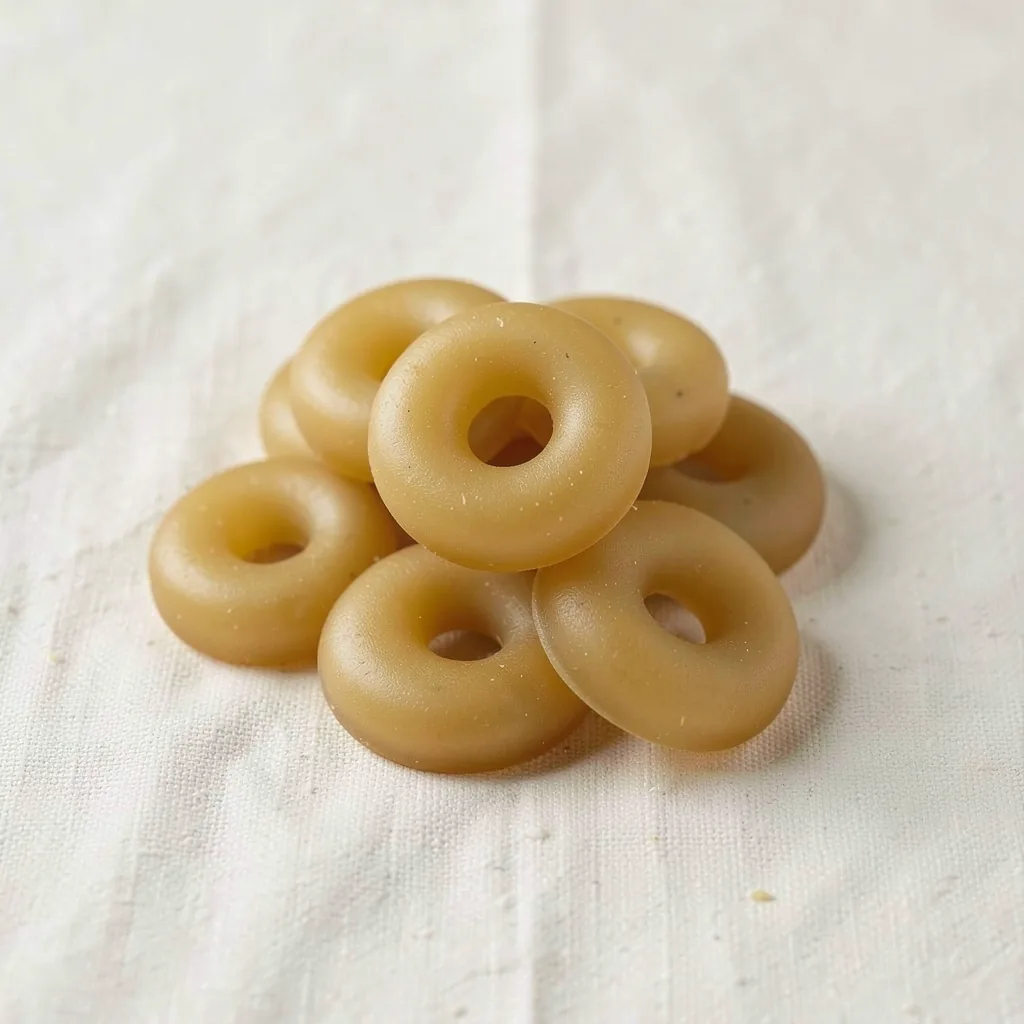
Calamarata
Tubes · Campania
wide short smooth ring, the shape of a squid ring
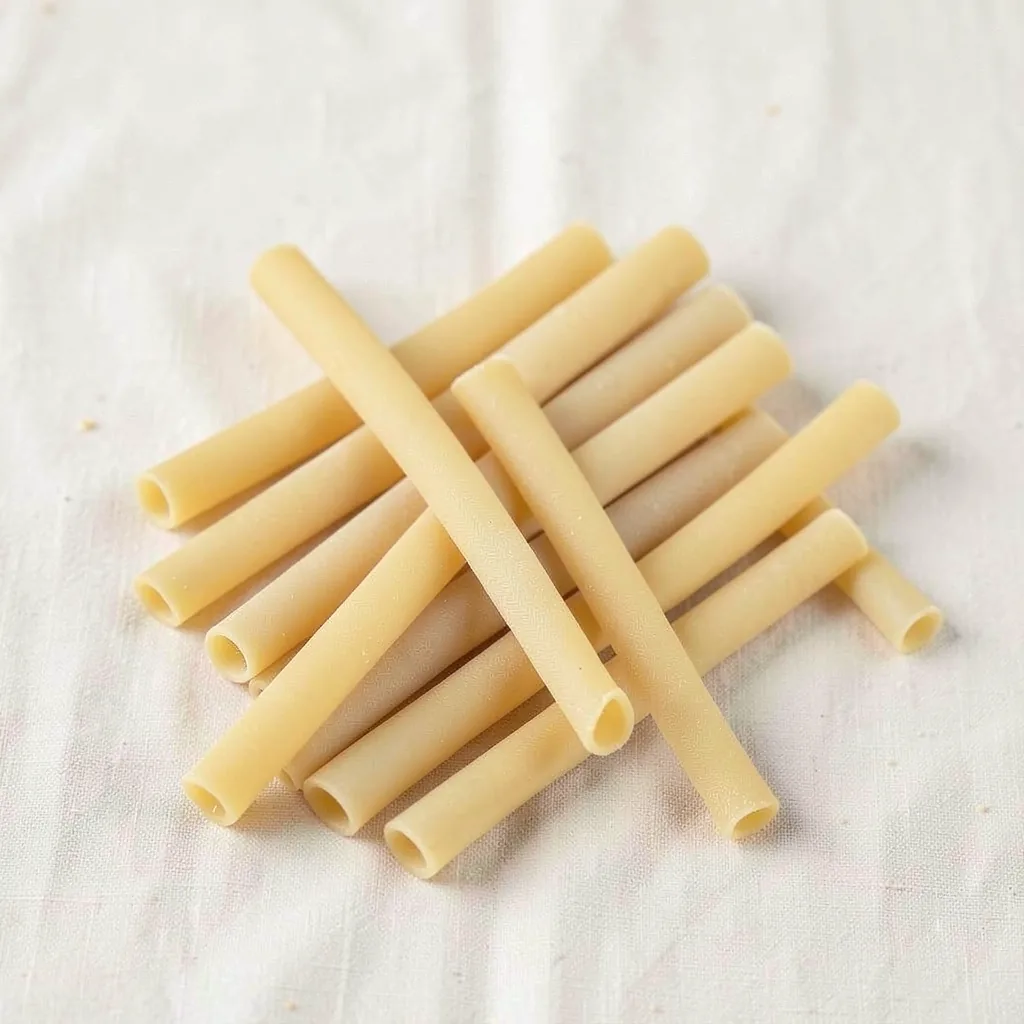
Candele
Tubes · Campania
very long smooth tube, broken by hand before cooking
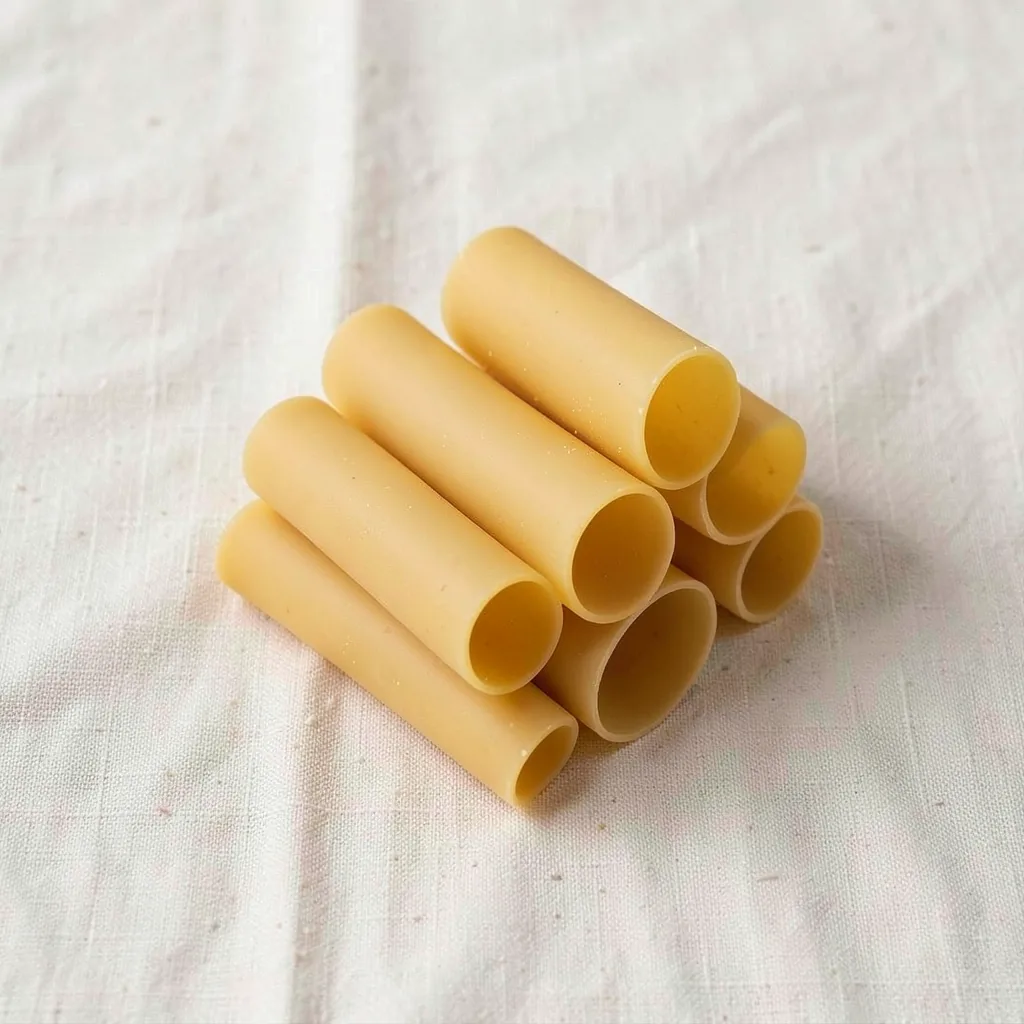
Cannelloni
Tubes · Campania
large smooth tube for stuffing, or a rolled sheet
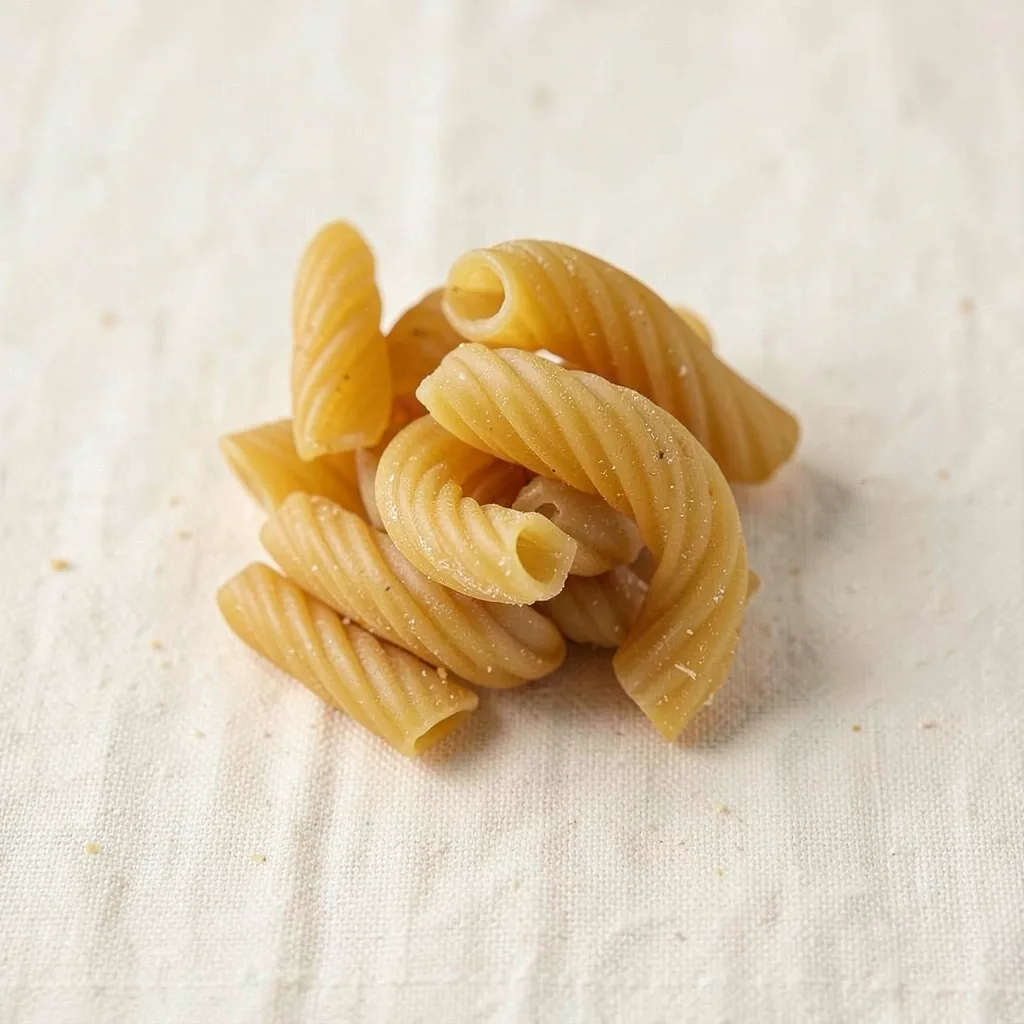
Cavatappi
Tubes · All of Italy
hollow ridged tube wound into a corkscrew
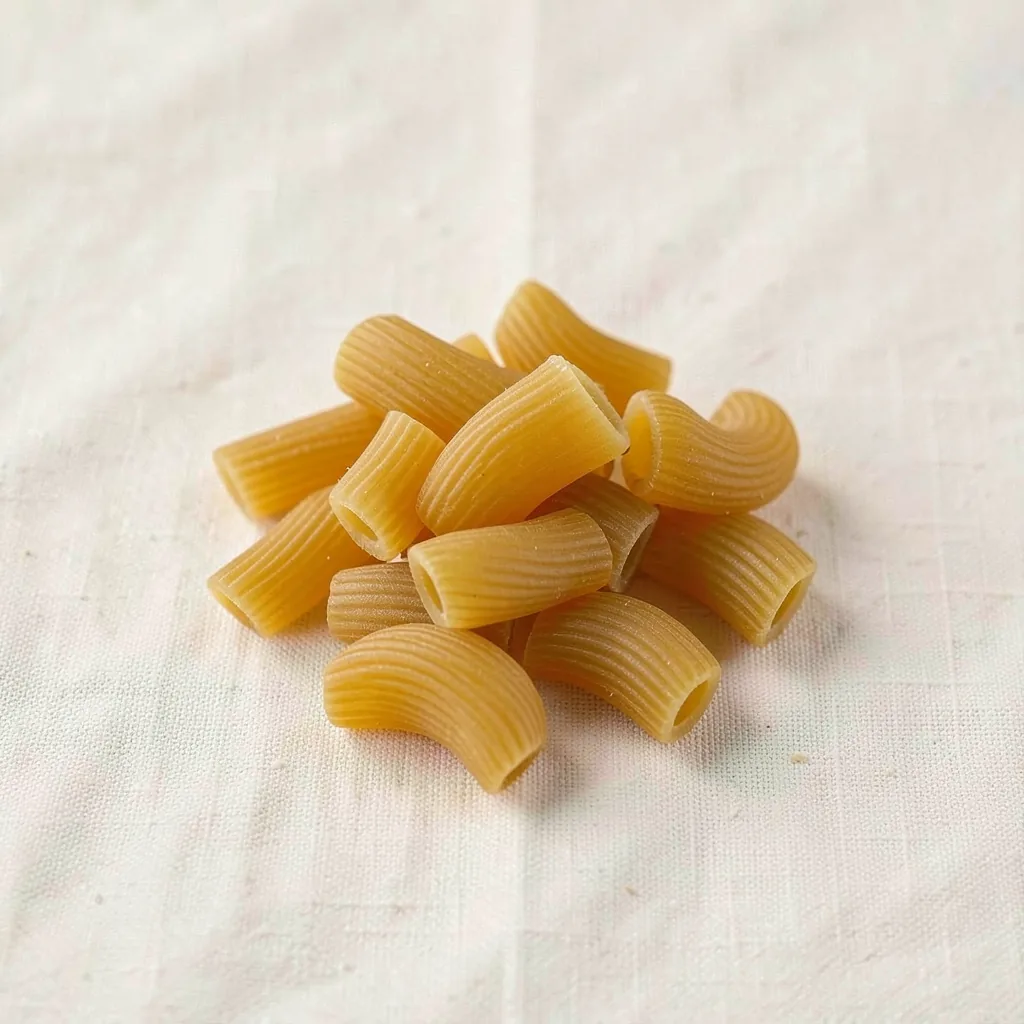
Chifferi
Tubes · All of Italy
short curved elbow tube, usually ridged
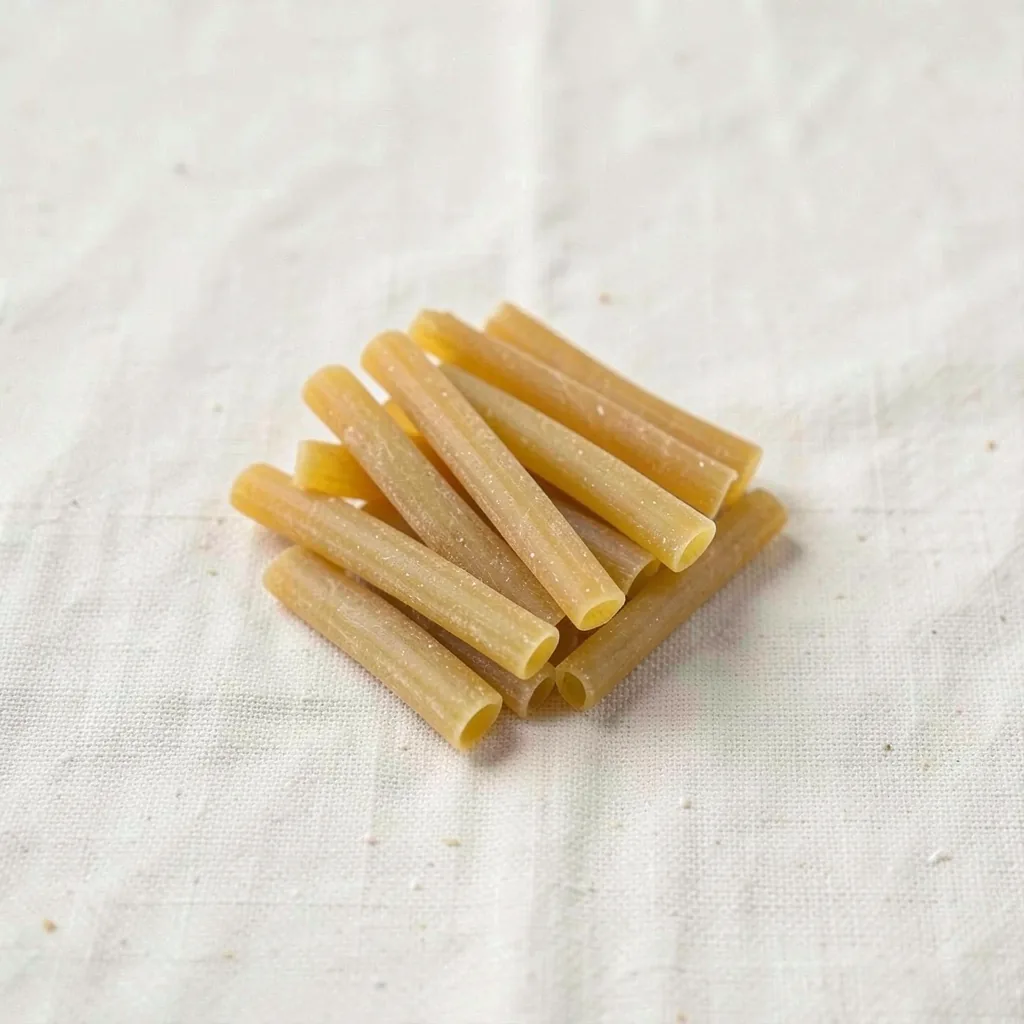
Ditali
Tubes · Campania
short straight tube, as long as it is wide
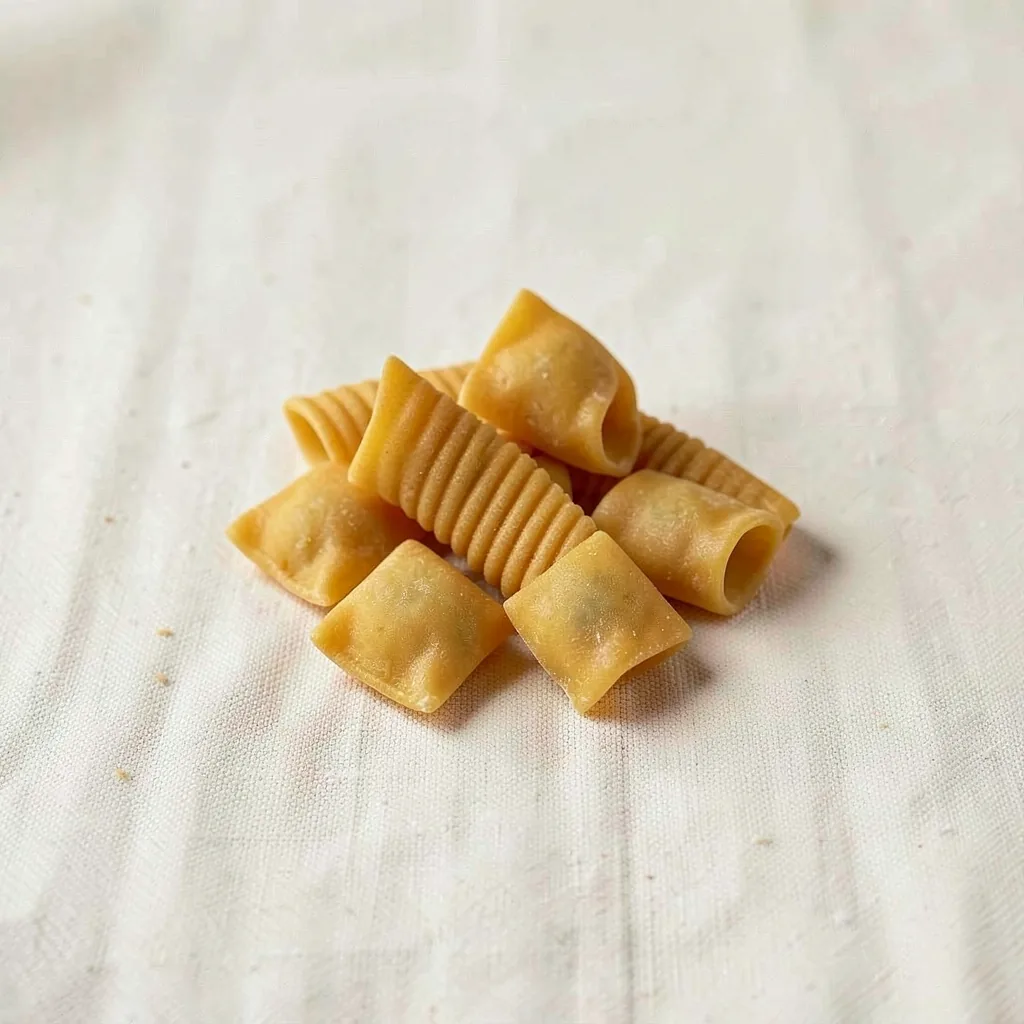
Garganelli
Tubes · Emilia-Romagna
egg-pasta square rolled on a comb into a ridged quill
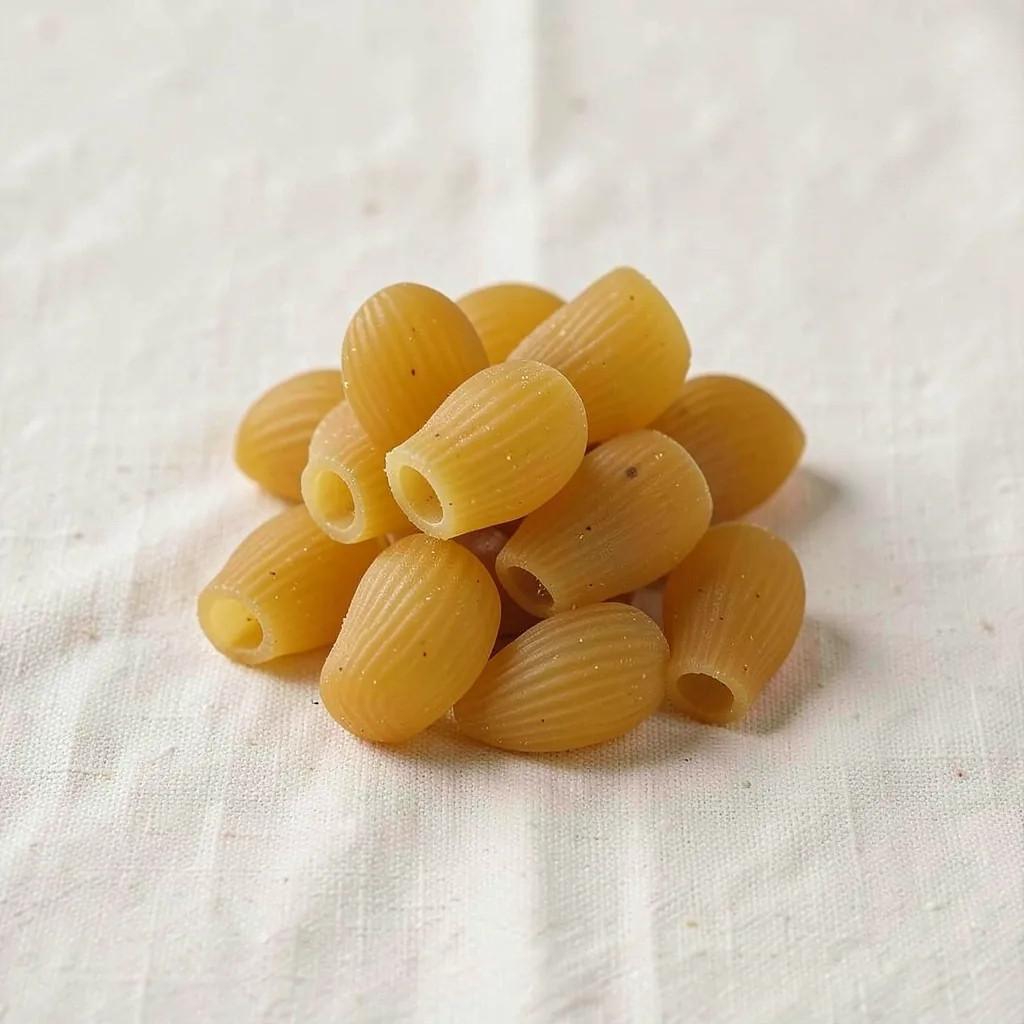
Lumache
Tubes · All of Italy
snail-shell tube, curved and pinched at one end
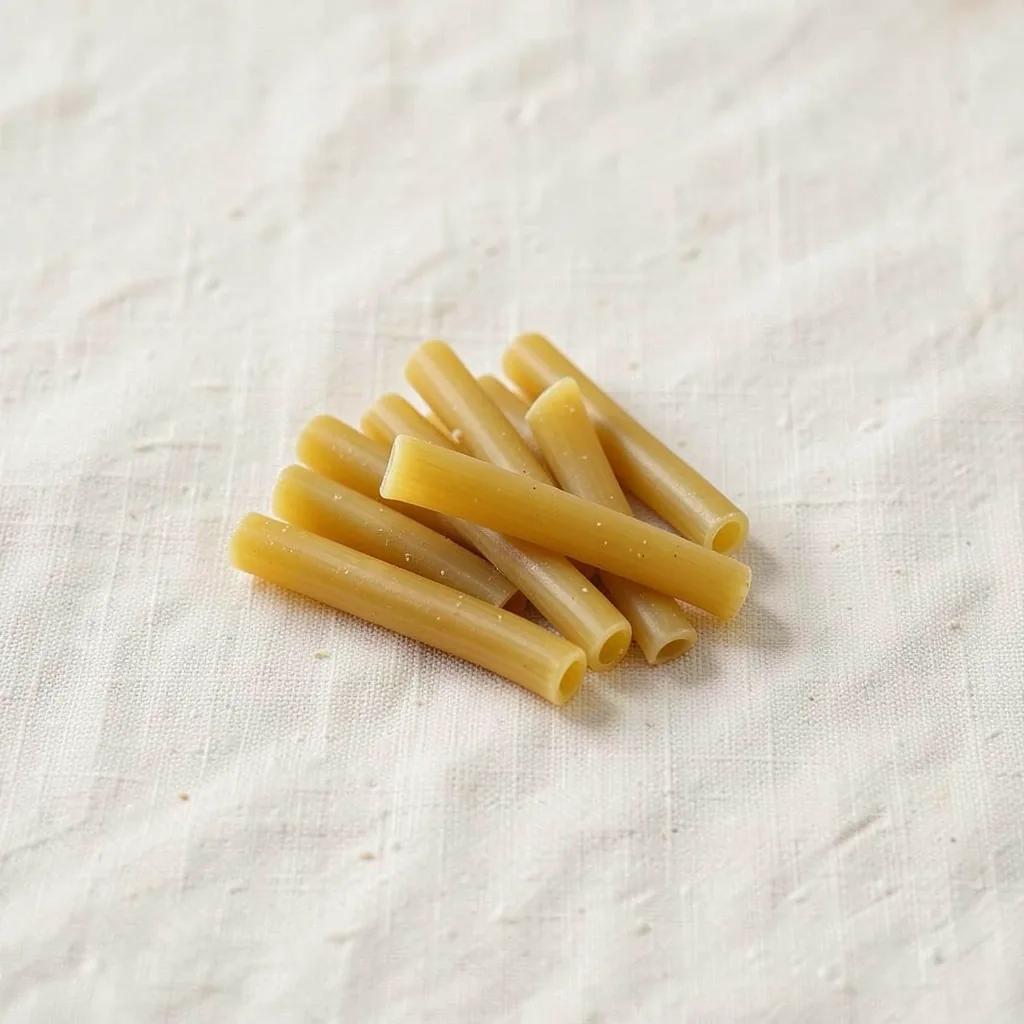
Macaroni
Tubes · Campania
short narrow smooth tube, straight or curved into an elbow
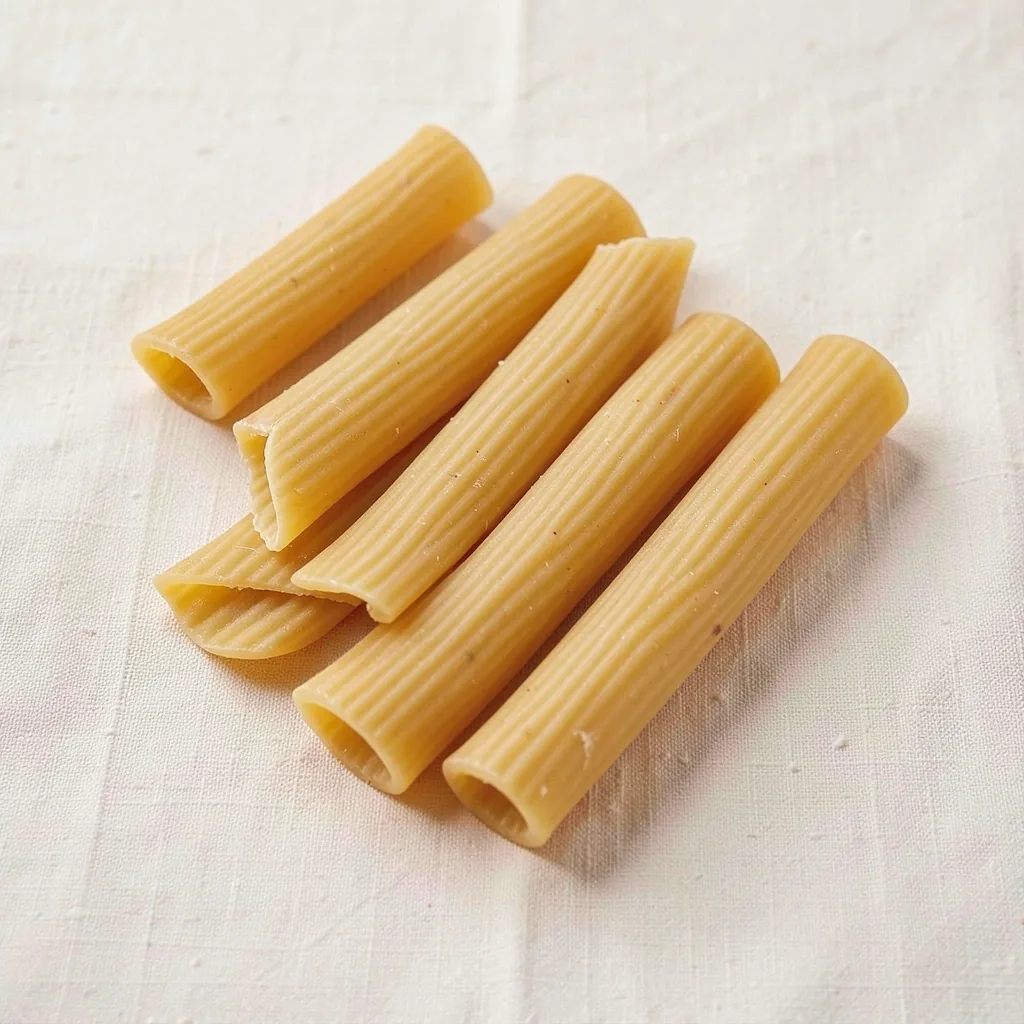
Manicotti
Tubes · United States
large ridged tube for stuffing, the American cannelloni
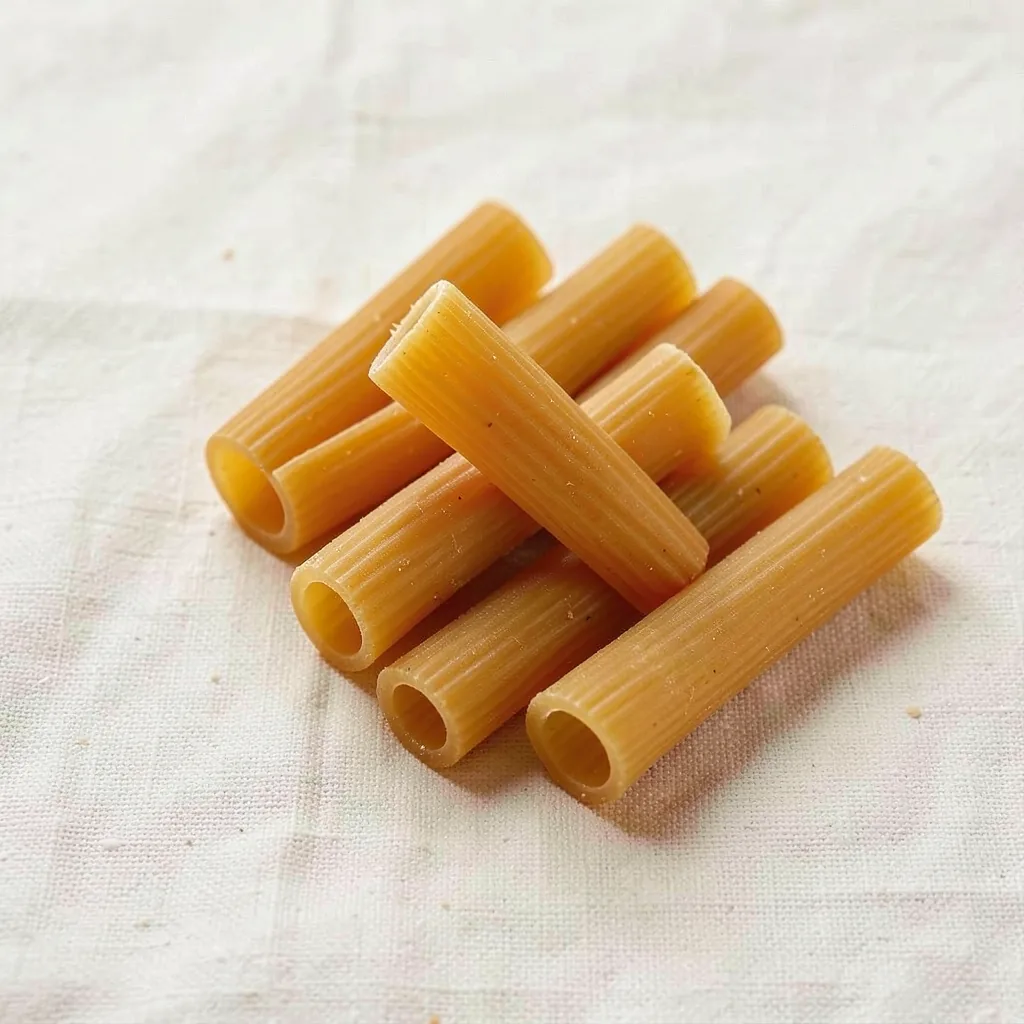
Mezze maniche
Tubes · All of Italy
short wide ridged tube, half a rigatoni
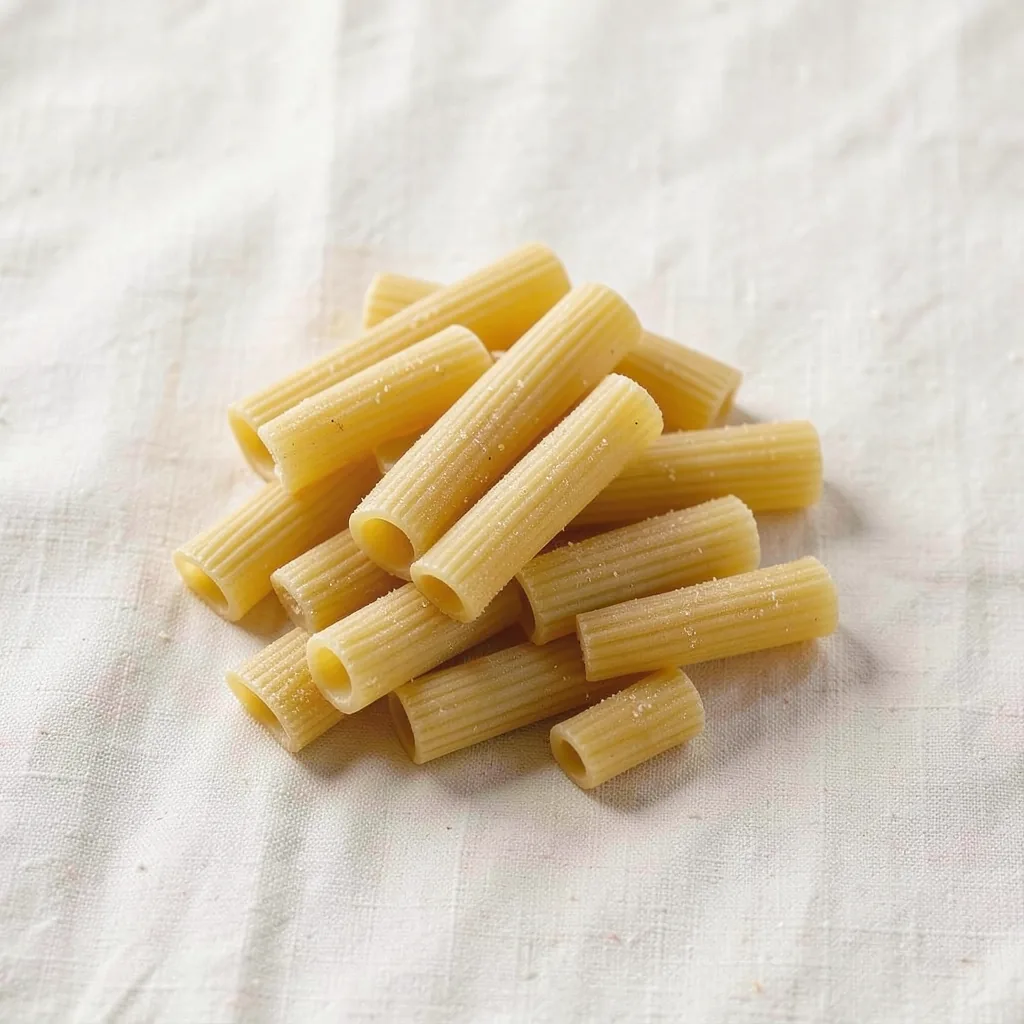
Mezzi rigatoni
Tubes · All of Italy
half-length rigatoni
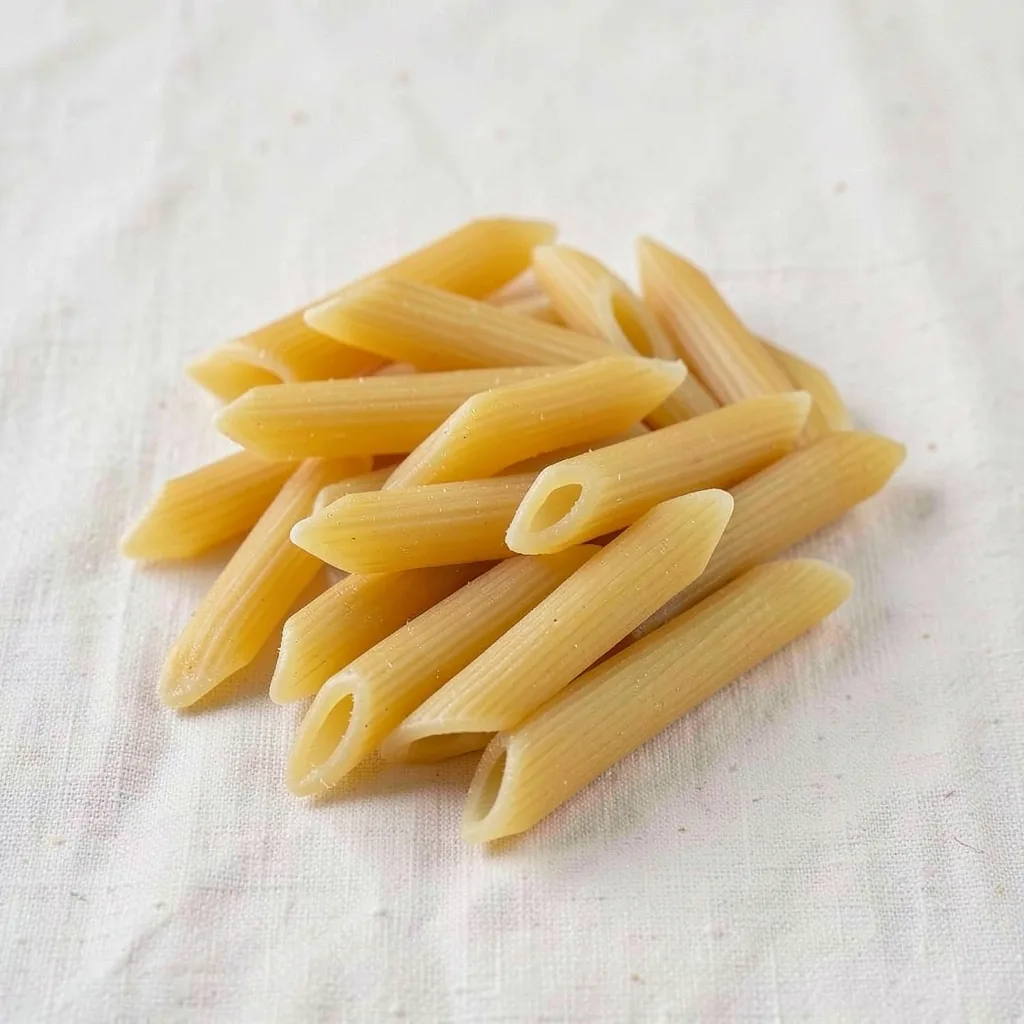
Mostaccioli
Tubes · United States
smooth diagonal-cut tube, the American penne lisce
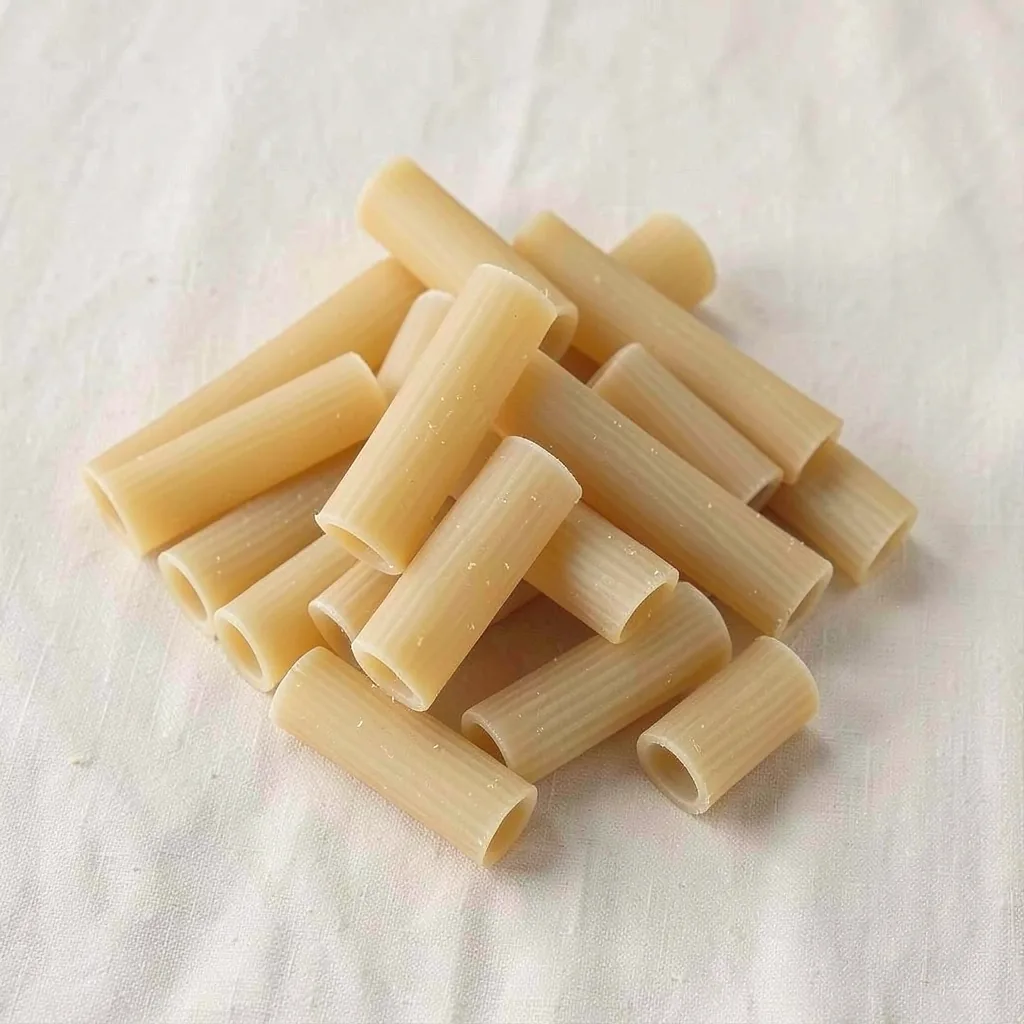
Occhi di lupo
Tubes · Campania
short wide ridged tube, cut straight
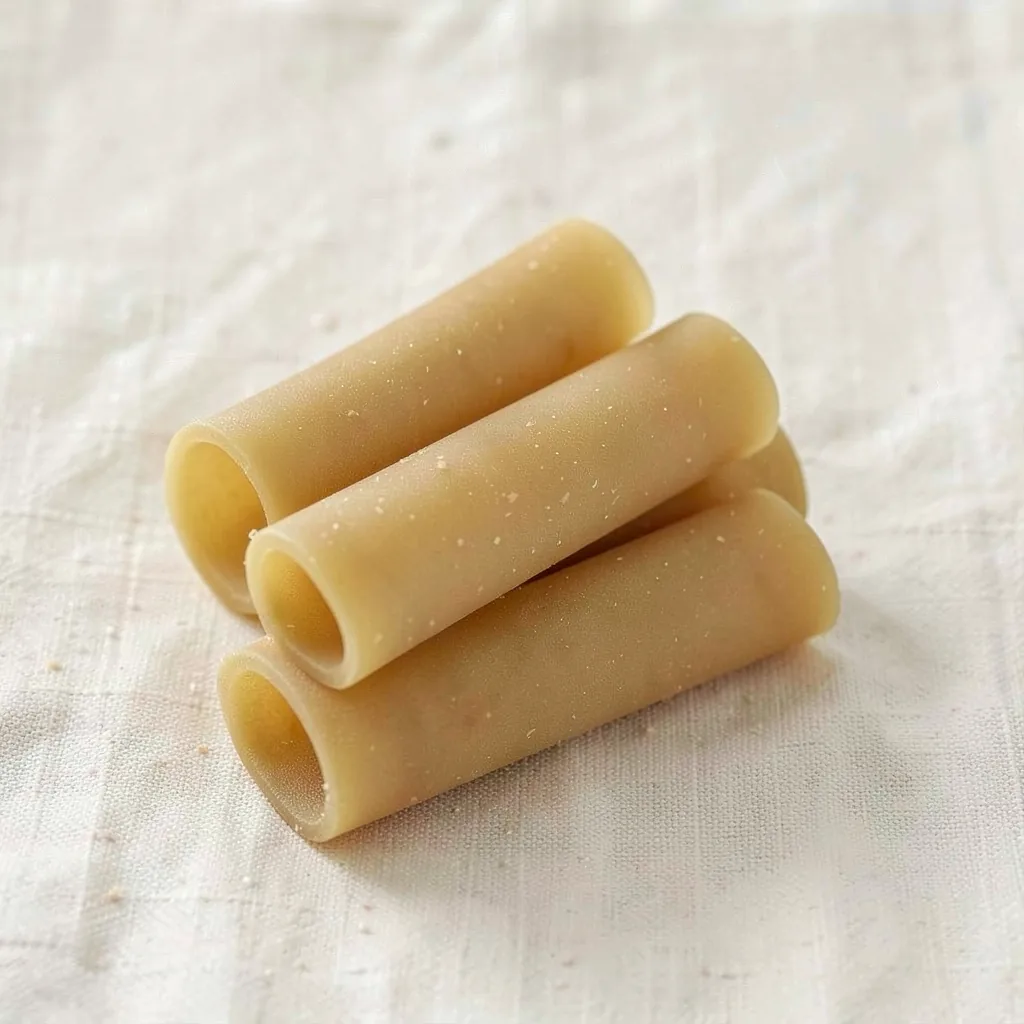
Paccheri
Tubes · Campania
very wide smooth tube, collapses flat when cooked
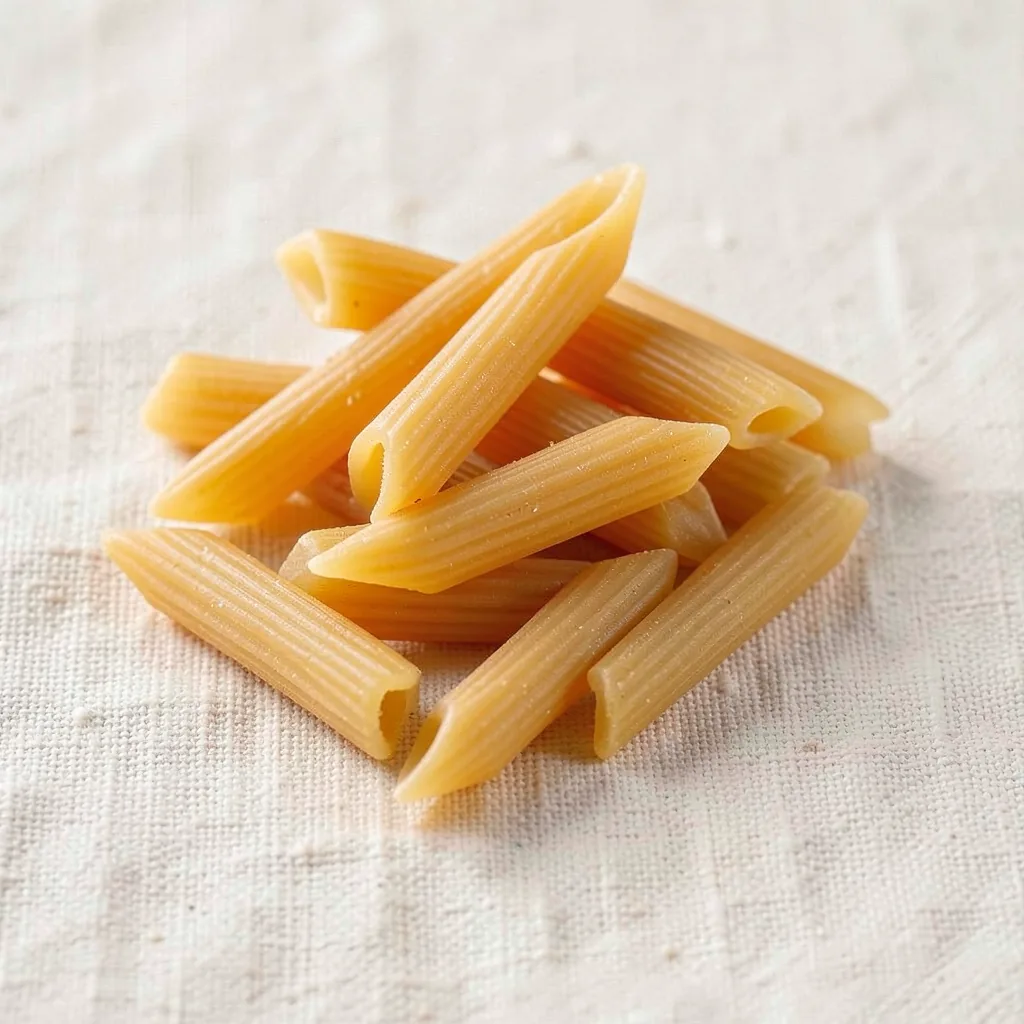
Penne
Tubes · Liguria
medium tube cut on the diagonal, ridged (rigate) or smooth (lisce)
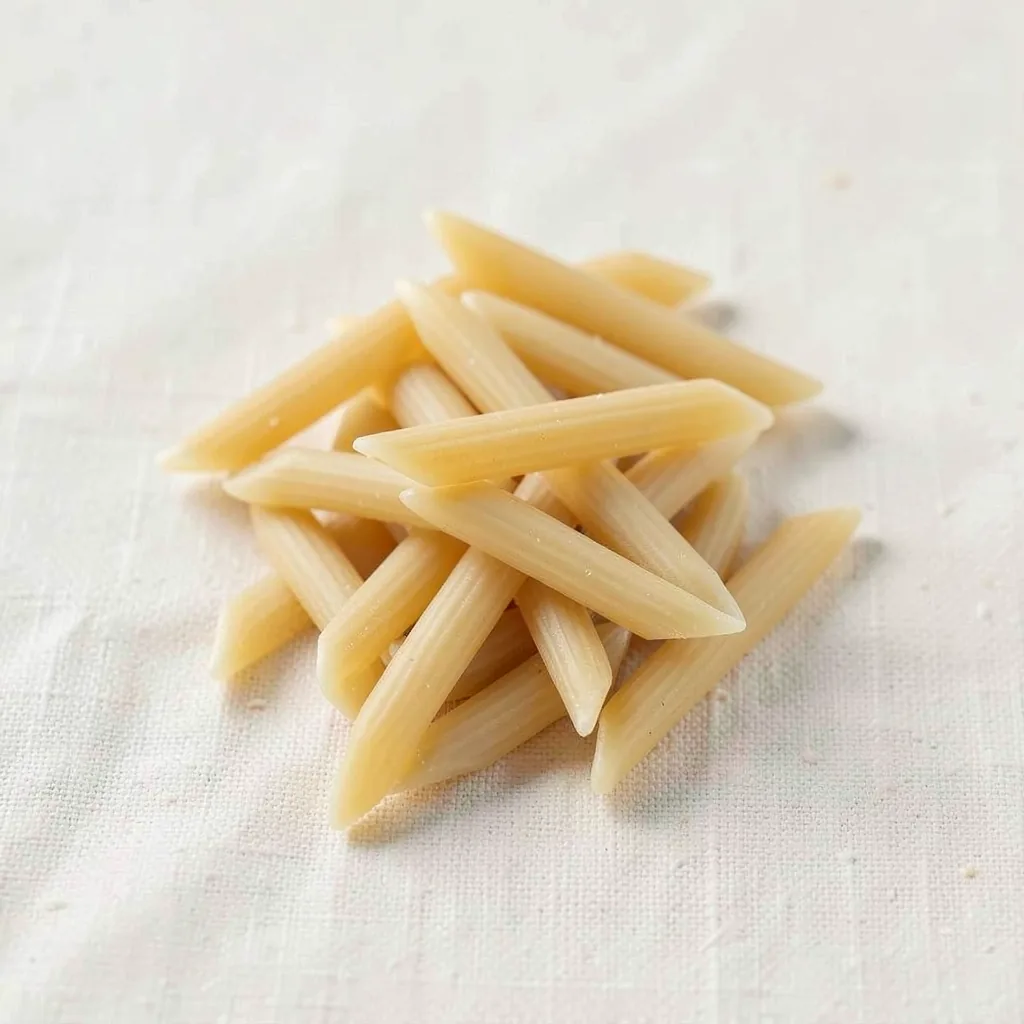
Penne lisce
Tubes · Liguria
smooth diagonal-cut medium tube
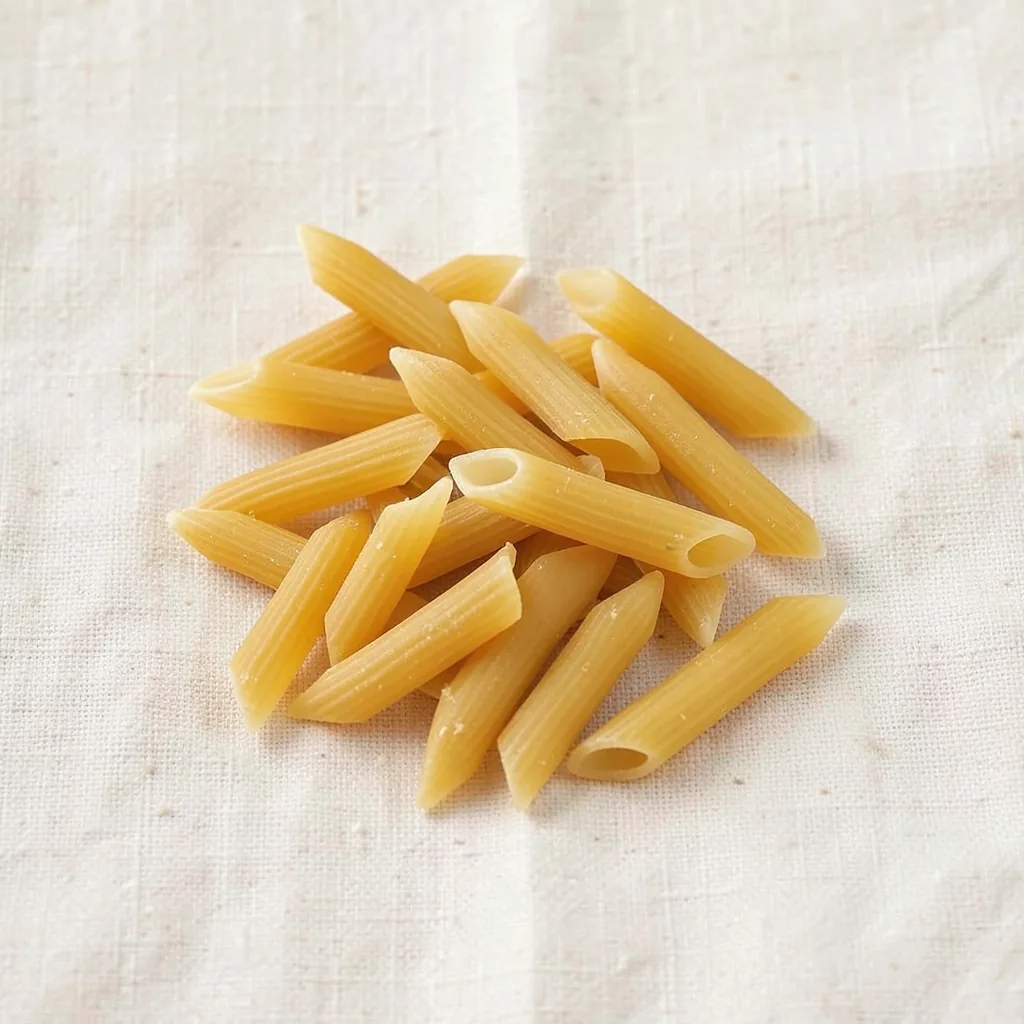
Pennette
Tubes · All of Italy
small penne, ridged, about 3.5 cm
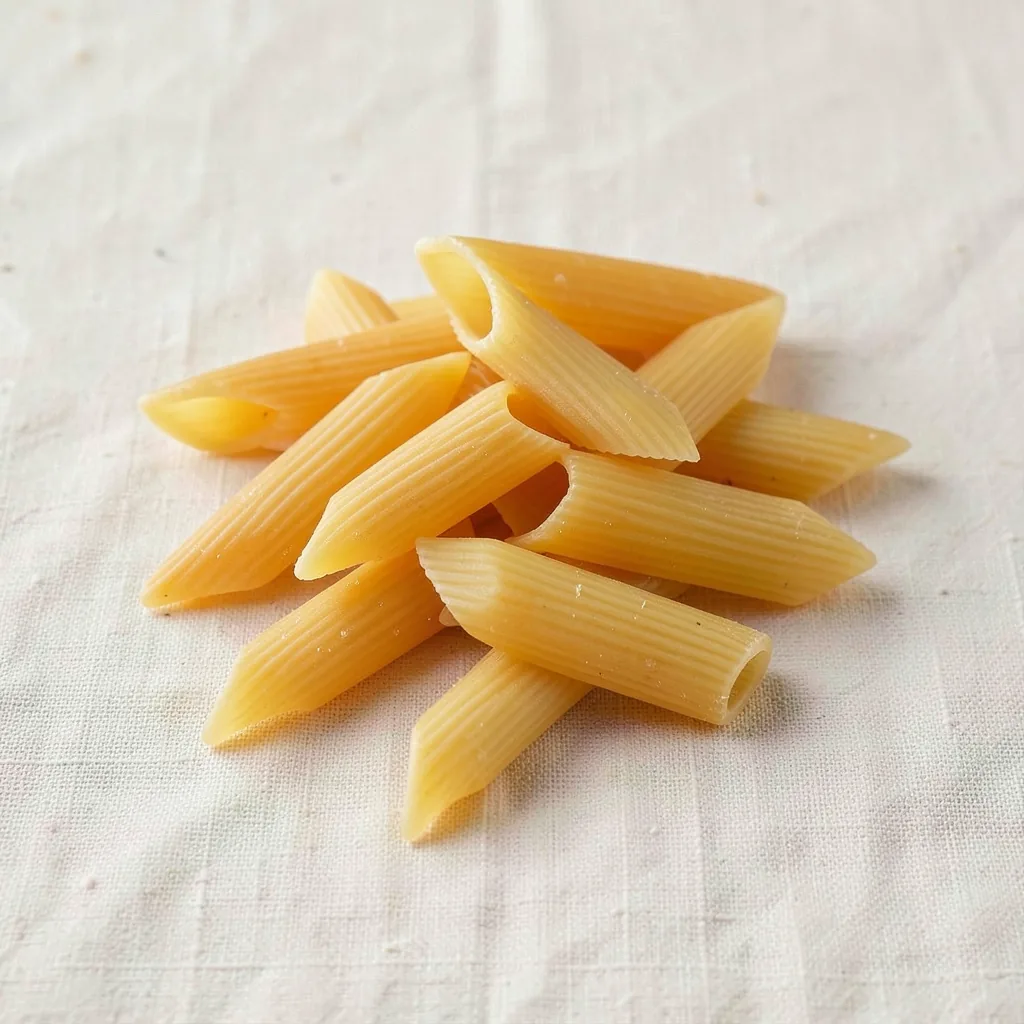
Pennoni
Tubes · All of Italy
large penne, ridged, 1.5 cm across
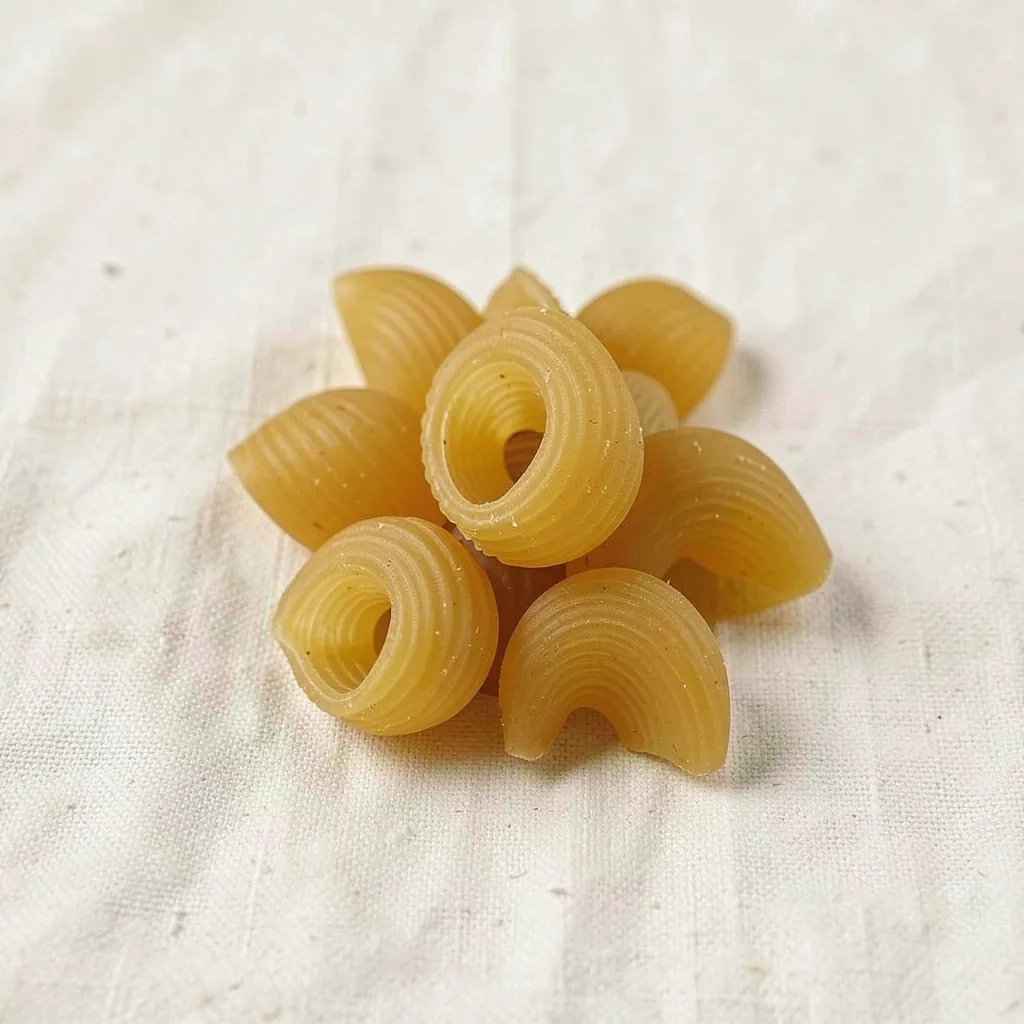
Pipe rigate
Tubes · All of Italy
curved ridged tube pinched at one end, like a snail shell
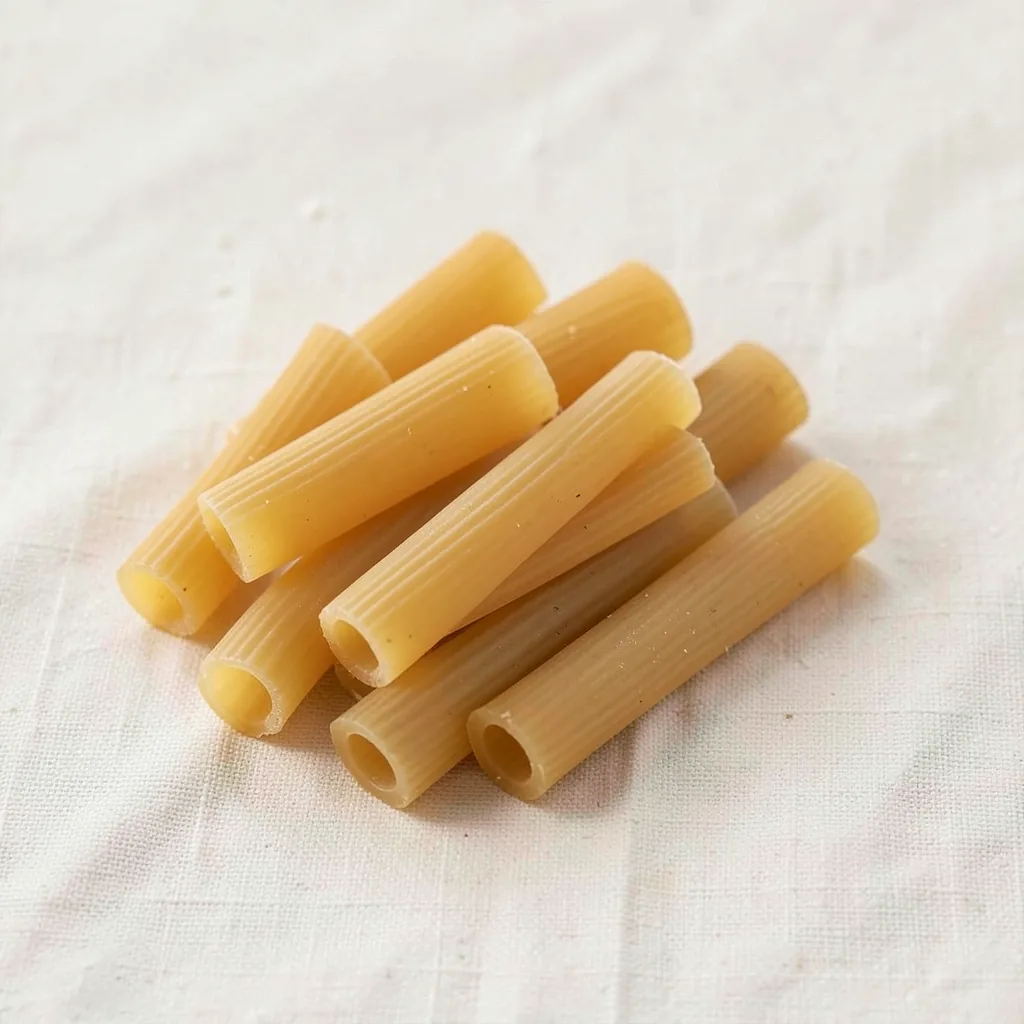
Rigatoni
Tubes · Lazio
wide ridged tube cut straight across
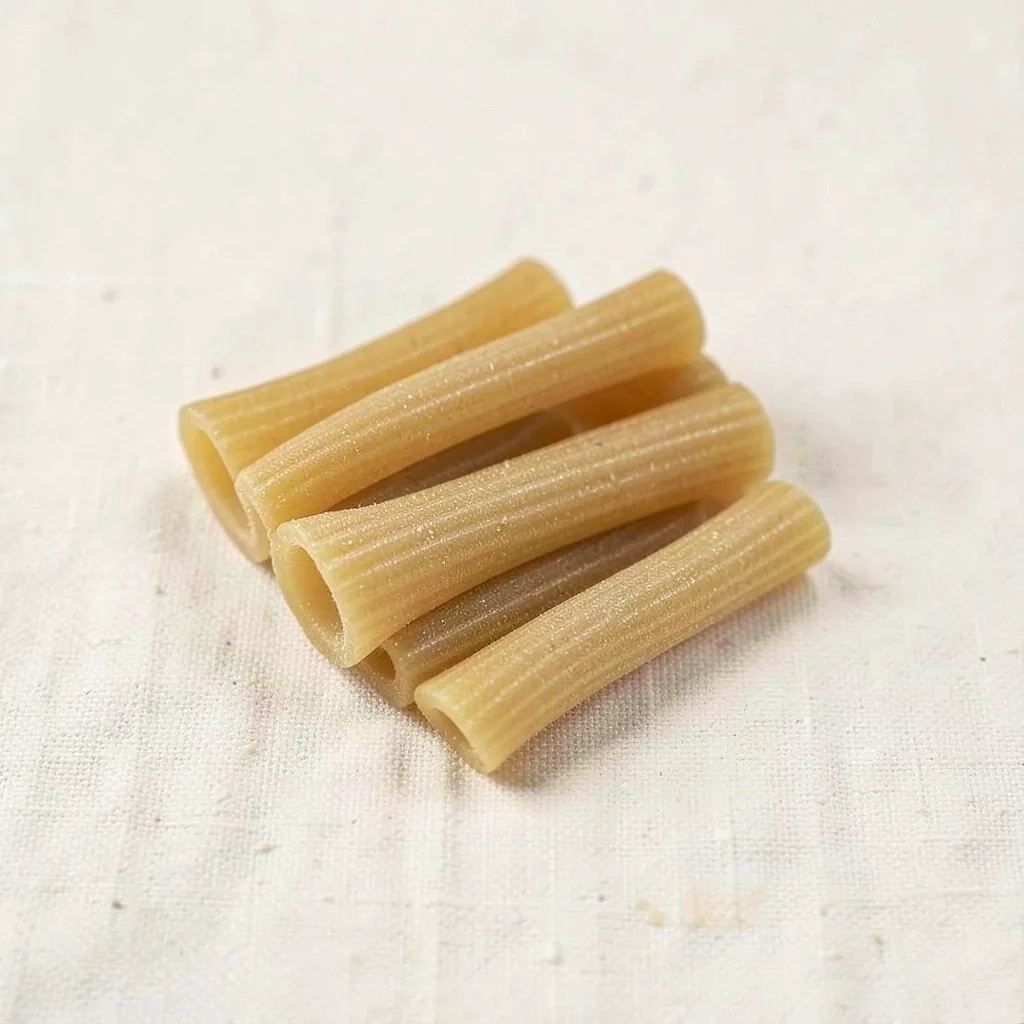
Sedani
Tubes · All of Italy
slightly curved narrow ridged tube
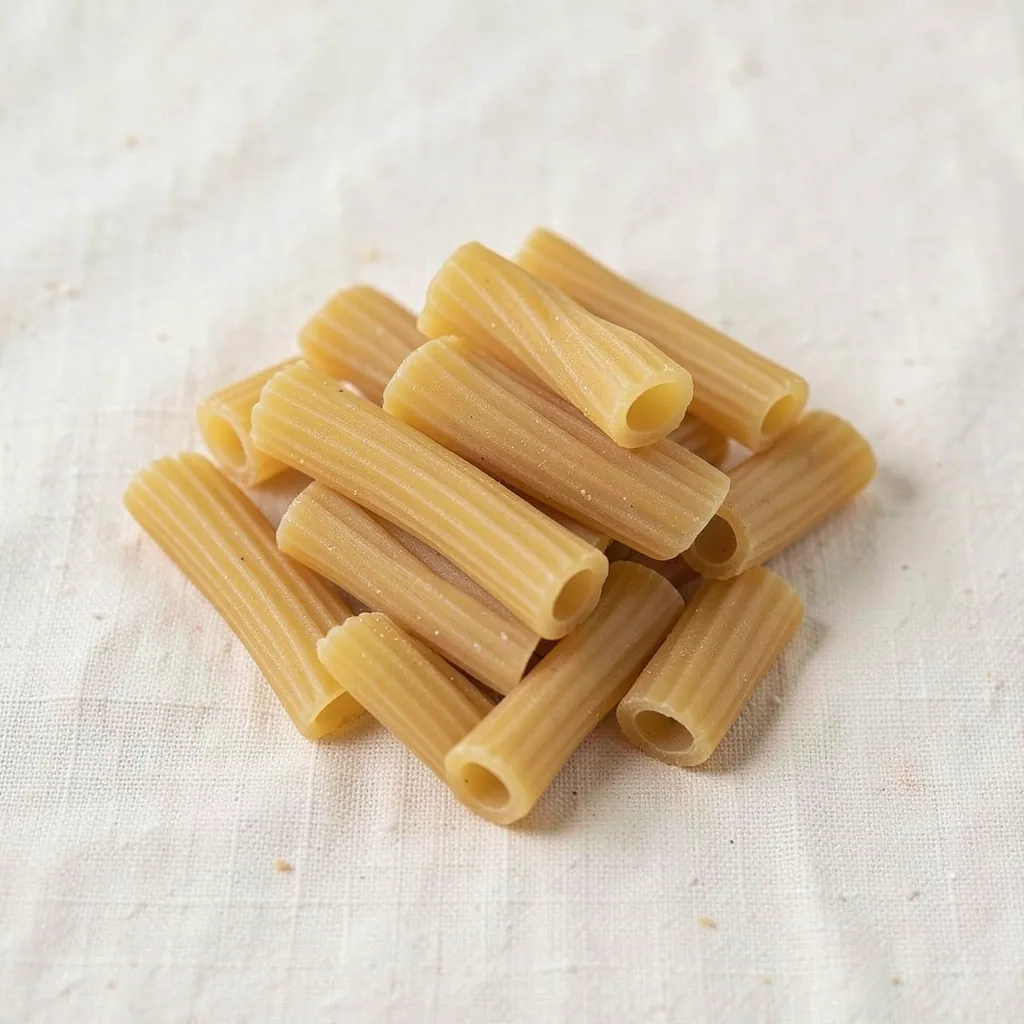
Tortiglioni
Tubes · Campania
medium tube with ridges that spiral around it
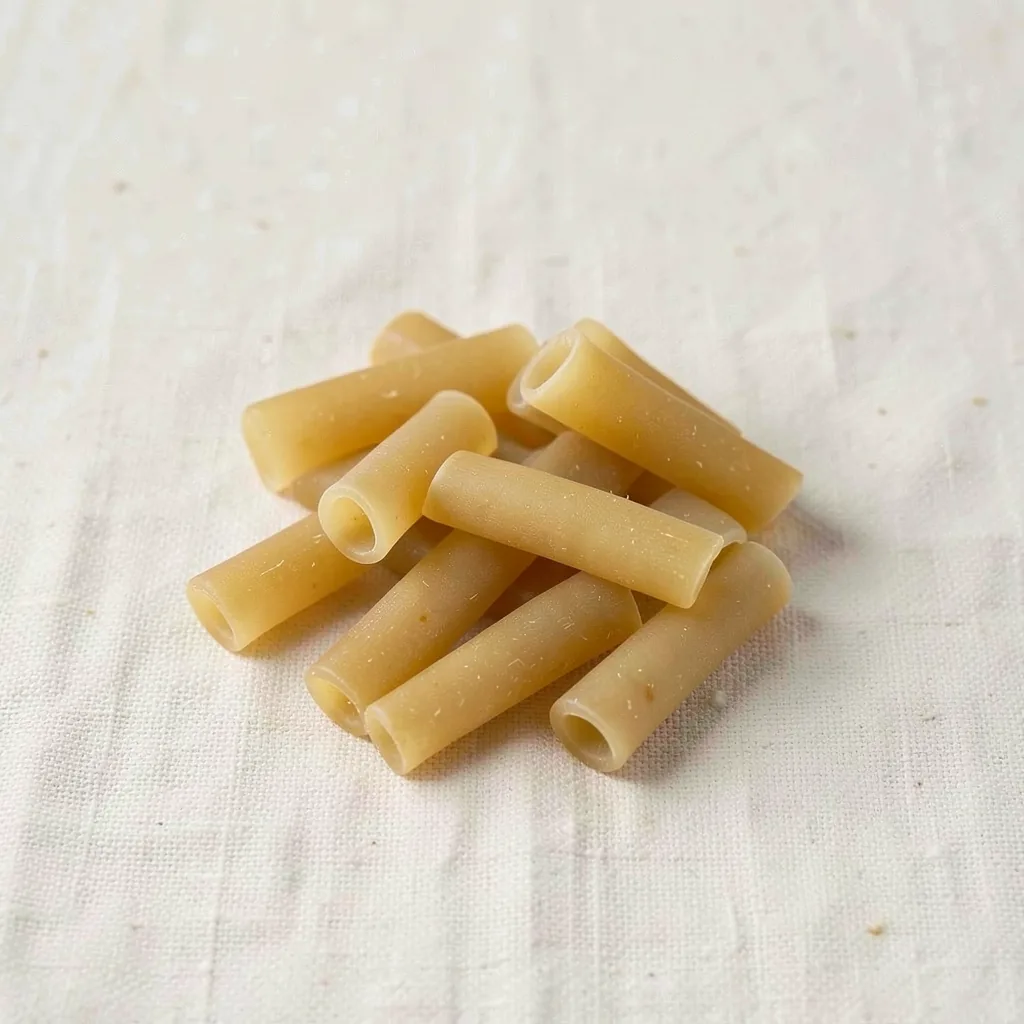
Tubetti
Tubes · Campania
small straight tube, the soup tube of Naples
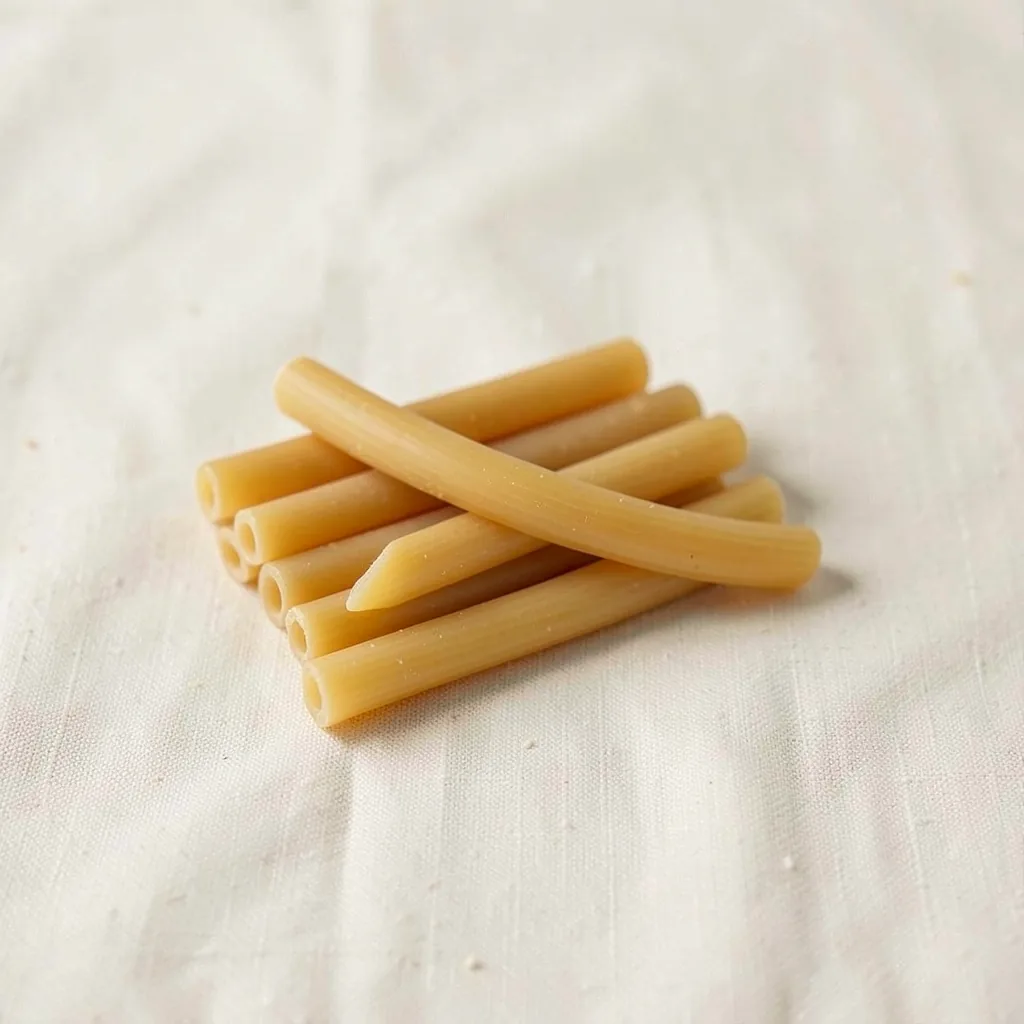
Ziti
Tubes · Campania
smooth medium tube, cut straight; sold long or cut
7 more tubes
Names, origins, and what the sources say. Profiles in progress.
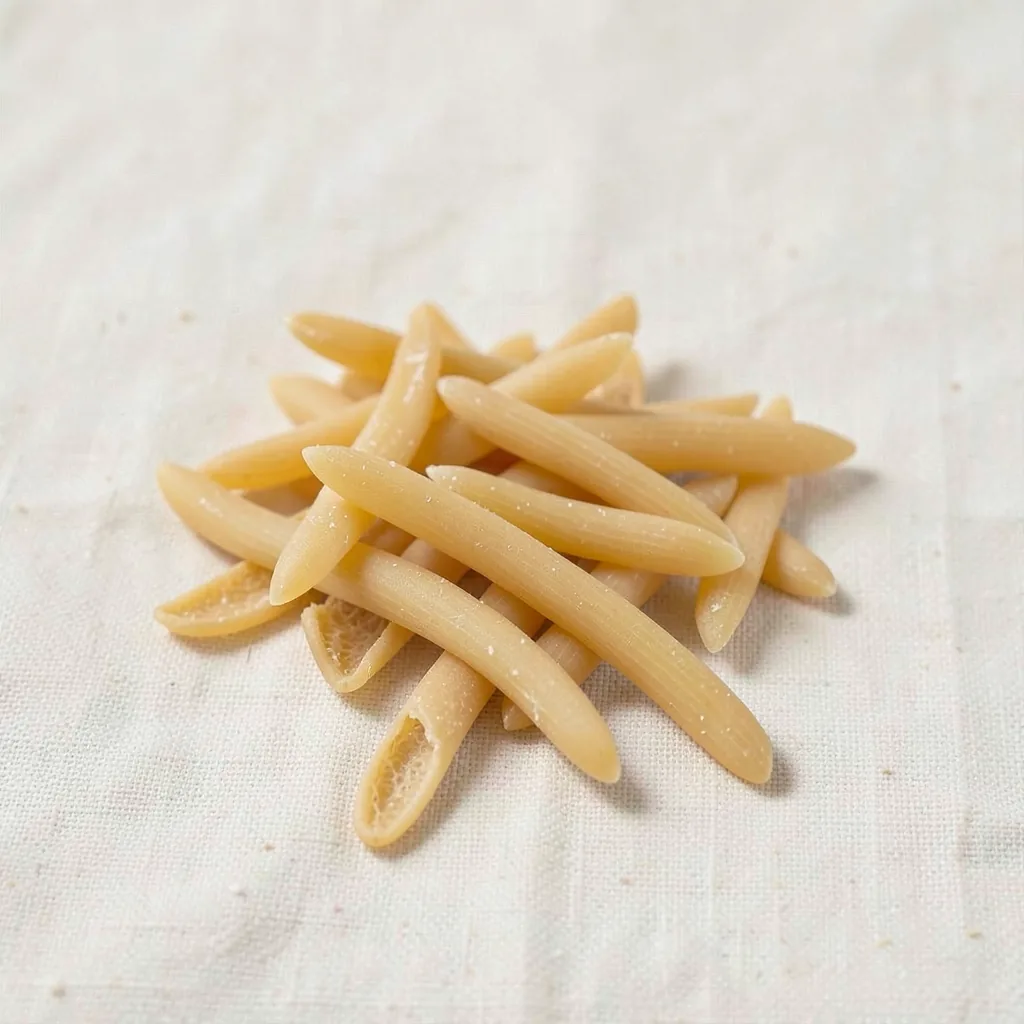
Fagioloni
Tubes
Short narrow tube
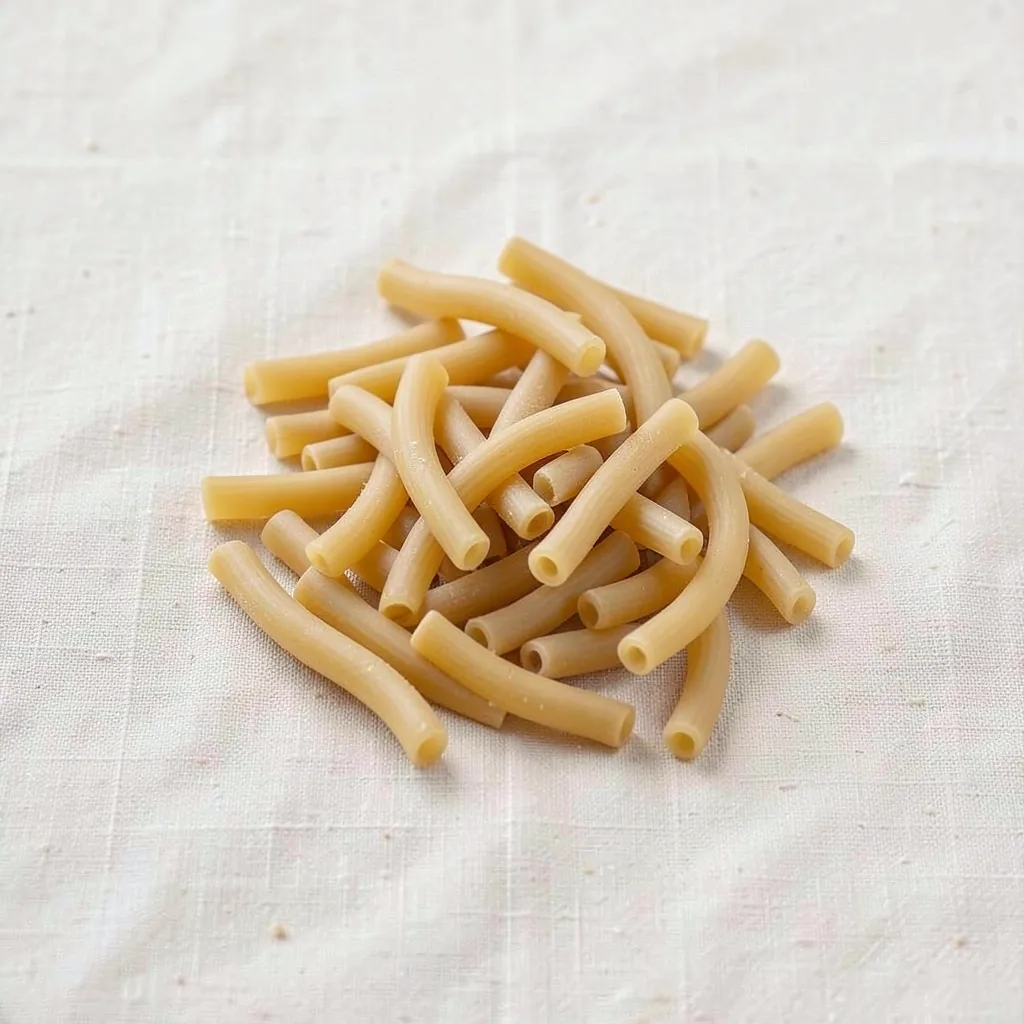
Maccheroncelli
Tubes
Hollow tube-shaped pasta that is slightly smaller than a pencil in thickness
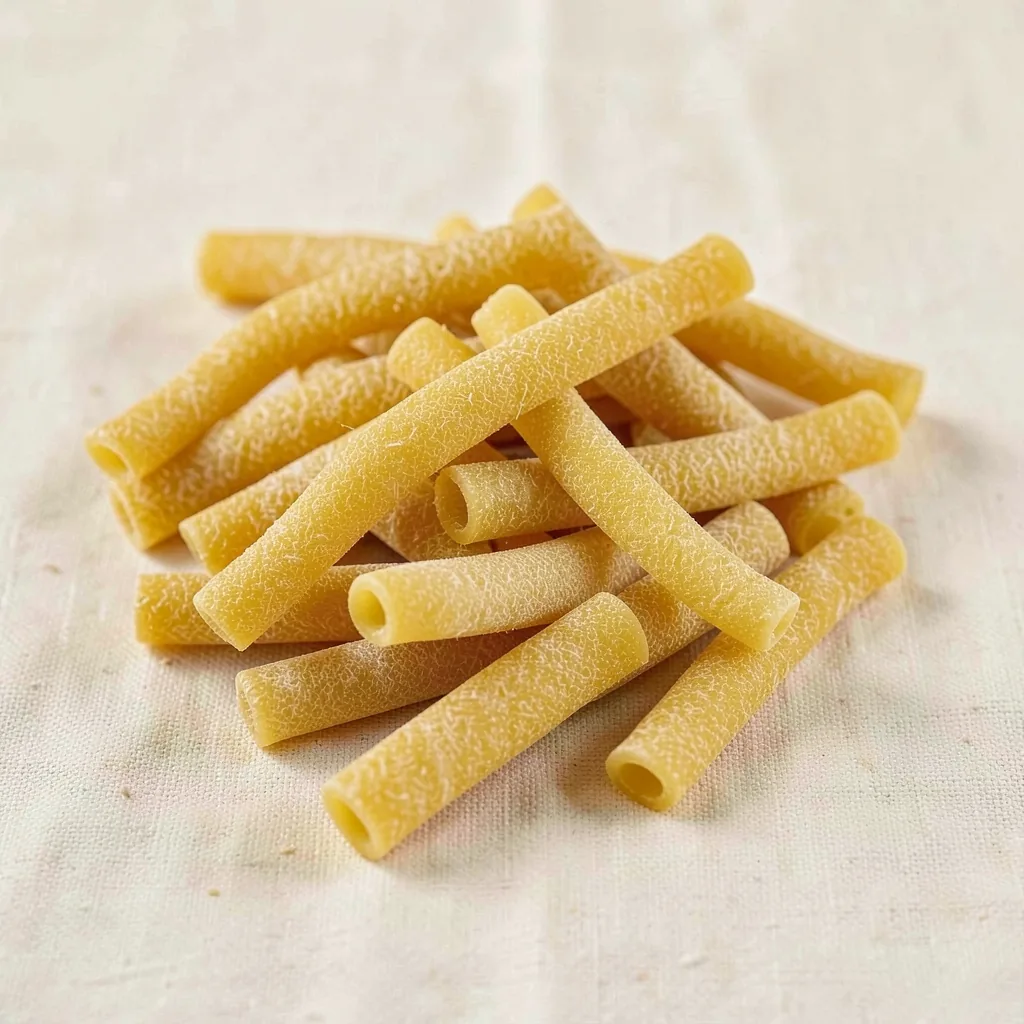
Mezzani
Tubes · Campania
Short curved tube
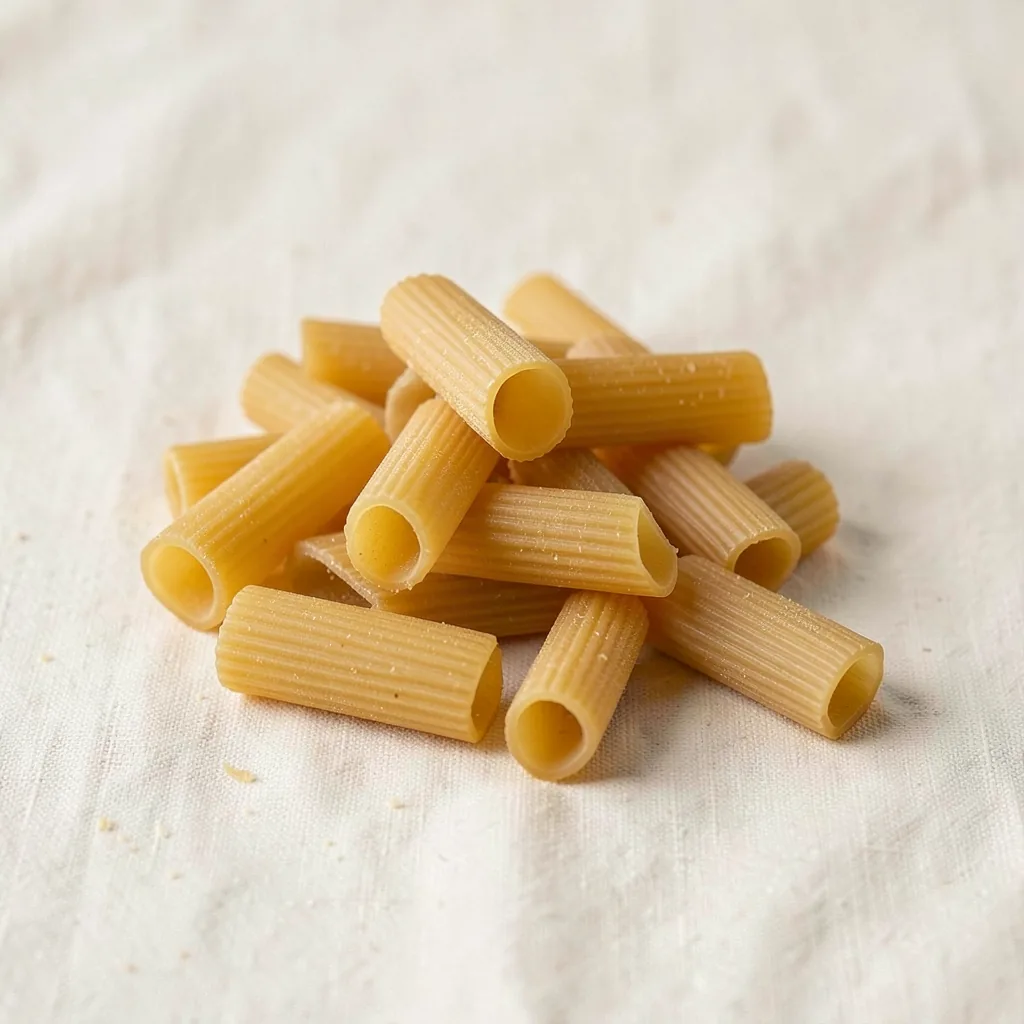
Mezzi bombardoni
Tubes
Wide short tubes
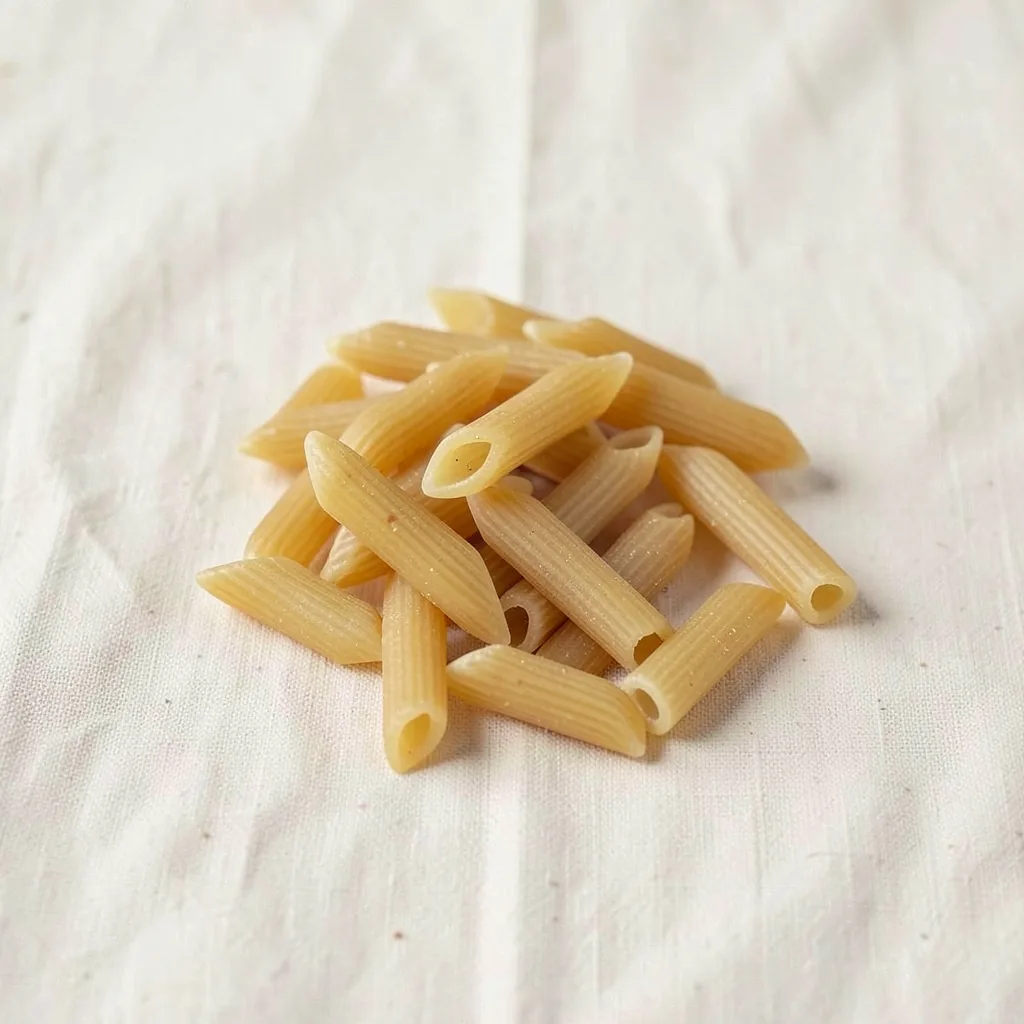
Trenne
Tubes · Abruzzo
Penne shaped as a triangle
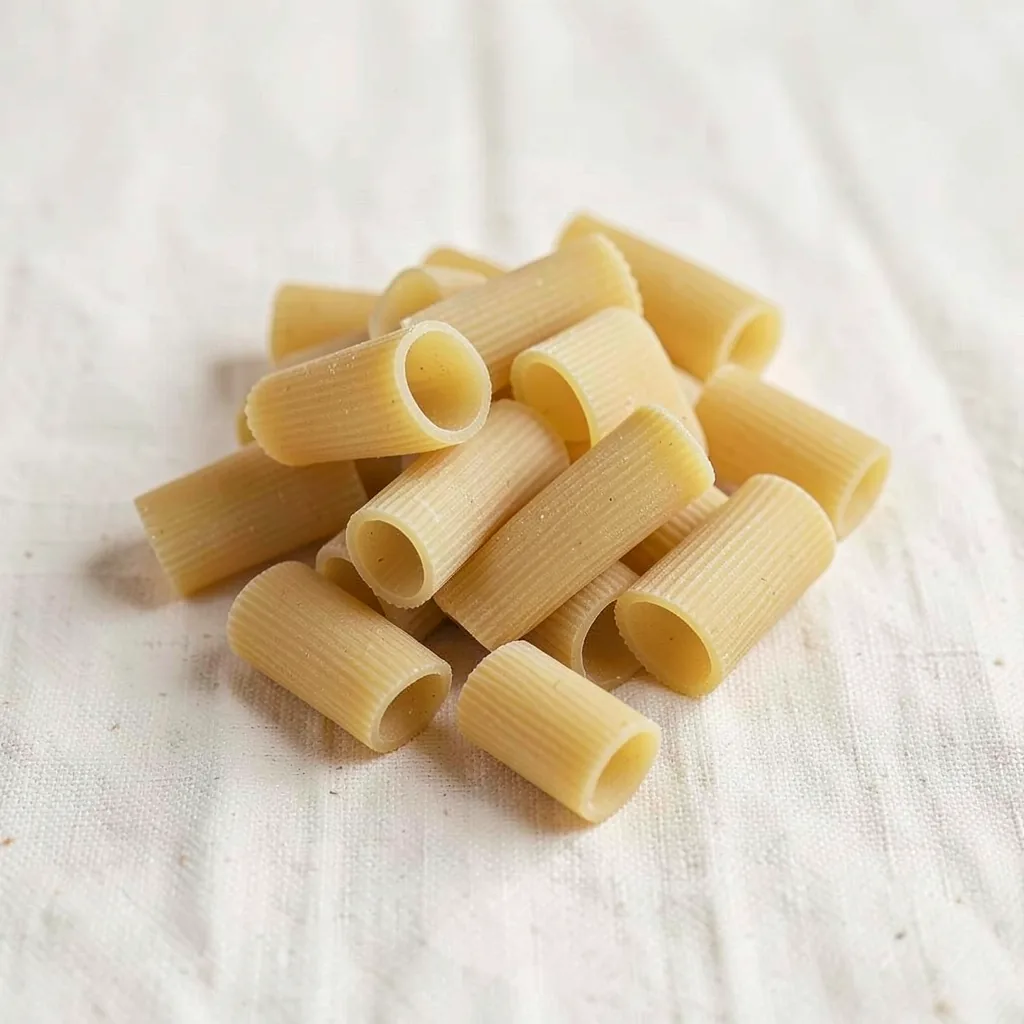
Tuffoli
Tubes
Ridged rigatoni
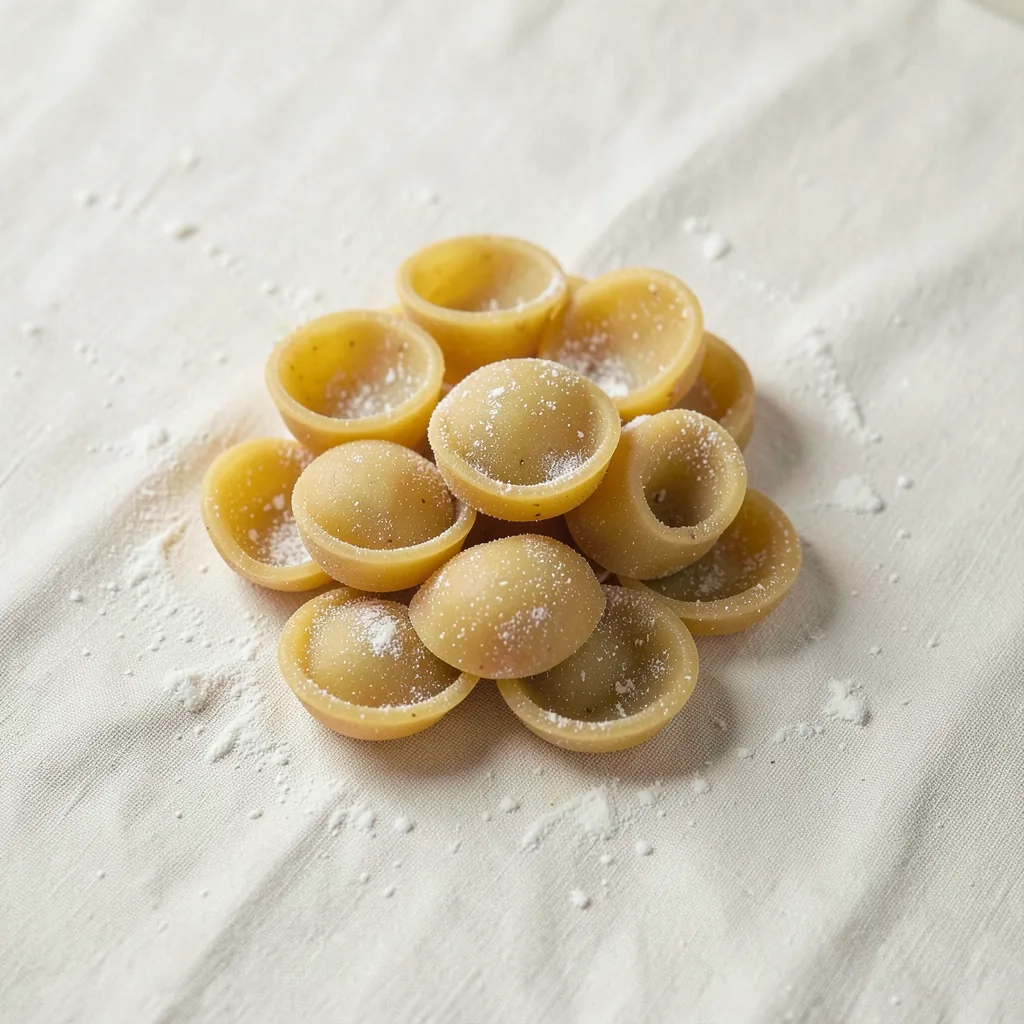
Tufoli
Tubes
A pasta shell large enough for stuffing (as with meat or cheese). From a southern Italian dialect, plural of tufolo (tube), modification of
Classic plates
- Macaroni and cheeseChifferi, Macaroni
- Pasta e fagioliDitali, Tubetti
- Baked manicottiManicotti
- Baked mostaccioliMostaccioli
- Baked pennePenne
- Baked zitiZiti
- Calamarata allo scoglioCalamarata
- Calamarata con calamari e pomodoriniCalamarata
- Candele alla genoveseCandele
- Candele spezzate al raguCandele
- Cannelloni alla sorrentinaCannelloni
- Cannelloni di carneCannelloni
- Cannelloni ricotta e spinaciCannelloni
- Cavatappi alla vodkaCavatappi
- Cavatappi mac and cheeseCavatappi
- Cavatappi saladCavatappi
- Chifferi al pomodoroChifferi
- Ditali con le patateDitali
Read more
Bronze die versus Teflon: why the surface of dried pasta matters
What a bronze die does to the surface of pasta, why a rough shape holds sauce better, and how to tell a bronze-cut box from a Teflon one on the shelf.
Semolina versus egg dough: the two doughs of Italian pasta
The difference between durum semolina pasta and egg pasta: flour, water, eggs, where each is made, how each cooks, and which sauces each dough wants.
Fresh versus dried pasta: neither is better, they are different foods
The difference between fresh and dried pasta: dough, texture, cook time, storage, and which shapes and sauces belong to each.
Sources
- Every figure above is computed from the shape records. Each shape page names the brand page, spec sheet, or measured box behind its own numbers.
- The sauce counts and the classic plates come from the pairings and dishes in the profiled shape records: our editorial judgement, checked against the regional cookbooks named on the shape pages.