Bronze die versus Teflon: why the surface of dried pasta matters
What a bronze die does to the surface of pasta, why a rough shape holds sauce better, and how to tell a bronze-cut box from a Teflon one on the shelf.
Dried pasta is made by pushing a stiff semolina dough through a metal plate with holes cut in the shape of the pasta. The plate is the die. The metal of the die decides the surface of the pasta, and the surface decides how the sauce behaves on the plate.
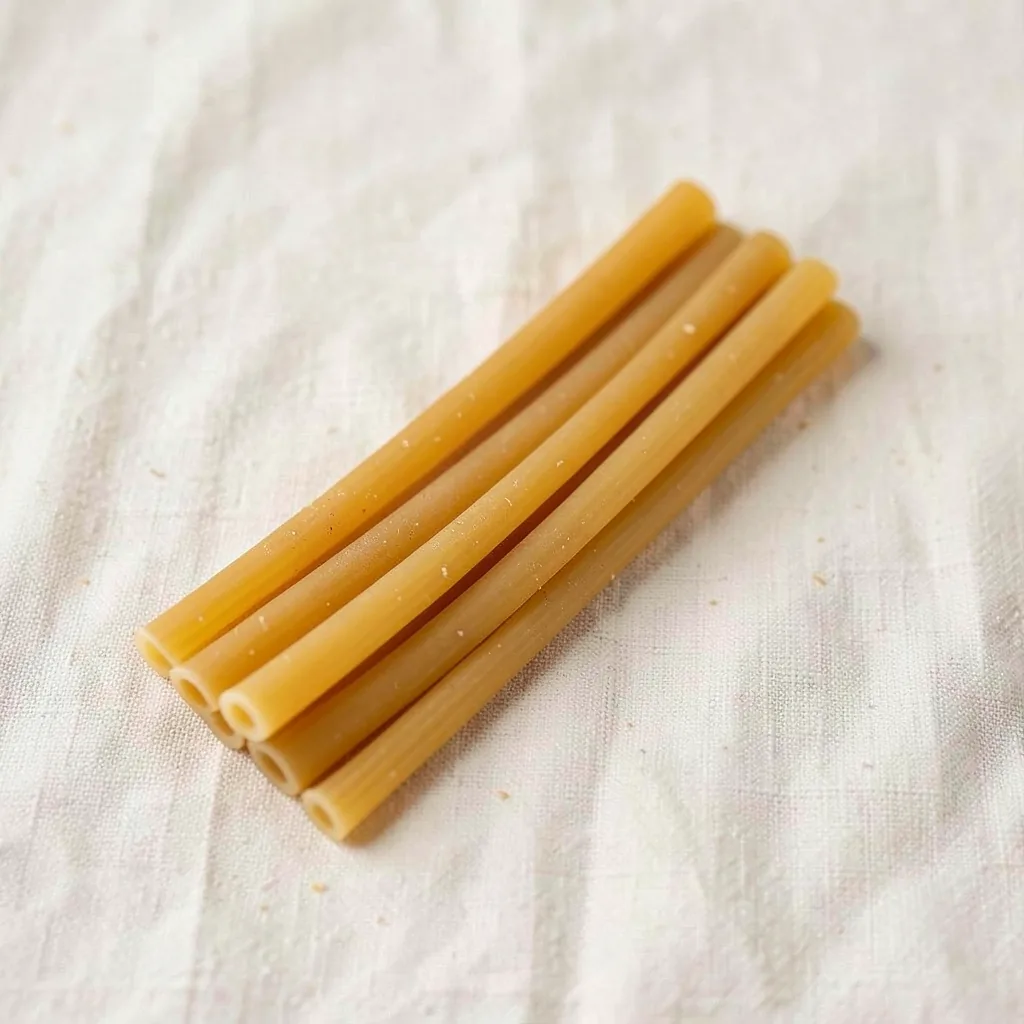
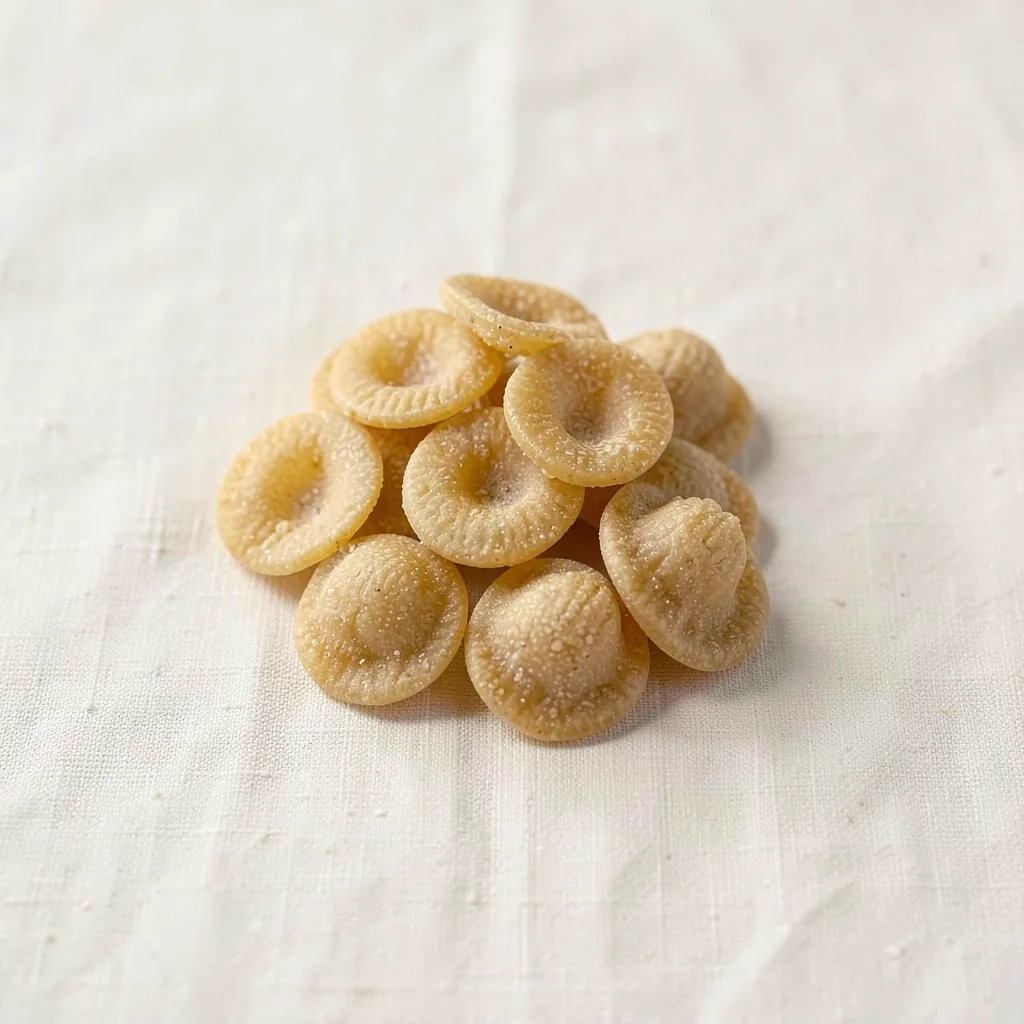
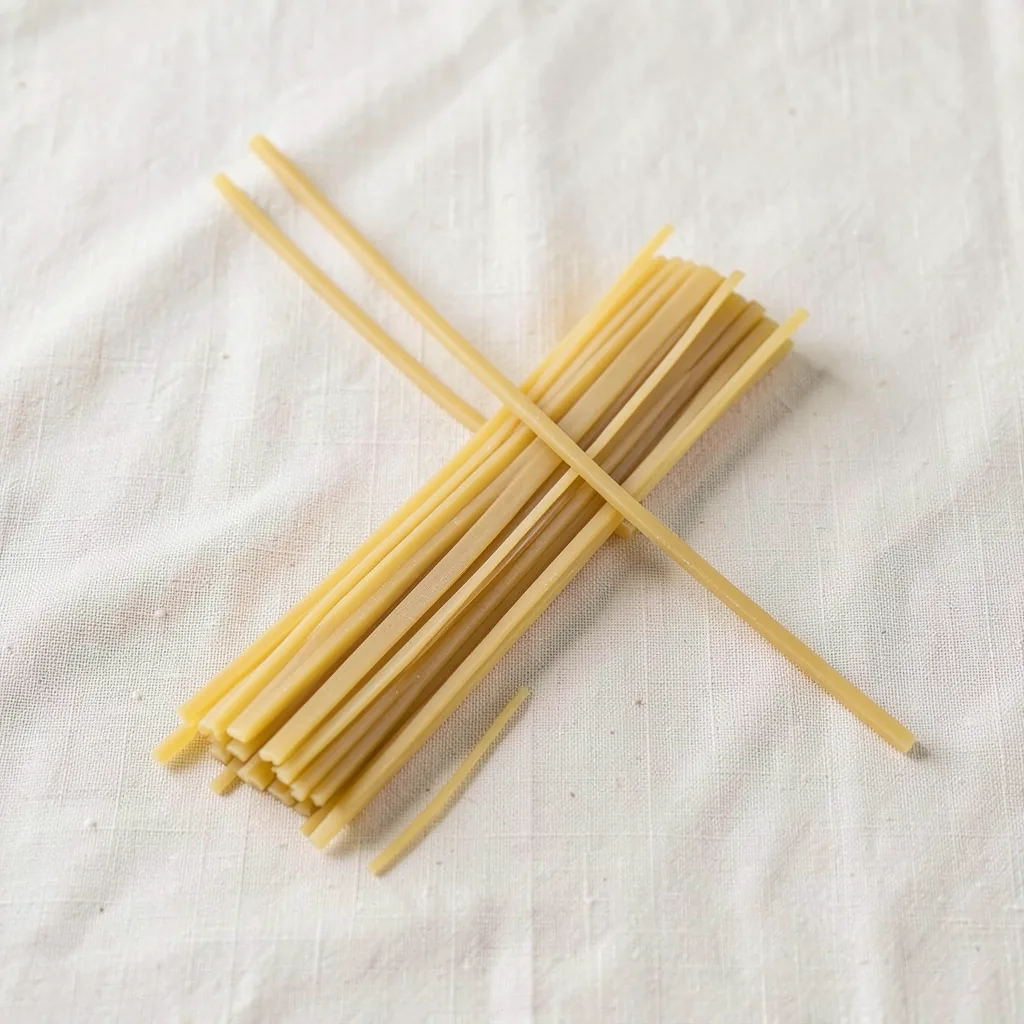
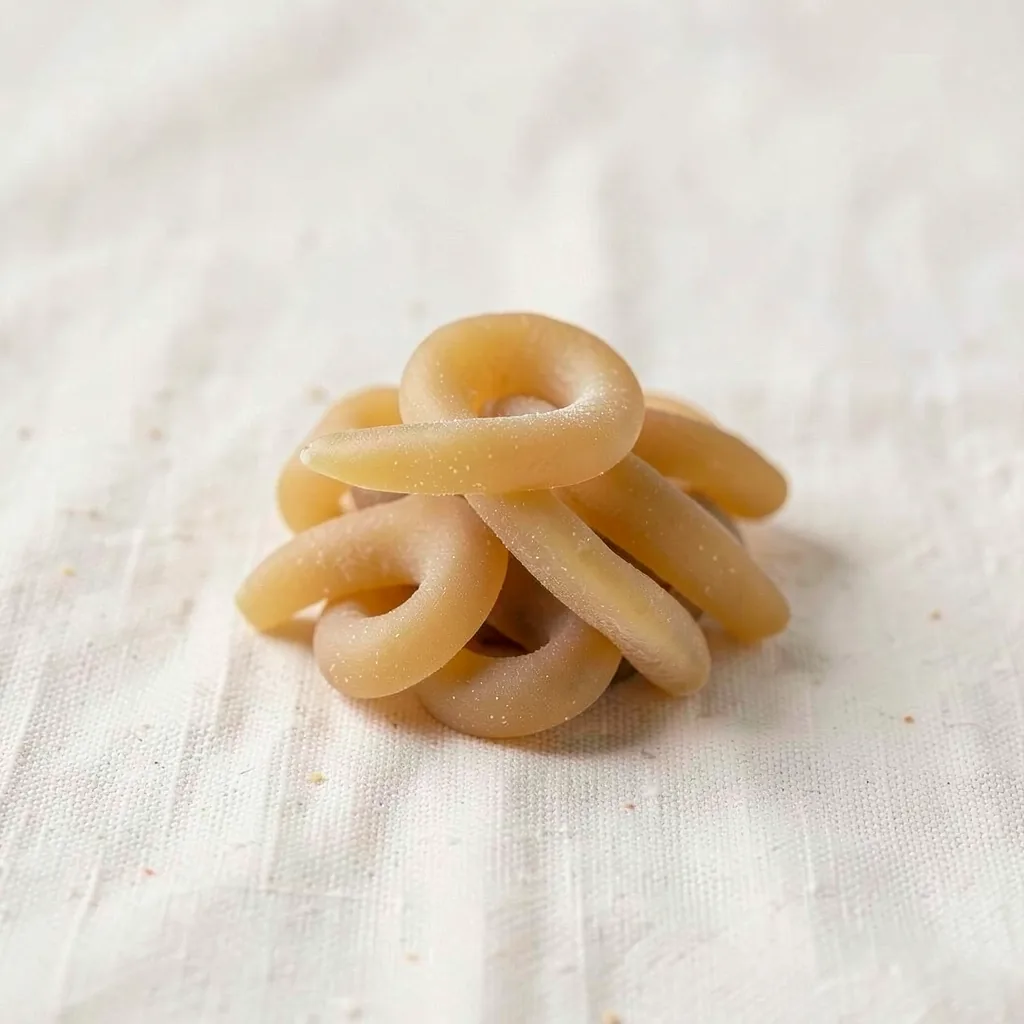
A bronze die is soft metal. The dough drags against it as it passes, and the drag tears the surface into thousands of small ridges. The pasta comes out pale, matte, and a little rough to the touch. That roughness is a grip. A thin sauce clings to it instead of running off.
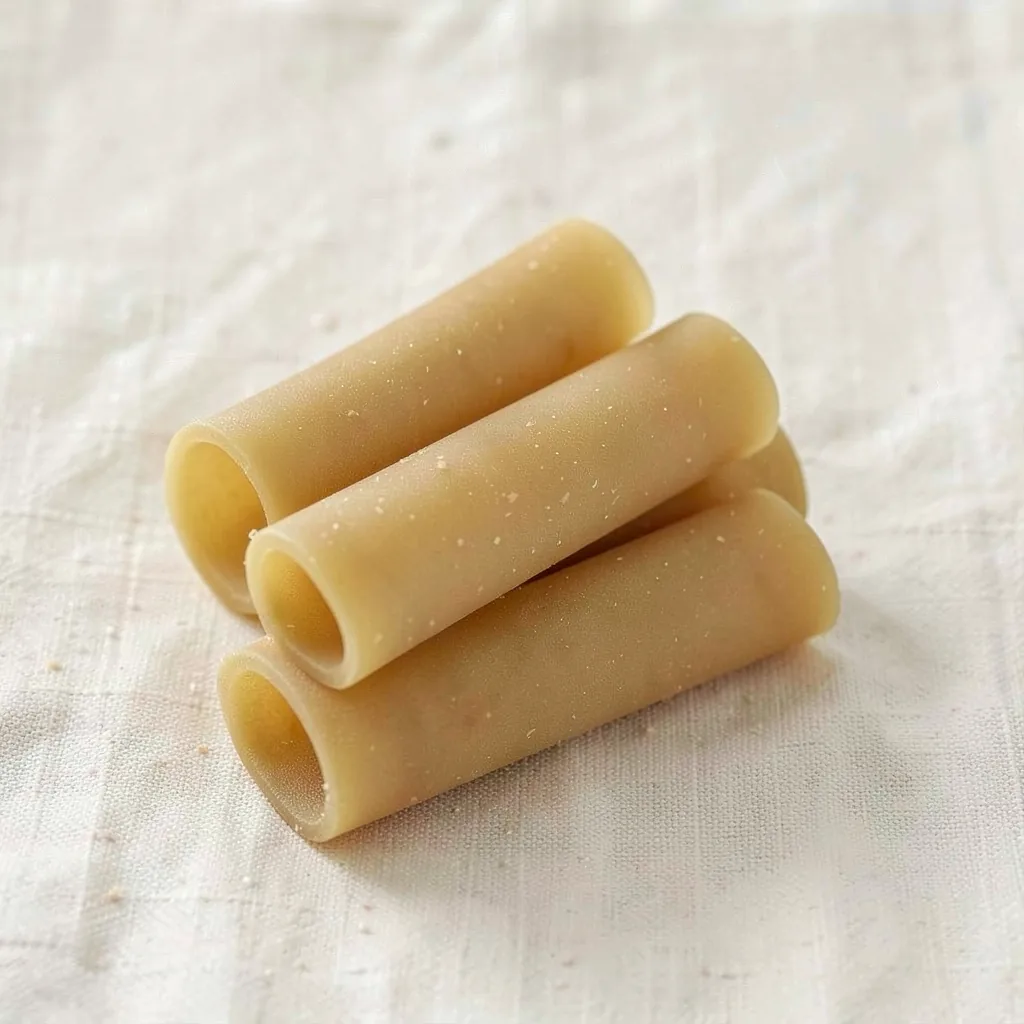
A Teflon die is coated with a slick polymer. The dough slides through without drag, so the pasta comes out smooth, glossy, and slightly yellow. It is cheaper to make, because the die lasts longer and the line runs faster. It is also harder to sauce. Oil and a thin tomato slide off a glossy strand and pool in the bowl.
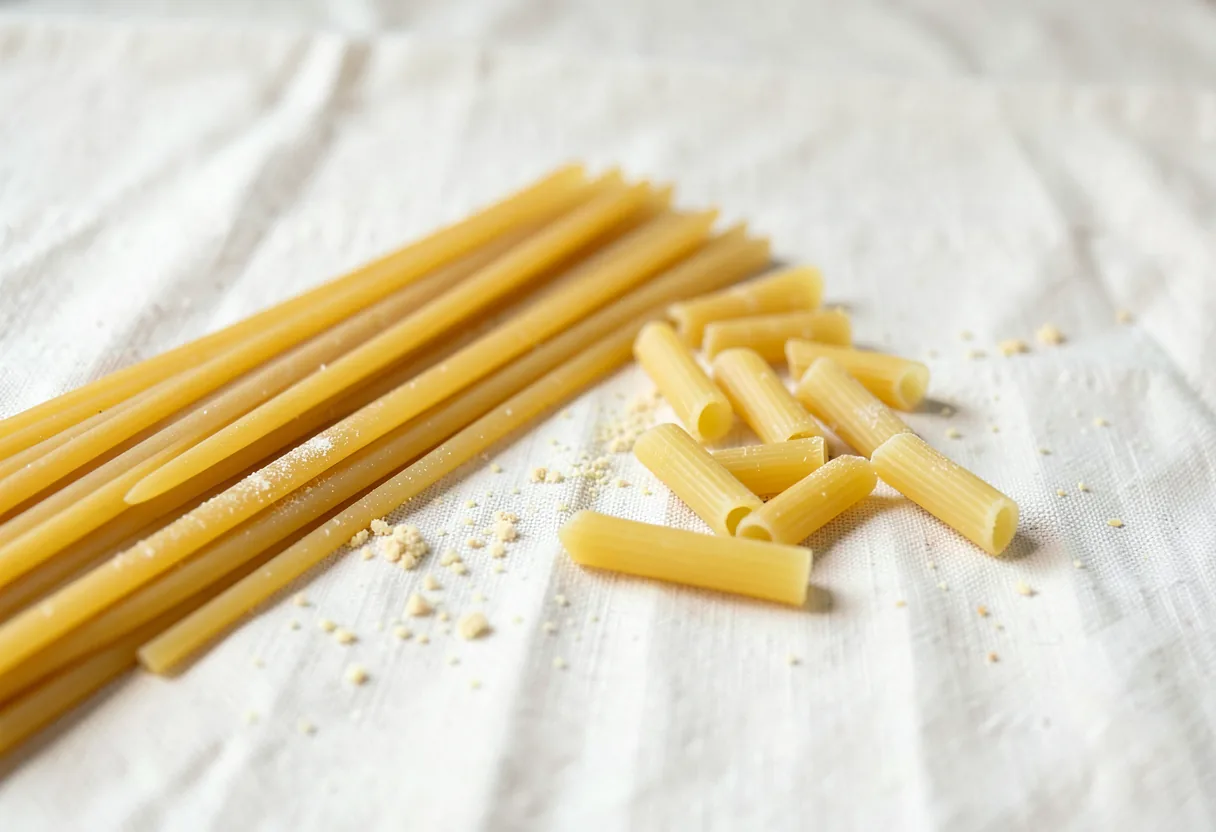
You can tell the two apart in the box. Bronze-cut pasta looks dusty and pale, almost white, and it feels like fine sandpaper. Teflon pasta looks polished. Most Italian brands print trafilata al bronzo on the front of a bronze-cut box, because it costs more and they want you to know.
The other half of the story is drying. A bronze-cut pasta dried slowly at a low temperature keeps its rough surface and its wheat flavour. A pasta dried fast at high heat sets a hard shell that resists both sauce and the boiling water. The two processes go together: the brands that cut on bronze are the brands that dry slowly.
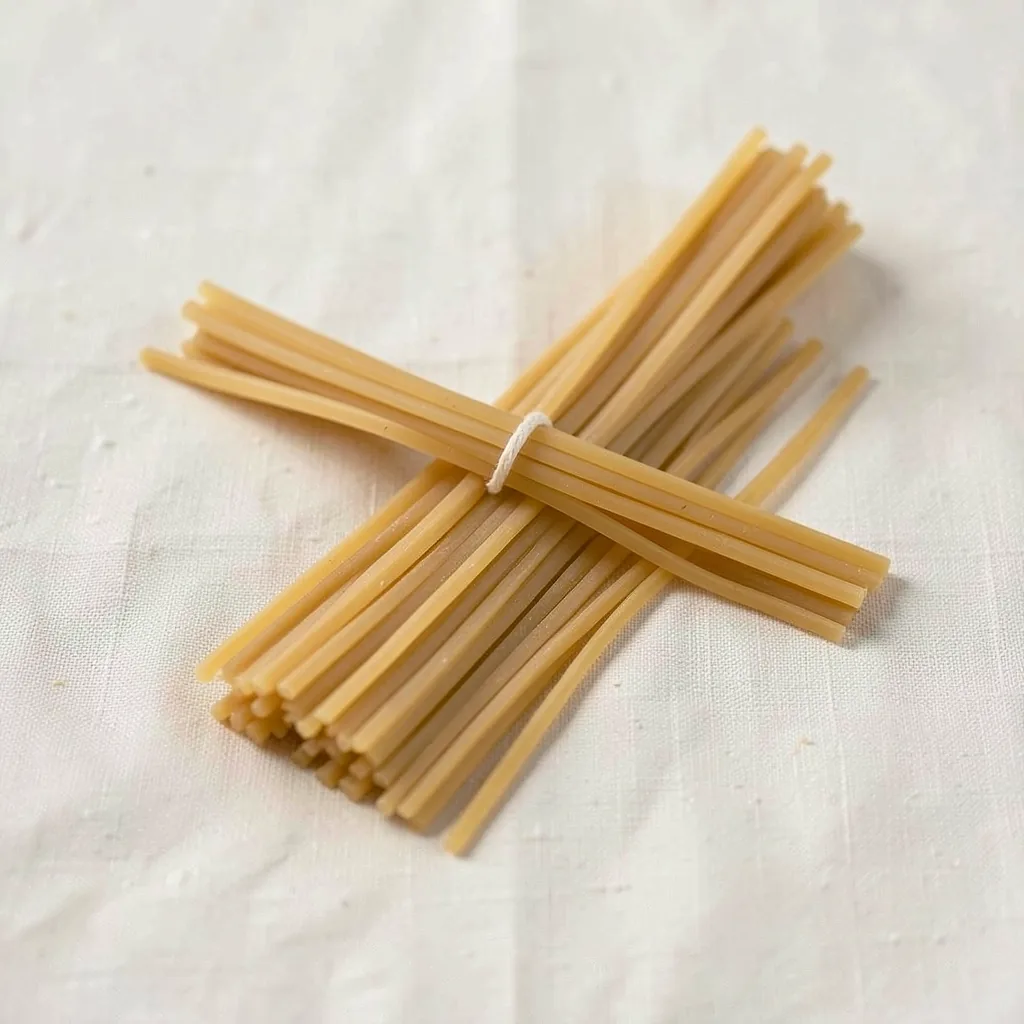
Every shape on this site marked as a bronze-die classic is one that the traditional Gragnano and Abruzzo producers still cut that way. A ridged shape, rigate, gains less from bronze than a smooth one, because the ridges already do the gripping. A smooth strand gains the most.
Sources