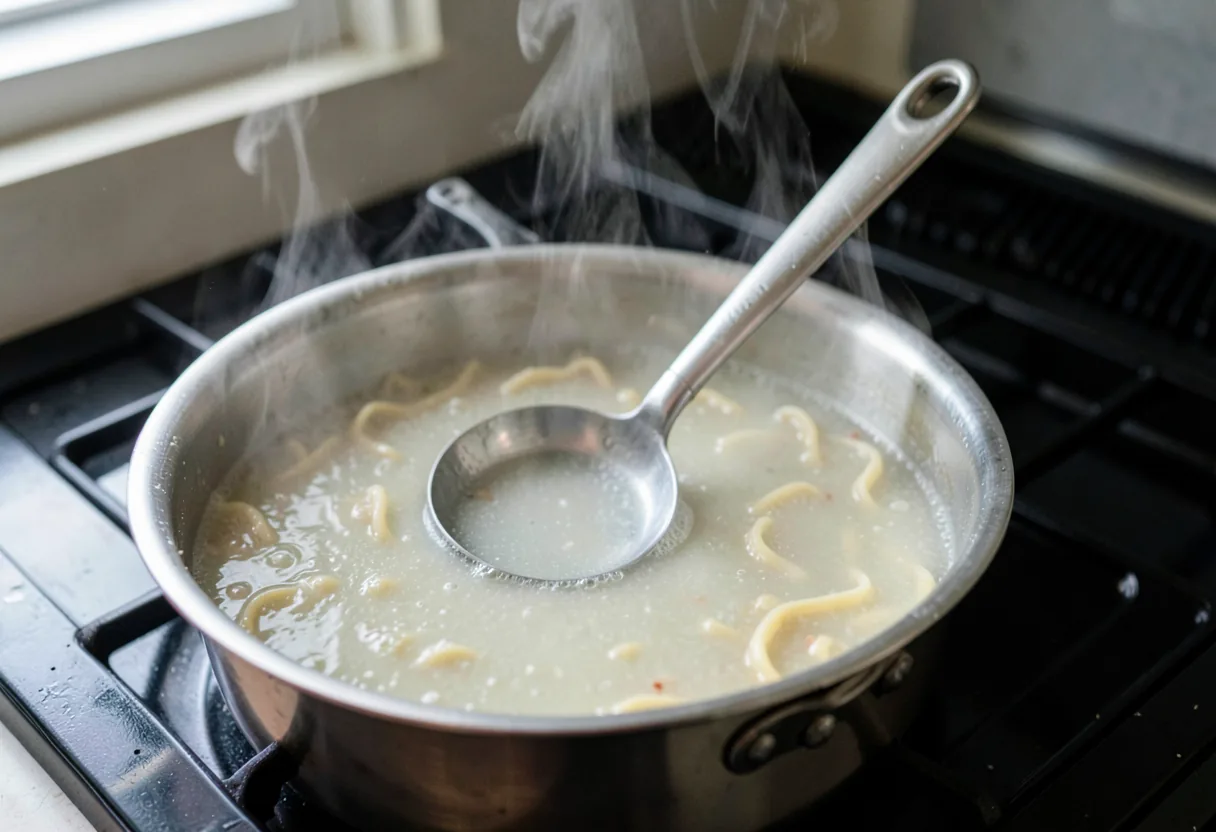
Pasta water: why the cloudy water in the pot makes the sauce
Why starchy pasta water binds a sauce, how much to save, how to use it in cacio e pepe, carbonara, and a tomato sauce, and how much salt goes in the pot.
The water pasta cooks in is not waste. As the pasta boils, starch leaves the surface and thickens the water into a thin, cloudy broth. A ladle of that water, added to the pan, binds oil and fat into a sauce that coats the pasta instead of pooling under it.
The chemistry is simple. Starch molecules hold oil and water together, the way flour thickens a gravy. Cacio e pepe is nothing but pecorino, black pepper, and pasta water; the starch is what turns grated cheese into a cream instead of a clump. Carbonara uses it to loosen the egg. Aglio e olio uses it to make oil cling to a strand.
Save a cup before you drain. The easiest method is to lift the pasta out of the pot with tongs or a spider straight into the pan, so the pot still holds all the water. Add the water a little at a time and toss. The sauce goes glossy when it is right.
The water should be salted like the sea, which in practice is 10 grams of salt per litre. That is a heaped tablespoon per litre, about two tablespoons for a pot that cooks 500 grams. Pasta takes salt only while it cooks. Salt added at the table sits on the surface and tastes sharp.
Use at least one litre of water per 100 grams of pasta, so the pieces have room to move and the water returns to the boil fast. Less water gives a starchier broth, which is good for the sauce, but the pasta sticks. A tall pot with four to five litres is right for a 500 gram box.
One more use: a tomato sauce that has gone thick and tight in the pan loosens with a splash of pasta water, and the starch keeps it from separating. A sauce thinned with plain water splits.
Sources