Pasta di Gragnano PGI: the town that made dried pasta an industry
What the Gragnano PGI protects, why the town near Naples became the capital of dried pasta, and what the mark means on a box.
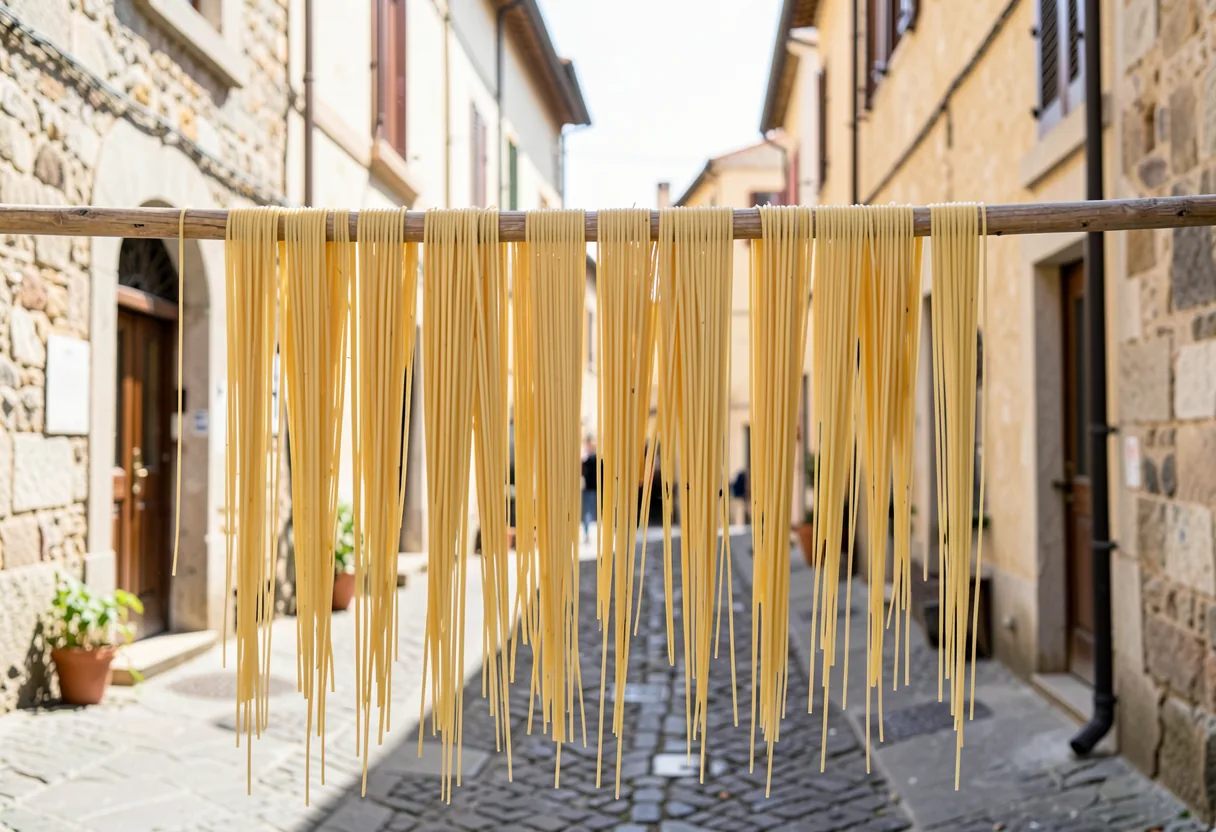
Gragnano is a small town on the hills above the Bay of Naples. From the sixteenth century it milled durum wheat from the plains around Naples, and by the nineteenth century its main street was lined with pasta hung on canes to dry in the sea air. The town had the wheat, the spring water, and a wind that dried the pasta slowly. That combination made dried pasta a product that could be shipped and sold.
The old process was this. Semolina and water were kneaded, pressed through a bronze die, and hung or laid in the open to dry over several days. The slow drying kept the flavour of the wheat and the rough surface from the bronze. Modern producers in the town do the same thing indoors, with warm air over one to two days instead of a factory blast that takes a few hours.
Pasta di Gragnano has held a Protected Geographical Indication in the European Union since 2013. The PGI sets the rules: durum wheat semolina and local water, a bronze die, slow drying at a low temperature, and production inside the town. A box that carries the mark was made that way. A box that says Gragnano without the PGI mark may not have been.
Several shapes were born in the town or made famous there. Paccheri, the wide smooth tube, is the Gragnano shape. So are the long ridged candele, the mezzi paccheri, and the mixed bag of broken shapes called pasta mista, which Naples cooks in pasta e patate.
The producers are small. Names such as Gentile, Faella, Afeltra, Pastificio dei Campi, and Garofalo, which is the largest, all sit inside the town. Their pasta costs two to four times a supermarket box. It cooks with a bite and it holds a sauce the way a bronze-cut, slow-dried pasta does.
Every shape on this site marked PGI protected is one where a Gragnano producer is the reference product. The shapes of Gragnano want the sauces of Naples: tomato, seafood, and the Neapolitan ragu.
Sources