Al dente: what it means, how to test it, and why the box time is a range
What al dente means, how to test pasta for it, why every brand prints a range, and why the pasta should come out a minute early when it finishes in the sauce.
Al dente means to the tooth. Pasta cooked al dente is soft enough to eat and firm enough to resist the bite. There is a thin white core at the centre of a strand, and the pasta holds its shape on the fork instead of folding.
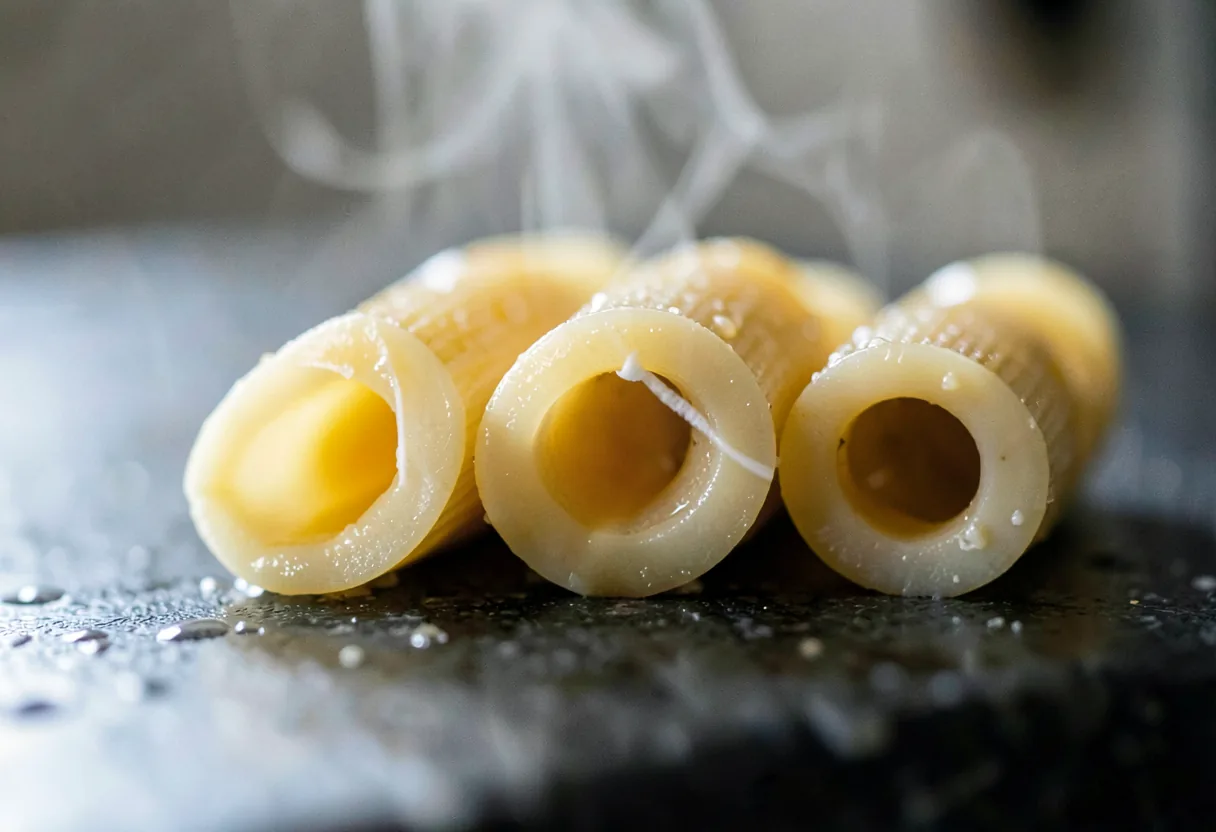
The test is to bite a piece. Take one out a minute before the box time and cut it or bite it in half. A raw core is chalky and white and wider than a pencil line. Al dente has a hairline of white at the centre. Overcooked has none, and the pasta bends without springing back.
The box time is a range because the cook has two choices. The shorter number is al dente. The longer number is fully cooked. The times on this site come from a brand product page, and where the brand prints both, both are shown. De Cecco, for example, prints 12 minutes for spaghetti and 10 for al dente.
Pasta keeps cooking after it leaves the water. If the pasta is going to be tossed in a hot pan with the sauce, take it out one to two minutes before al dente. It finishes in the sauce, and it drinks the sauce as it does. This is how a restaurant gets a sauce to cling. A pasta that is drained fully cooked and then heated again in a pan comes out soft.
Fresh egg pasta is never al dente in the same way. It has no dry core to keep. It is done when it is tender, two to four minutes, and a minute after a stuffed shape floats. Cook it until it tastes right, not until it resists.
The clock starts when the water returns to a full boil after the pasta goes in, not when the pasta goes in. Stir in the first minute so the pieces do not stick to one another. Do not add oil to the water; it coats the pasta and stops the sauce from clinging.
Sources