Festoni
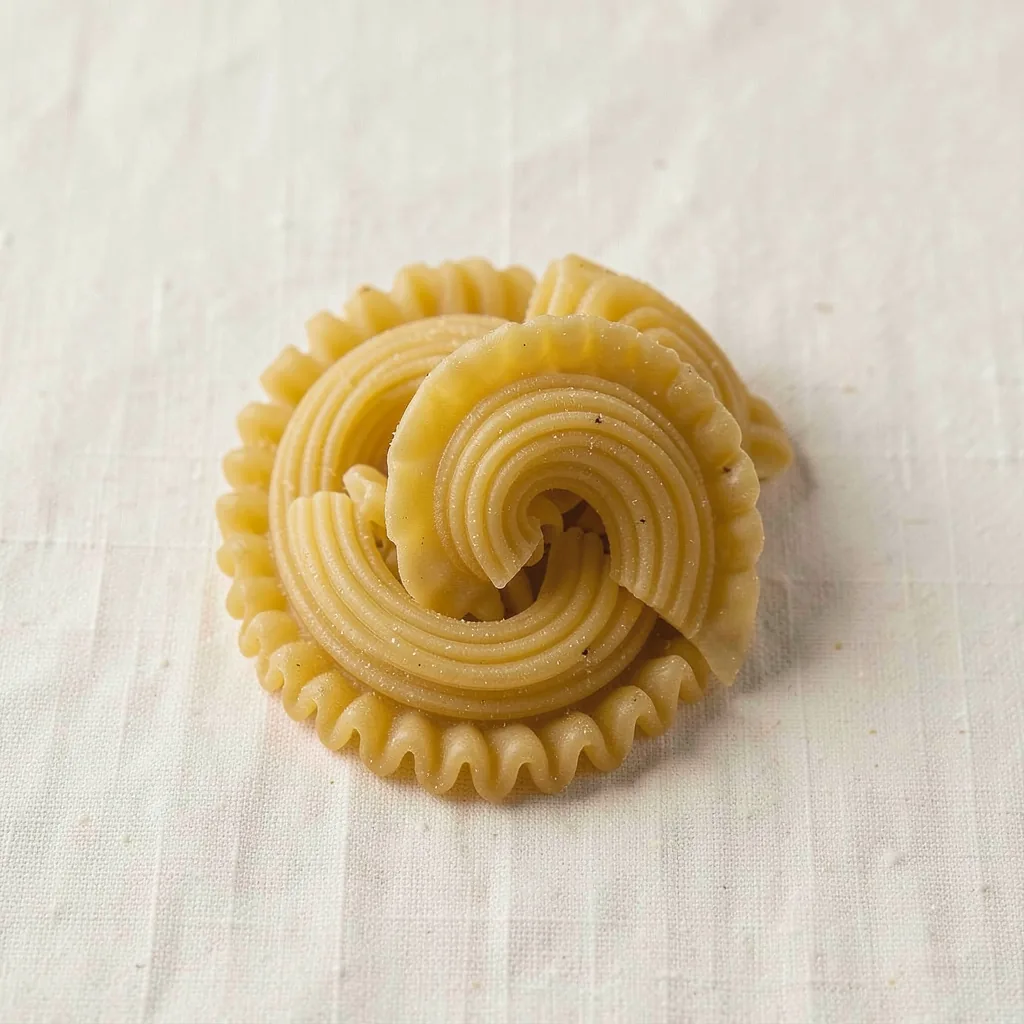
Thick ruffled helices.
Name. Festone means a festoon, a garland hung in loops for a celebration. The scalloped edges recall one.
What it is
Festoni are thick, ruffled helices of dried semolina pasta. The commercial version from De Cecco is sold as festonati. It is a tube with scalloped edges and a ridged surface. The twist and the frills give the piece a lot of surface. De Cecco lists a cook time of 9 minutes, or 7 minutes for al dente. The shape is extruded and cut by machine.
No source names a region of origin. De Cecco suggests dense, colourful sauces with meat or fish, green vegetables, or strong cheeses. The shape also works in pasta salads. A retailer adds meat ragù, creamy cheese sauces, and baked dishes.
How to cook festoni
9 minutes in boiling salted water. Take the shorter time for al dente, the longer time for fully cooked.
9:00
Start when the water returns to the boil.
Water and salt
- Pasta, dry
- 400 g
- Water
- 4 L
- Salt
- 40 g
100 g per person as a main. A litre and 10 g of salt per 100 g. Adjust with the portion calculator.
The steps
- Bring 4 L of water to a full boil in a tall pot. Add 40 g of salt when it boils.
- Add the festoni. Stir for the first minute so nothing sticks. Start the timer when the water returns to the boil.
- Bite a piece at 8 minutes. A hairline of white at the centre is al dente.
- Scoop out a cup of the cooking water. Drain, or lift the pasta straight into the pan.
- Toss with the sauce over the heat for a minute. Add cooking water a splash at a time until it clings.
Read more: what al dente means and why the pasta water matters. Times for every shape are on the cook page.
What it is served with
Pairs with: Meat ragu · Four cheese · Baked (al forno) · Pasta salad · Vegetable ragu
By brand: numbers, cook times, spec sheets
1 brand, 1 product page.
| Brand | Product | Cook |
|---|---|---|
| De Cecco | Festonati n° 22 | 9 min |
Nutrition
Per 100 g of dry semolina pasta. The shape does not change these numbers. The dough does, so a whole wheat or egg version of this shape reads differently. See every dough.
| Per 100 g | Energy | Protein | Carbohydrate | Fibre | Fat | Sodium | Iron |
|---|---|---|---|---|---|---|---|
| Dry | 371 kcal | 13.0 g | 74.7 g | 3.2 g | 1.5 g | 6 mg | 3.3 mg |
| Cooked | 158 kcal | 5.8 g | 30.9 g | 1.8 g | 0.9 g | 1 mg | 1.3 mg |
One portion. 100 g dry becomes about 235 g cooked, 371 kcal and 13 g of protein. Pasta takes on 2.3 times its weight in the pot.
No festoni? Use these
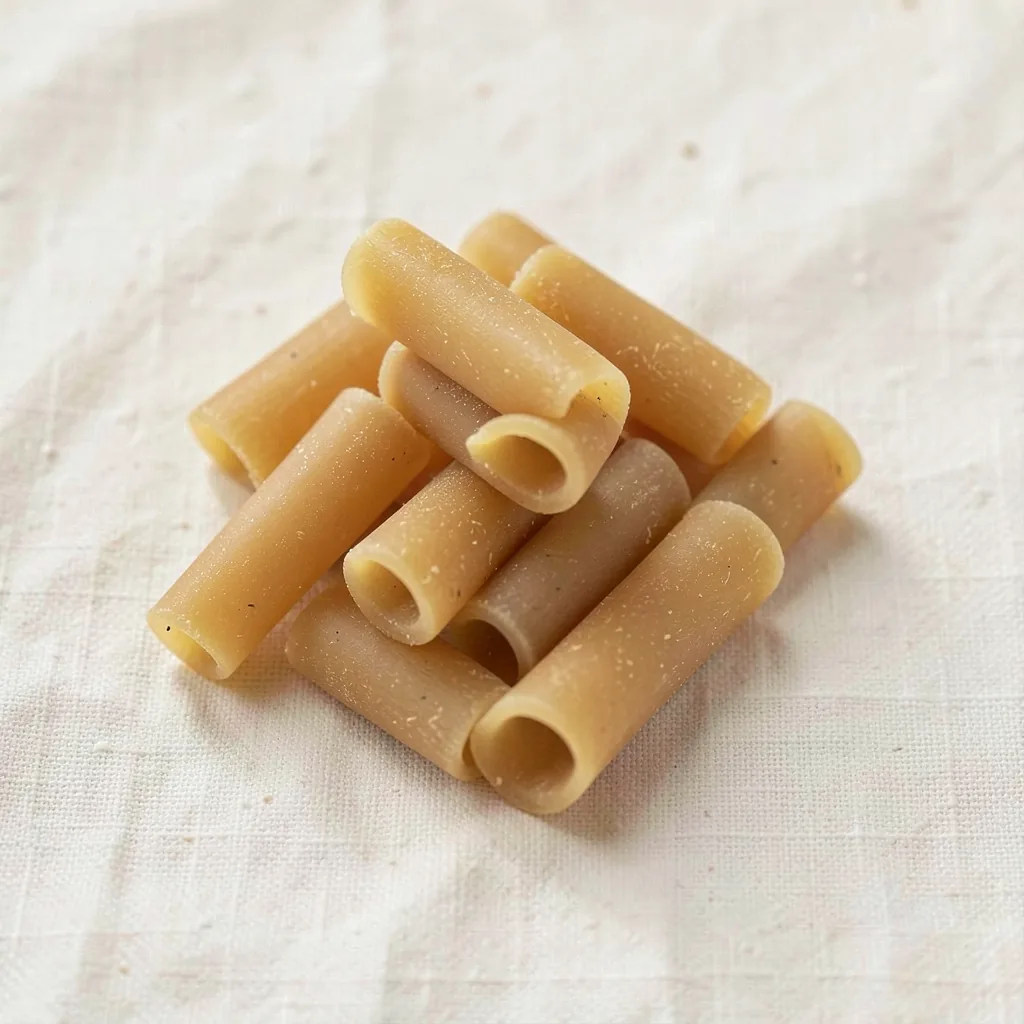
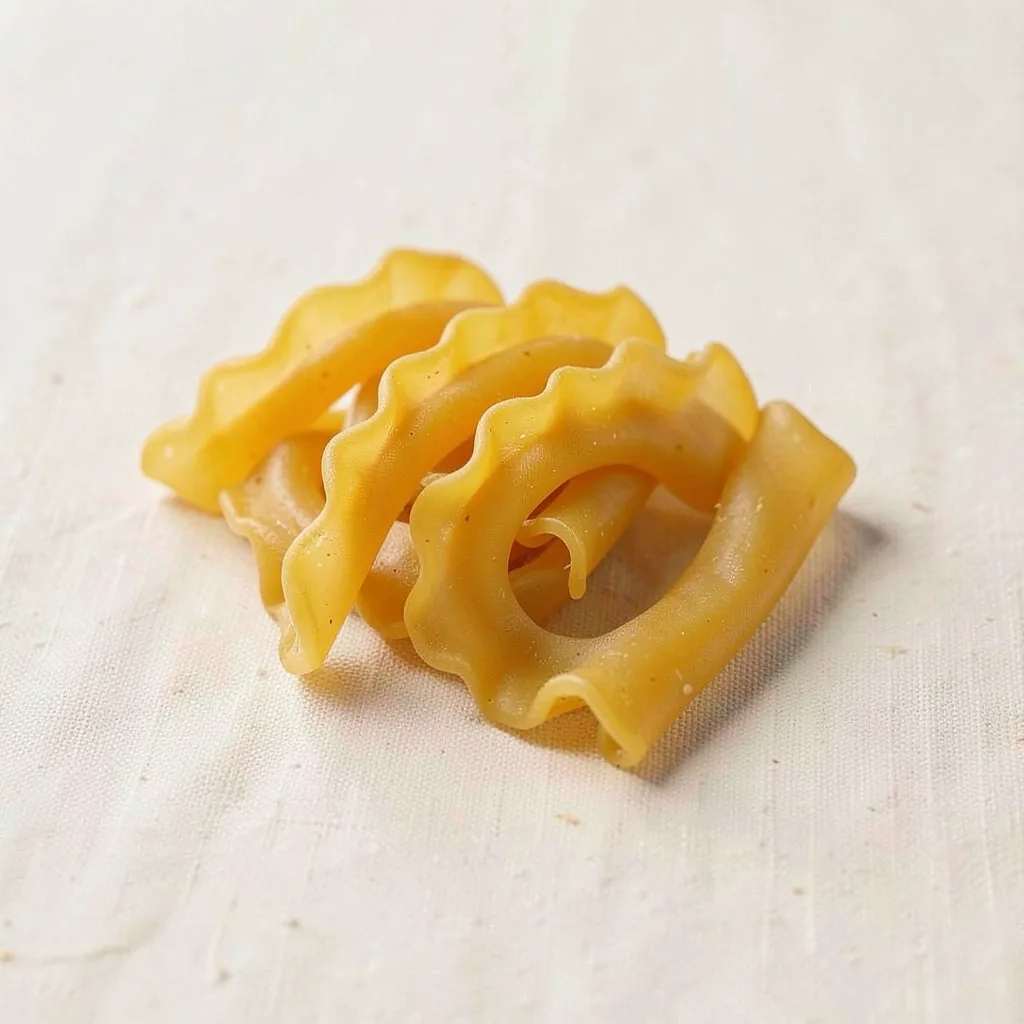
Ranked by how they behave with sauce, not how they look.
Other names
festonati.
Sources
- Festonati n° 22, De Cecco (cook time, from the brand's own product page)
- Wikipedia, List of pasta (profile: origin, form, use)
- De Cecco shop, Festonati n° 22 (profile: origin, form, use)
- De Cecco Deutschland, Festonati n° 22 (profile: origin, form, use)
- Shop4Pasta, De Cecco n. 22 Festonati (profile: origin, form, use)
- Cook time: De Cecco Festonati n° 22: 9 min.
- Photograph: Festoni.jpg, Popo le Chien, CC0.
- USDA FoodData Central (nutrition per 100 g, by dough: FDC 169736, Pasta, dry, enriched; FDC 169737, Pasta, cooked, enriched, without added salt), public domain. The cooked yield is derived from the two energy figures.
- Festoni, Wikipedia (names, origin), CC BY-SA 4.0
- Dimensions: brand spec sheets and measured boxes. Blank fields are unmeasured, never guessed.