Fedelini
fed-eh-LEE-nee
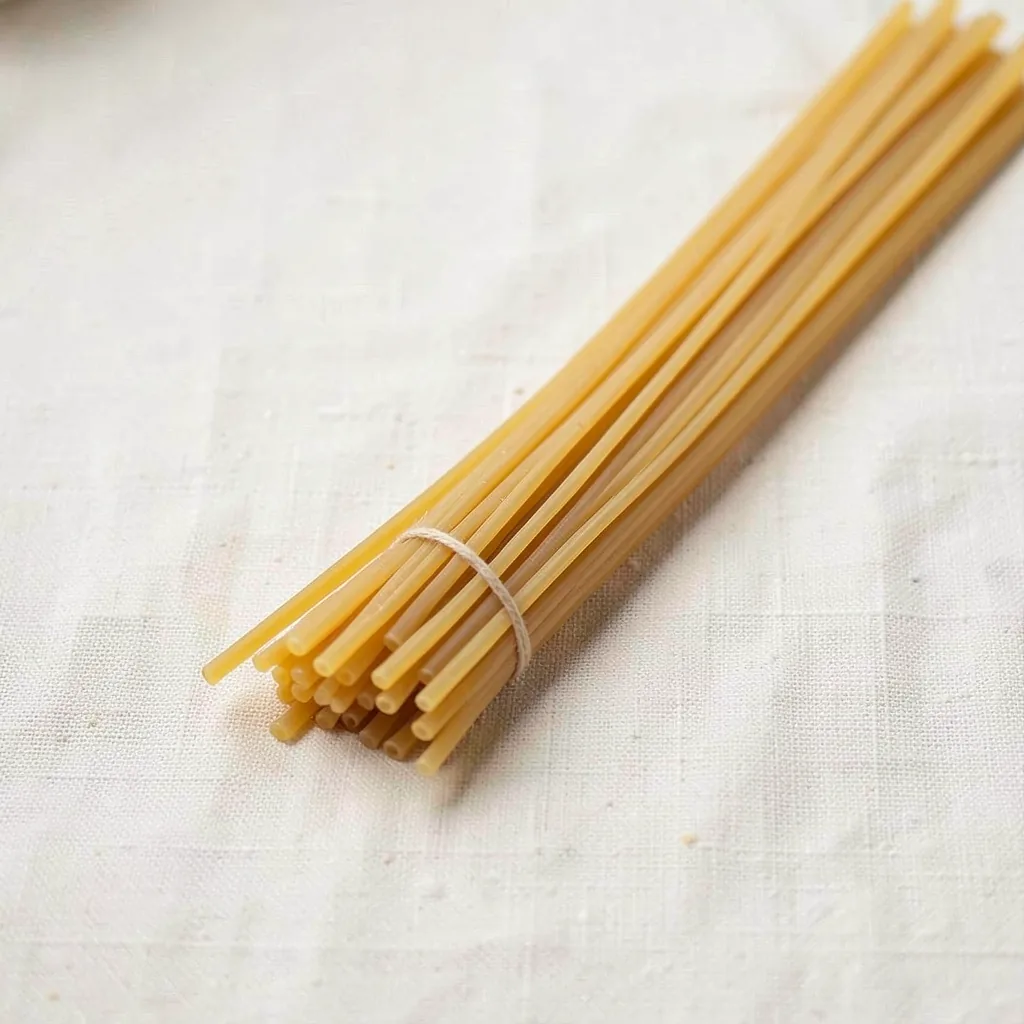
Fine round strand, between capellini and spaghettini.
1.3 mm across
Name. From fedele, faithful. The medieval word fidelli named a thin strand in Genoa and Sicily.
What it is
Fedelini is a fine strand, thicker than capellini and thinner than spaghettini, about 1.3 millimetres. The name is old, Genoese and Sicilian, and survives on De Cecco's box as no. 10.
It is the strand for broth and for the lightest of sauces, and in Liguria it was traditionally broken into soup.
How to cook fedelini
5 to 7 minutes in boiling salted water. Al dente at 4 minutes, fully cooked at 7.
4:00
Start when the water returns to the boil.
Water and salt
- Pasta, dry
- 400 g
- Water
- 4 L
- Salt
- 40 g
100 g per person as a main. A litre and 10 g of salt per 100 g. Adjust with the portion calculator.
The steps
- Bring 4 L of water to a full boil in a tall pot. Add 40 g of salt when it boils.
- Add the fedelini. Stir for the first minute so nothing sticks. Start the timer when the water returns to the boil.
- Bite a piece at 3 minutes. A hairline of white at the centre is al dente.
- Scoop out a cup of the cooking water. Drain, or lift the pasta straight into the pan.
- Toss with the sauce over the heat for a minute. Add cooking water a splash at a time until it clings.
Read more: what al dente means and why the pasta water matters. Times for every shape are on the cook page.
How it holds sauce
Light and fast, like spaghettini. Butter, oil, a clear broth, a fresh tomato. It goes limp under anything with weight.
Pairs with: In brodo · Lemon and butter · Aglio e olio · Pomodoro
Classic plates: Fedelini in brodo, Fedelini al pomodoro fresco.
By brand: numbers, cook times, spec sheets
1 brand, 2 product pages.
| Brand | Product | No. | Cook |
|---|---|---|---|
| De Cecco | Fedelini no. 10 | 10 | 6 min, al dente 4 |
| De Cecco | Filini n° 181 | 181 |
Nutrition
Per 100 g of dry semolina pasta. The shape does not change these numbers. The dough does, so a whole wheat or egg version of this shape reads differently. See every dough.
| Per 100 g | Energy | Protein | Carbohydrate | Fibre | Fat | Sodium | Iron |
|---|---|---|---|---|---|---|---|
| Dry | 371 kcal | 13.0 g | 74.7 g | 3.2 g | 1.5 g | 6 mg | 3.3 mg |
| Cooked | 158 kcal | 5.8 g | 30.9 g | 1.8 g | 0.9 g | 1 mg | 1.3 mg |
One portion. 100 g dry becomes about 235 g cooked, 371 kcal and 13 g of protein. Pasta takes on 2.3 times its weight in the pot.
No fedelini? Use these
Ranked by how they behave with sauce, not how they look. Full substitute list.
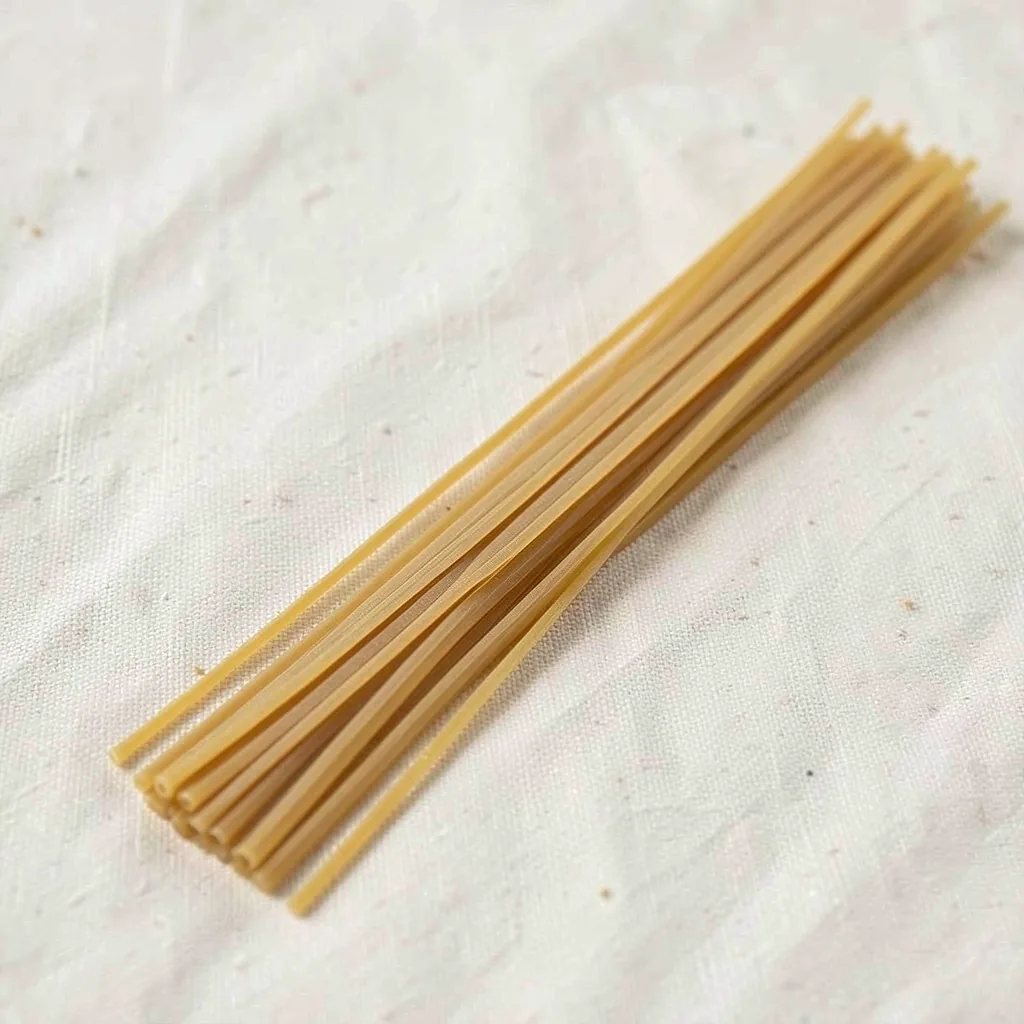
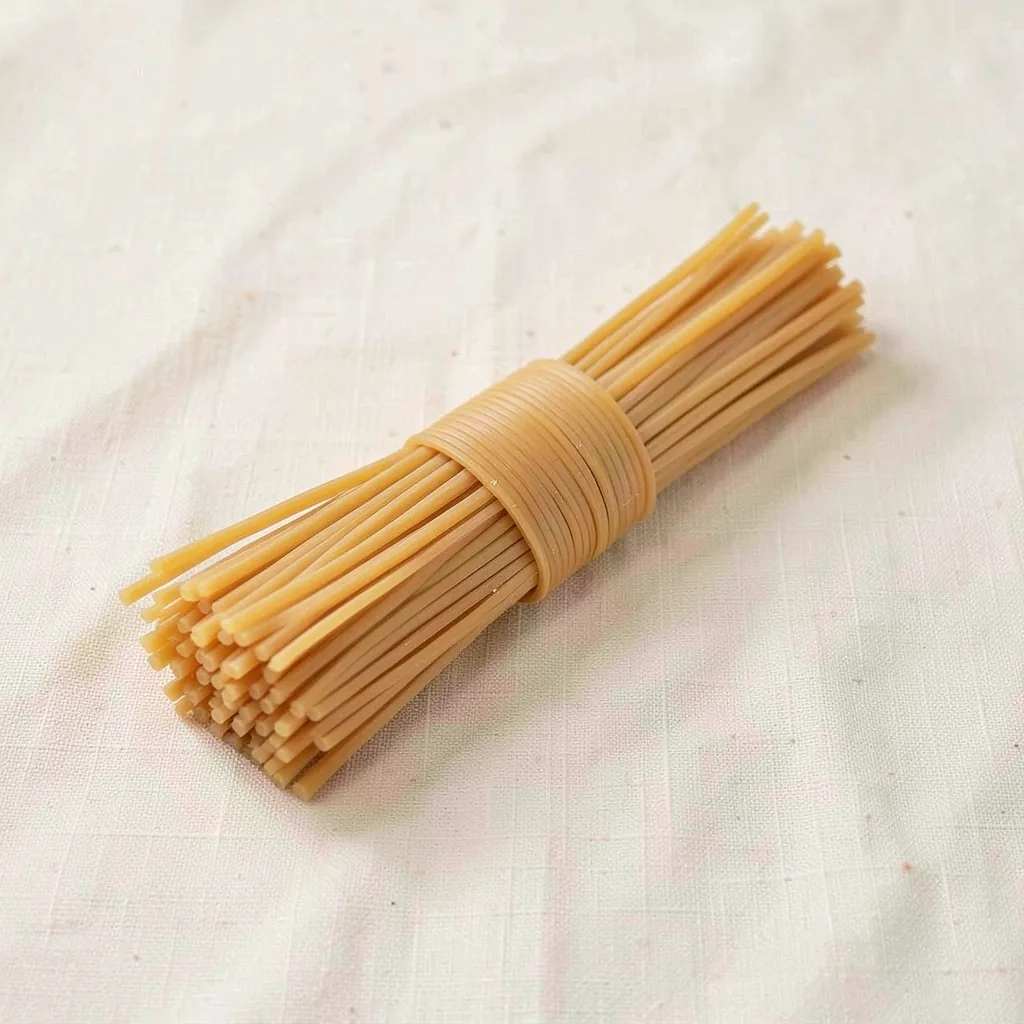
Side by side
Easy to confuse with
Other names
fidelini, fidelli.
Sources
- Fedelini no. 10, De Cecco (cook time, catalogue number, from the brand's own product page)
- Filini n° 181, De Cecco (catalogue number, from the brand's own product page)
- Cook time: De Cecco no. 10: 7 min.
- Photograph: Fedelini.jpg, Popo le Chien, CC0.
- USDA FoodData Central (nutrition per 100 g, by dough: FDC 169736, Pasta, dry, enriched; FDC 169737, Pasta, cooked, enriched, without added salt), public domain. The cooked yield is derived from the two energy figures.
- Fedelini, Wikipedia (names, origin), CC BY-SA 4.0
- Q58898059, Wikidata
- Dimensions: brand spec sheets and measured boxes. Blank fields are unmeasured, never guessed.