Castellane
Shell pasta coiled into a conical shape.
Name. Italian for castle ladies. The coiled shell recalls the long skirts of noblewomen in a medieval castle.
What it is
Castellane are a shell rolled into a long, tapered cone. The outside carries fine ridges. The inside is a wide hollow that fills with sauce. Barilla makes them from durum wheat semolina and water and lists a cook time of 9 minutes. The shape is a modern development of conchiglie: closed further, and longer than the classic shell.
Barilla introduced castellane in 1987. Barilla's product page credits pasta maker Carlo Moro of Parma. RecipeTips says an earlier name was paguri, after a small crab. Barilla suggests sauces made from vegetables and cheese. The shape also holds a chunky tomato or sausage ragù and works in a pasta salad.
How to cook castellane
9 minutes in boiling salted water. Take the shorter time for al dente, the longer time for fully cooked.
9:00
Start when the water returns to the boil.
Water and salt
- Pasta, dry
- 400 g
- Water
- 4 L
- Salt
- 40 g
100 g per person as a main. A litre and 10 g of salt per 100 g. Adjust with the portion calculator.
The steps
- Bring 4 L of water to a full boil in a tall pot. Add 40 g of salt when it boils.
- Add the castellane. Stir for the first minute so nothing sticks. Start the timer when the water returns to the boil.
- Bite a piece at 8 minutes. A hairline of white at the centre is al dente.
- Scoop out a cup of the cooking water. Drain, or lift the pasta straight into the pan.
- Toss with the sauce over the heat for a minute. Add cooking water a splash at a time until it clings.
Read more: what al dente means and why the pasta water matters. Times for every shape are on the cook page.
What it is served with
Pairs with: Vegetable ragu · Four cheese · Pomodoro · Sausage ragu · Pasta salad
By brand: numbers, cook times, spec sheets
1 brand, 1 product page.
| Brand | Product | Cook |
|---|---|---|
| Barilla | Collezione Castellane 500g (retailer listing of the Barilla product) | 9 min |
Nutrition
Per 100 g of dry semolina pasta. The shape does not change these numbers. The dough does, so a whole wheat or egg version of this shape reads differently. See every dough.
| Per 100 g | Energy | Protein | Carbohydrate | Fibre | Fat | Sodium | Iron |
|---|---|---|---|---|---|---|---|
| Dry | 371 kcal | 13.0 g | 74.7 g | 3.2 g | 1.5 g | 6 mg | 3.3 mg |
| Cooked | 158 kcal | 5.8 g | 30.9 g | 1.8 g | 0.9 g | 1 mg | 1.3 mg |
One portion. 100 g dry becomes about 235 g cooked, 371 kcal and 13 g of protein. Pasta takes on 2.3 times its weight in the pot.
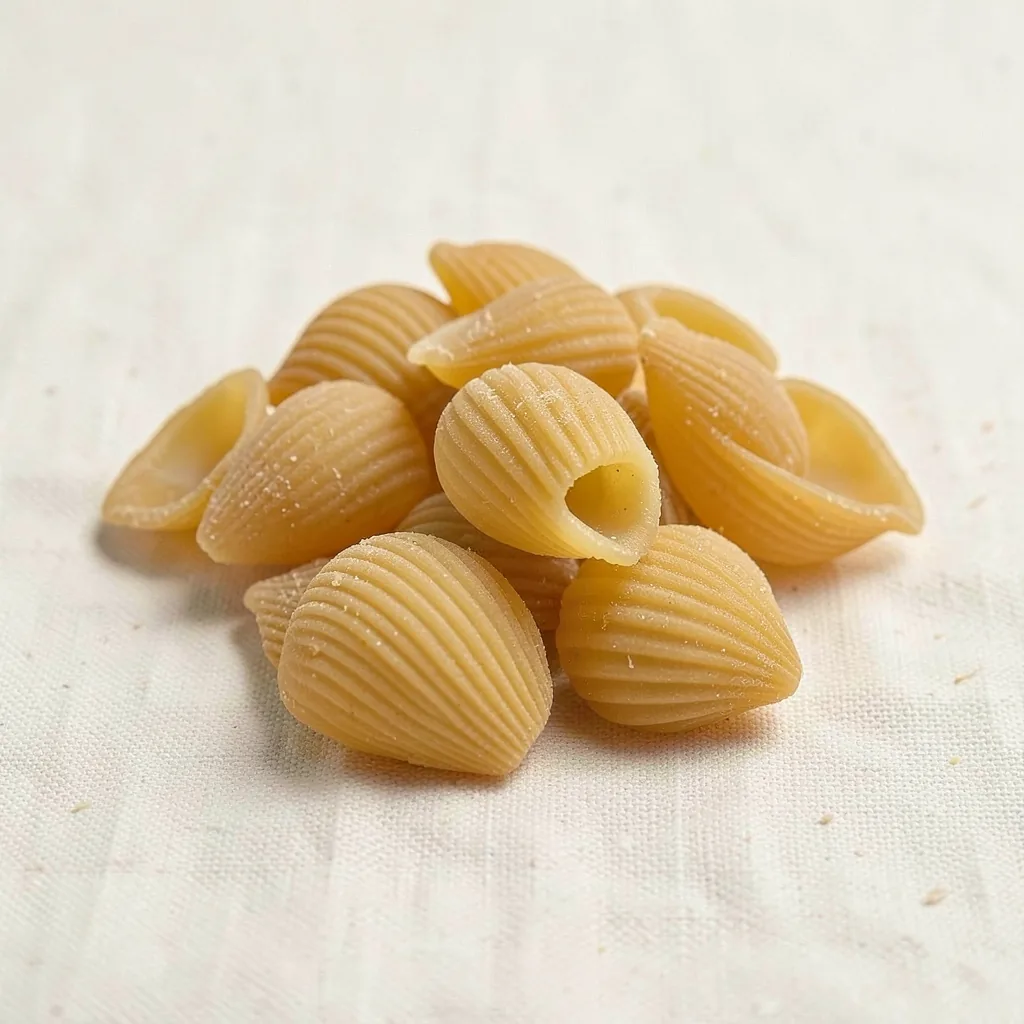
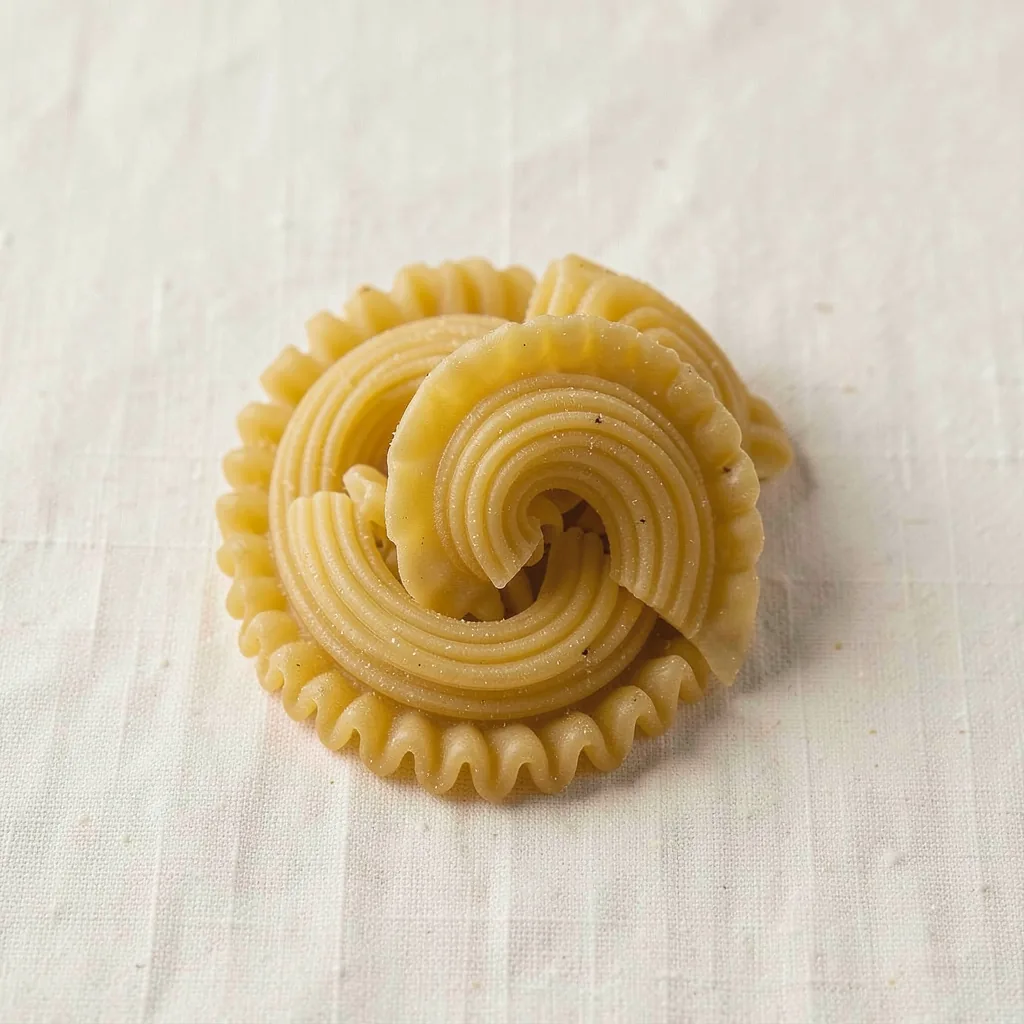
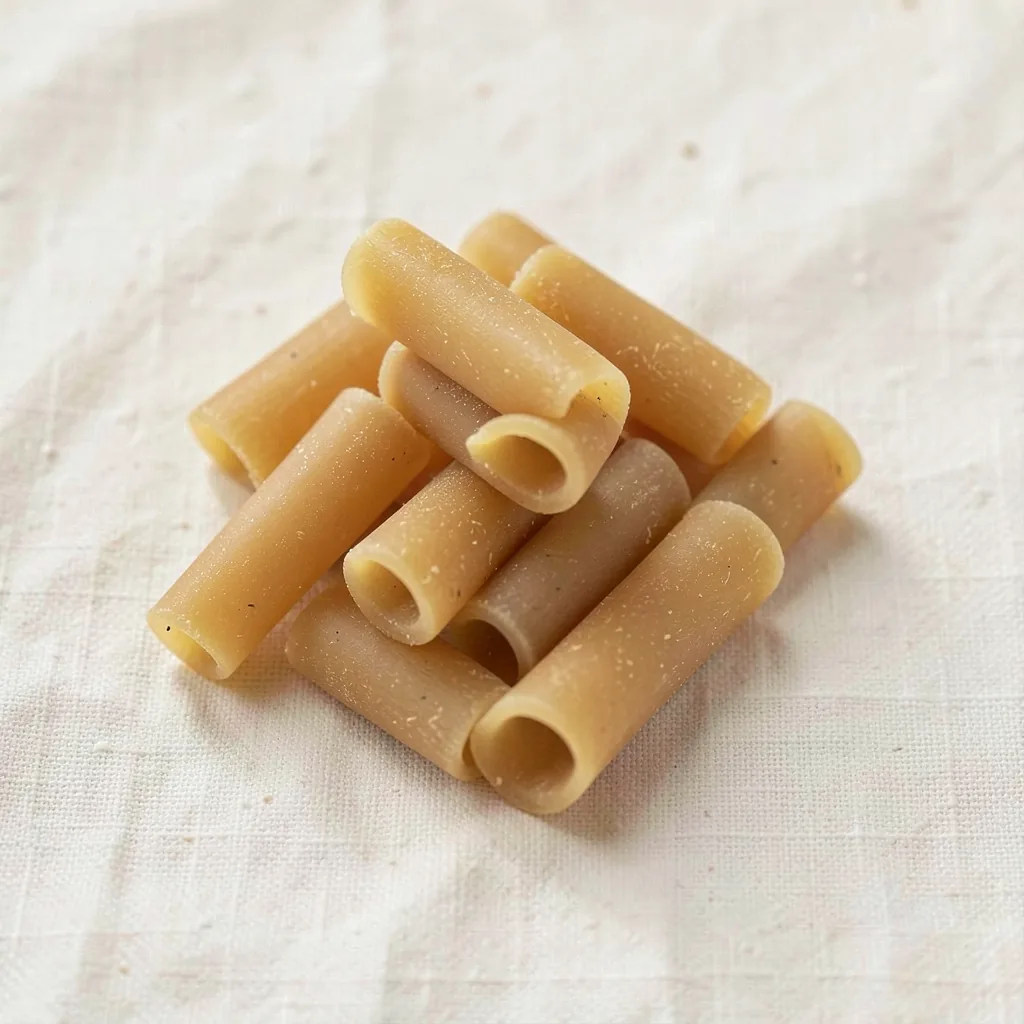
No castellane? Use these
Ranked by how they behave with sauce, not how they look.
Other names
paguri.
Sources
- Collezione Castellane 500g (retailer listing of the Barilla product), Barilla (cook time, from the brand's own product page)
- BILLA: Barilla Collezione Castellane (profile: origin, form, use)
- Cicalia: Barilla Specialità Castellane (profile: origin, form, use)
- RecipeTips: Castellane pasta (profile: origin, form, use)
- Wikipedia (en): List of pasta (profile: origin, form, use)
- Cook time: Barilla Collezione Castellane 500g (retailer listing of the Barilla product): 9 min.
- Photograph: Castellane2.jpg, Popo le Chien, CC BY-SA 4.0.
- USDA FoodData Central (nutrition per 100 g, by dough: FDC 169736, Pasta, dry, enriched; FDC 169737, Pasta, cooked, enriched, without added salt), public domain. The cooked yield is derived from the two energy figures.
- Castellane (pasta), Wikipedia (names, origin), CC BY-SA 4.0
- Dimensions: brand spec sheets and measured boxes. Blank fields are unmeasured, never guessed.