Caramelle
kah-rah-MEL-leh
Rectangle rolled around a filling and twisted at both ends like a sweet wrapper.
25 mm across
Name. Sweets, for the twisted-wrapper shape.
What it is
Caramelle are filled pasta rolled into a cylinder and twisted at both ends so they look like wrapped sweets. They come from Emilia and Piacenza, where tortelli con la coda are a related braided shape, and have become a restaurant favourite for their look.
Fillings run from ricotta to pumpkin to beetroot.
How to cook caramelle
3 to 5 minutes in boiling salted water. Take the shorter time for al dente, the longer time for fully cooked.
3:00
Start when the water returns to the boil.
Water and salt
- Pasta, dry
- 400 g
- Water
- 4 L
- Salt
- 40 g
100 g per person as a main. A litre and 10 g of salt per 100 g. Adjust with the portion calculator.
The steps
- Bring 4 L of water to a full boil in a tall pot. Add 40 g of salt when it boils.
- Add the caramelle. Stir for the first minute so nothing sticks. Start the timer when the water returns to the boil.
- Keep the water at a gentle boil, not a rolling one, so the parcels do not split. They are done about a minute after they float.
- Scoop out a cup of the cooking water. Drain, or lift the pasta straight into the pan.
- Toss with the sauce over the heat for a minute. Add cooking water a splash at a time until it clings.
Read more: what al dente means and why the pasta water matters. Times for every shape are on the cook page.
How it holds sauce
Butter and sage, or a light cream, or a few roast juices. The twisted ends catch a little sauce.
Pairs with: Butter and sage · Cream sauce · Porcini
Classic plates: Caramelle di ricotta al burro e salvia, Caramelle di zucca.
Nutrition
Per 100 g of fresh pasta. The shape does not change these numbers. The dough does, so a whole wheat or egg version of this shape reads differently. See every dough.
| Per 100 g | Energy | Protein | Carbohydrate | Fibre | Fat | Sodium | Iron |
|---|---|---|---|---|---|---|---|
| Dry | 288 kcal | 11.3 g | 54.7 g | g | 2.3 g | 26 mg | 3.4 mg |
| Cooked | 131 kcal | 5.2 g | 24.9 g | g | 1.1 g | 6 mg | 1.1 mg |
One portion. 100 g dry becomes about 220 g cooked, 288 kcal and 11 g of protein. Pasta takes on 2.2 times its weight in the pot.
Who makes caramelle
6 caramelle products are catalogued, most of them sold in Italy.
Brands: Bindi (1), Dolciando (1), Dolciando Eurospin (1), Eurospin (1), Lidl (1), Sperlari (1).
No caramelle? Use these
Ranked by how they behave with sauce, not how they look. Full substitute list.
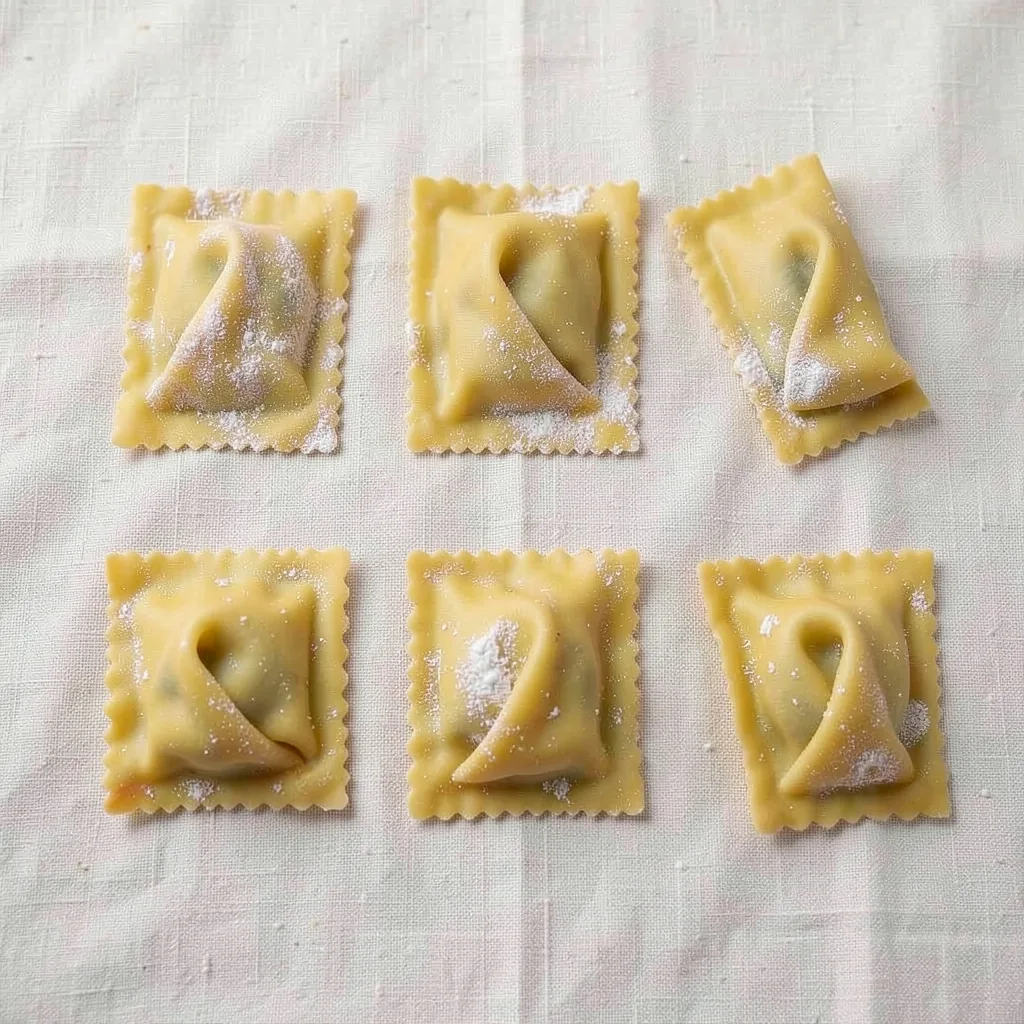
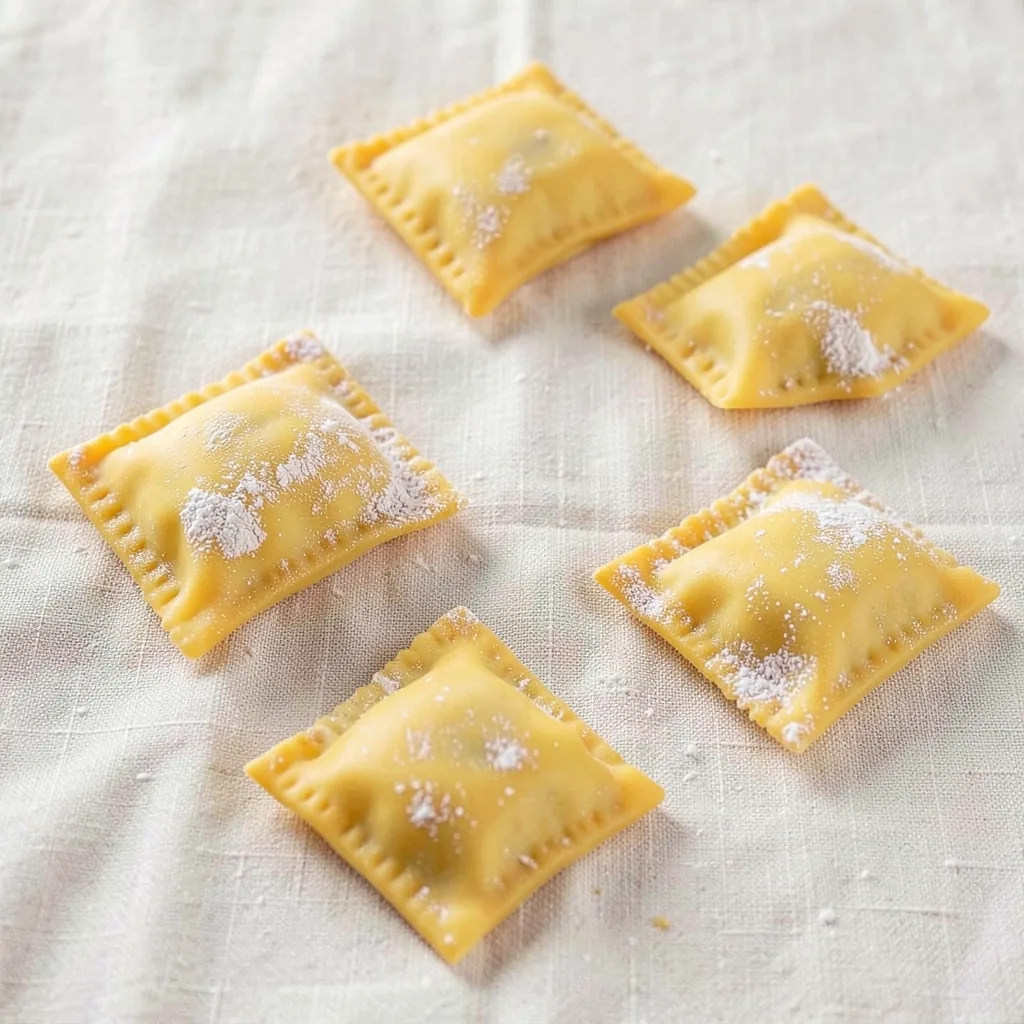
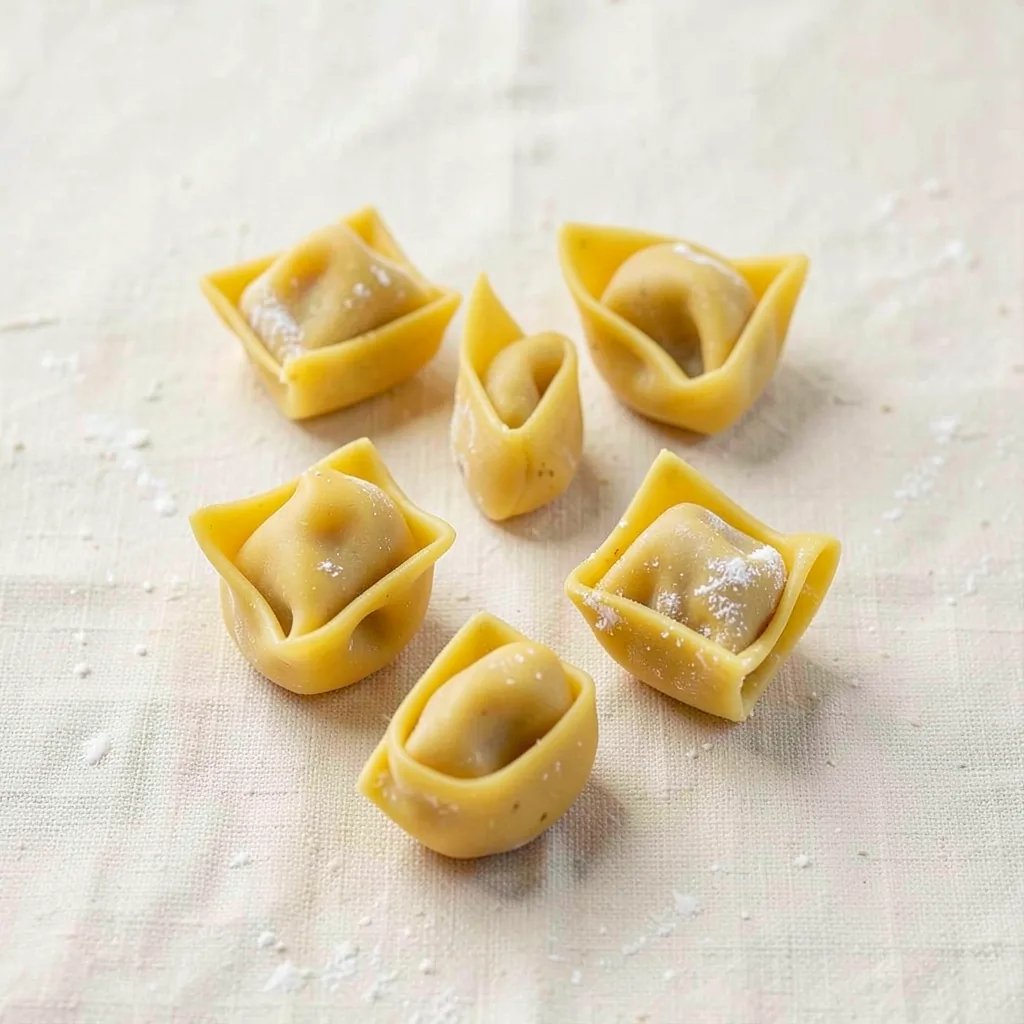
Side by side
Easy to confuse with
Other names
caramelle ripiene, candy pasta.
Read more
Semolina versus egg dough: the two doughs of Italian pasta
The difference between durum semolina pasta and egg pasta: flour, water, eggs, where each is made, how each cooks, and which sauces each dough wants.
Fresh versus dried pasta: neither is better, they are different foods
The difference between fresh and dried pasta: dough, texture, cook time, storage, and which shapes and sauces belong to each.
Sources
- Cook time: fresh egg pasta.
- Photograph: Caramelle di sfoglia con ricotta, basilico e zucchine (14072207807).jpg, fugzu from Pistoia, Italia, CC BY 2.0.
- Open Food Facts (products, brands, labels), Open Database License, read on 2026-08-25.
- USDA FoodData Central (nutrition per 100 g, by dough: FDC 169727, Pasta, fresh-refrigerated, plain, as purchased; FDC 169728, Pasta, fresh-refrigerated, plain, cooked), public domain. The cooked yield is derived from the two energy figures.
- Caramelle (pasta), Wikipedia (names, origin), CC BY-SA 4.0
- Dimensions: brand spec sheets and measured boxes. Blank fields are unmeasured, never guessed.