Tripoline
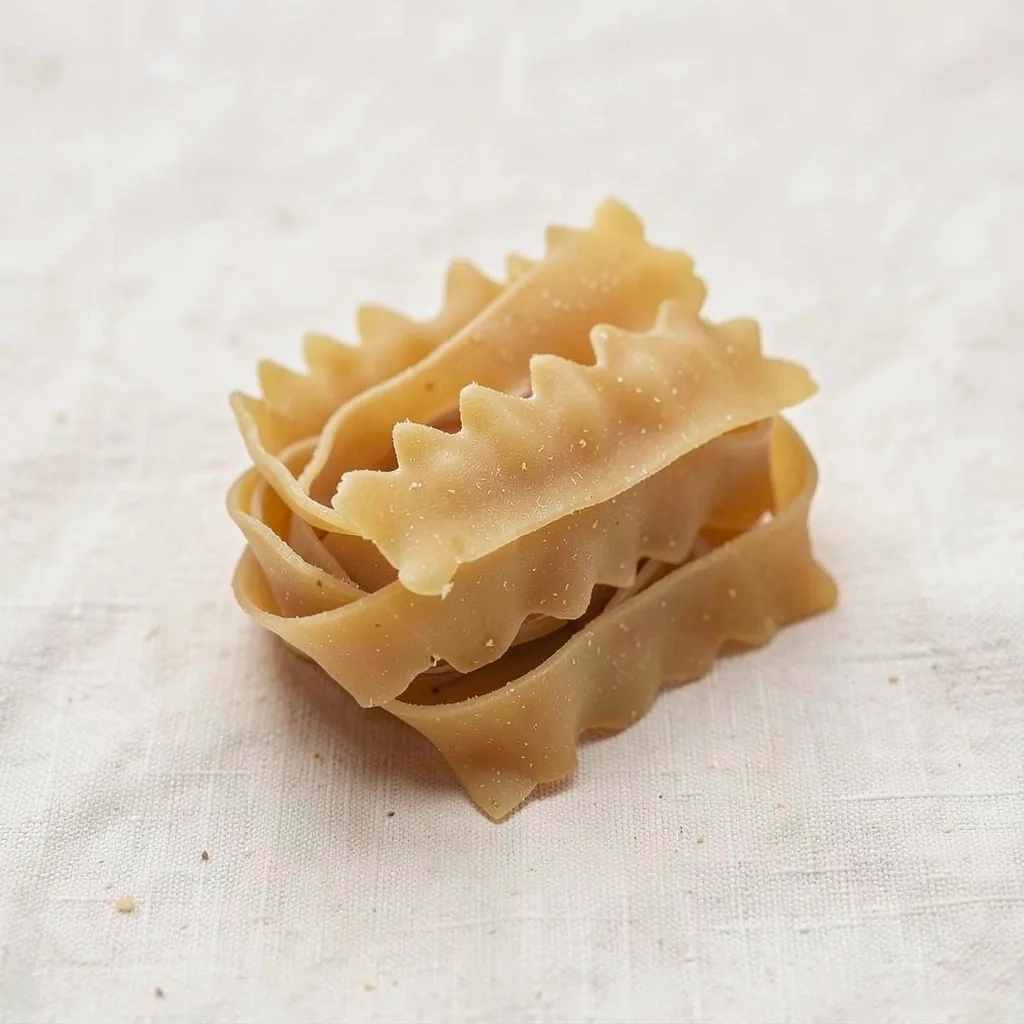
Thick ribbon ridged on one side.
7.9 mm wide, 1.2 mm thick
Name. Named for Tripoli after Italy took Libya in the 1911 to 1912 war. Colonial names were fashionable for pasta then.
What it is
Tripoline are a long, thick ribbon with one straight edge and one wavy edge. They differ from mafaldine, which are wavy on both sides. Rummo gives a length of 260 mm, a width of 7.9 mm, and a thickness of 1.17 mm for its number 81. The dough is durum wheat semolina and water. The ruffled edge holds sauce better than the smooth edge, and it keeps its shape after cooking.
The shape is believed to come from Campania. Garofalo groups it with bengasine, assabesi, and abissine, all named for Italy's African colonies in the early 1900s. A Naples tradition also claims it was made to honour King Victor Emmanuel. Tripoline are a festive pasta in the south. They take rich meat ragu, sometimes with ricotta, and sauces of game or offal. In Campania they are broken up and cooked with chickpeas. They also go into baked dishes. Rummo suggests rocket pesto with dried tomatoes.
How to cook tripoline
8 minutes in boiling salted water. Take the shorter time for al dente, the longer time for fully cooked.
8:00
Start when the water returns to the boil.
Water and salt
- Pasta, dry
- 400 g
- Water
- 4 L
- Salt
- 40 g
100 g per person as a main. A litre and 10 g of salt per 100 g. Adjust with the portion calculator.
The steps
- Bring 4 L of water to a full boil in a tall pot. Add 40 g of salt when it boils.
- Add the tripoline. Stir for the first minute so nothing sticks. Start the timer when the water returns to the boil.
- Bite a piece at 7 minutes. A hairline of white at the centre is al dente.
- Scoop out a cup of the cooking water. Drain, or lift the pasta straight into the pan.
- Toss with the sauce over the heat for a minute. Add cooking water a splash at a time until it clings.
Read more: what al dente means and why the pasta water matters. Times for every shape are on the cook page.
What it is served with
Pairs with: Ragu napoletano · Meat ragu · Ricotta · Pasta e ceci · Baked (al forno)
Classic plates: tripoline e ceci, tripoline con ricotta fresca e battuto di rucola.
By brand: numbers, cook times, spec sheets
1 brand, 1 product page. A blank cell is a figure the brand does not state.
| Brand | Product | No. | Cook | Length | Width or Ø | Wall |
|---|---|---|---|---|---|---|
| Rummo | Tripolineartisan line | 81 | 8 min | 260 mm | 7.9 mm | 1.17 mm |
Nutrition
Per 100 g of dry semolina pasta. The shape does not change these numbers. The dough does, so a whole wheat or egg version of this shape reads differently. See every dough.
| Per 100 g | Energy | Protein | Carbohydrate | Fibre | Fat | Sodium | Iron |
|---|---|---|---|---|---|---|---|
| Dry | 371 kcal | 13.0 g | 74.7 g | 3.2 g | 1.5 g | 6 mg | 3.3 mg |
| Cooked | 158 kcal | 5.8 g | 30.9 g | 1.8 g | 0.9 g | 1 mg | 1.3 mg |
One portion. 100 g dry becomes about 235 g cooked, 371 kcal and 13 g of protein. Pasta takes on 2.3 times its weight in the pot.
No tripoline? Use these
Ranked by how they behave with sauce, not how they look.
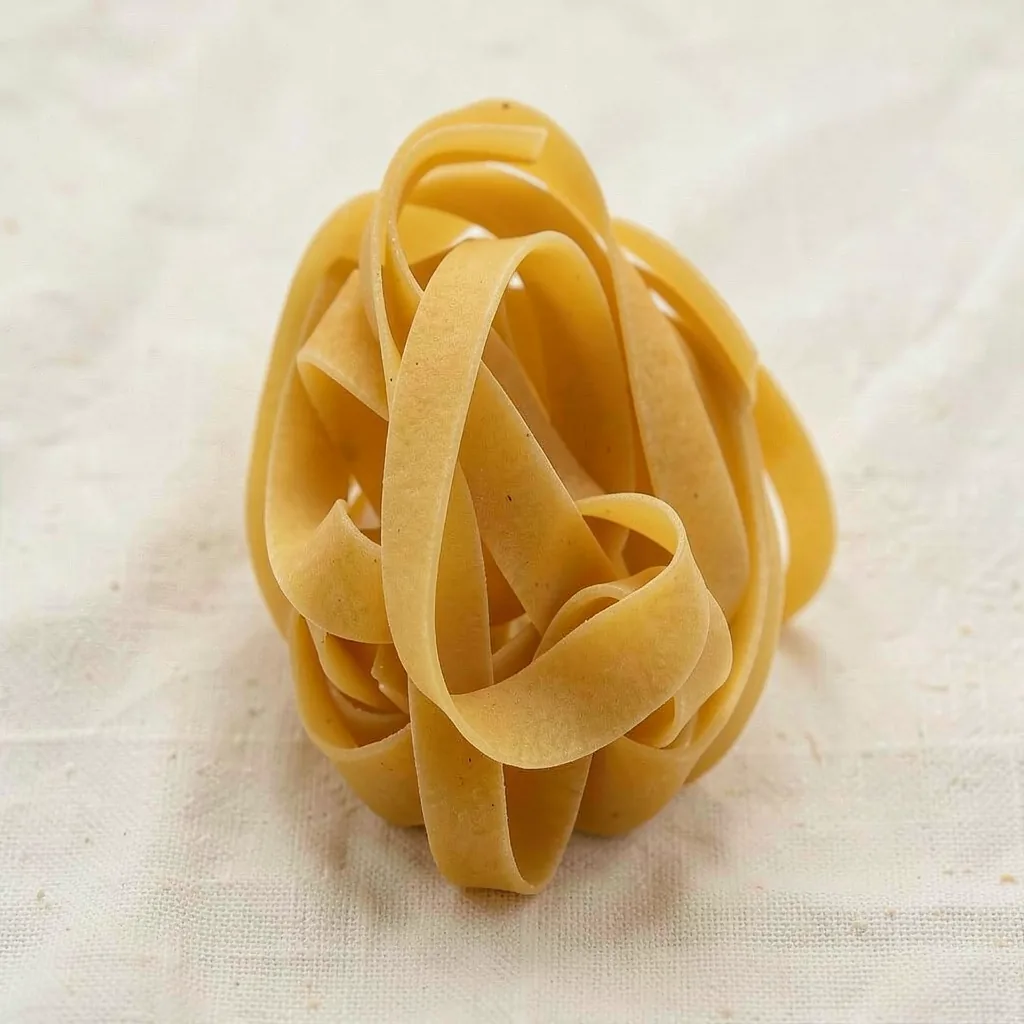
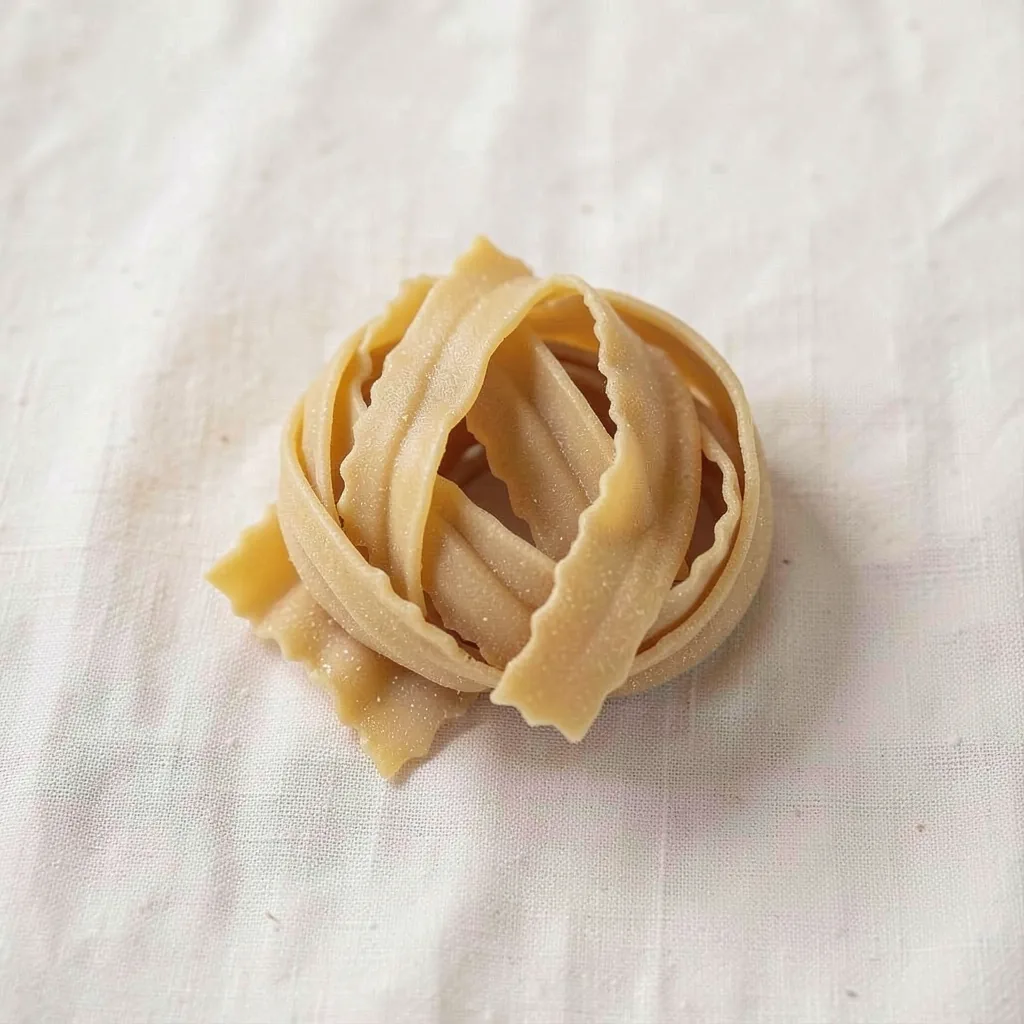
Other names
Signorine, signorine, tripolini.
Sources
- Tripoline (artisan), Rummo (cook time, catalogue number, spec sheet dimensions, from the brand's own product page)
- Rummo: Tripoline (profile: origin, form, use)
- Wikipedia: Mafaldine (Tripoline section) (profile: origin, form, use)
- Pasta Garofalo: mafalde, manfredi, reginette e tripoline (profile: origin, form, use)
- Pastificio Carmiano: Tripoline (profile: origin, form, use)
- Cook time: Rummo Tripoline: 8 min.
- Dimensions: the Rummo spec sheet, Tripoline. No box of ours has been measured yet.
- USDA FoodData Central (nutrition per 100 g, by dough: FDC 169736, Pasta, dry, enriched; FDC 169737, Pasta, cooked, enriched, without added salt), public domain. The cooked yield is derived from the two energy figures.
- Tripoline, Wikipedia (names, origin), CC BY-SA 4.0
- Q7843687, Wikidata
- Dimensions: brand spec sheets and measured boxes. Blank fields are unmeasured, never guessed.