maccaronara
Name. Named after the maccaronara, the grooved wooden or brass rolling pin that cuts the sheet into strands.
What it is
Maccaronara is a thick fresh strand from the hills of Irpinia. The cook rolls a semolina and water dough into a sheet. A grooved rolling pin, also called a maccaronara, presses the sheet into strands. The cook then pulls the strands apart by hand. Each strand has a square or triangular cross section and measures about half a centimetre across. The pasta needs about ten minutes in boiling water because it is so thick.
The shape belongs to the triangle of Castelfranci, Montemarano and Castelvetere sul Calore in the province of Avellino. Cooks in the Vulture area of Basilicata make a close relative called maccuarnàr. The classic dressing is a simple fresh tomato sauce. A long-cooked pork ragù with grated aged ricotta is common at festivals. Other local sauces use beans, mushrooms, truffle, or toasted breadcrumbs with garlic and herbs.
What it is served with
Pairs with: Pomodoro · Meat ragu · Porcini · Pasta e fagioli
Classic plates: maccaronara al ragù, maccaronara con r' frecul.
Nutrition
Per 100 g of dry semolina pasta. The shape does not change these numbers. The dough does, so a whole wheat or egg version of this shape reads differently. See every dough.
| Per 100 g | Energy | Protein | Carbohydrate | Fibre | Fat | Sodium | Iron |
|---|---|---|---|---|---|---|---|
| Dry | 371 kcal | 13.0 g | 74.7 g | 3.2 g | 1.5 g | 6 mg | 3.3 mg |
| Cooked | 158 kcal | 5.8 g | 30.9 g | 1.8 g | 0.9 g | 1 mg | 1.3 mg |
One portion. 100 g dry becomes about 235 g cooked, 371 kcal and 13 g of protein. Pasta takes on 2.3 times its weight in the pot.
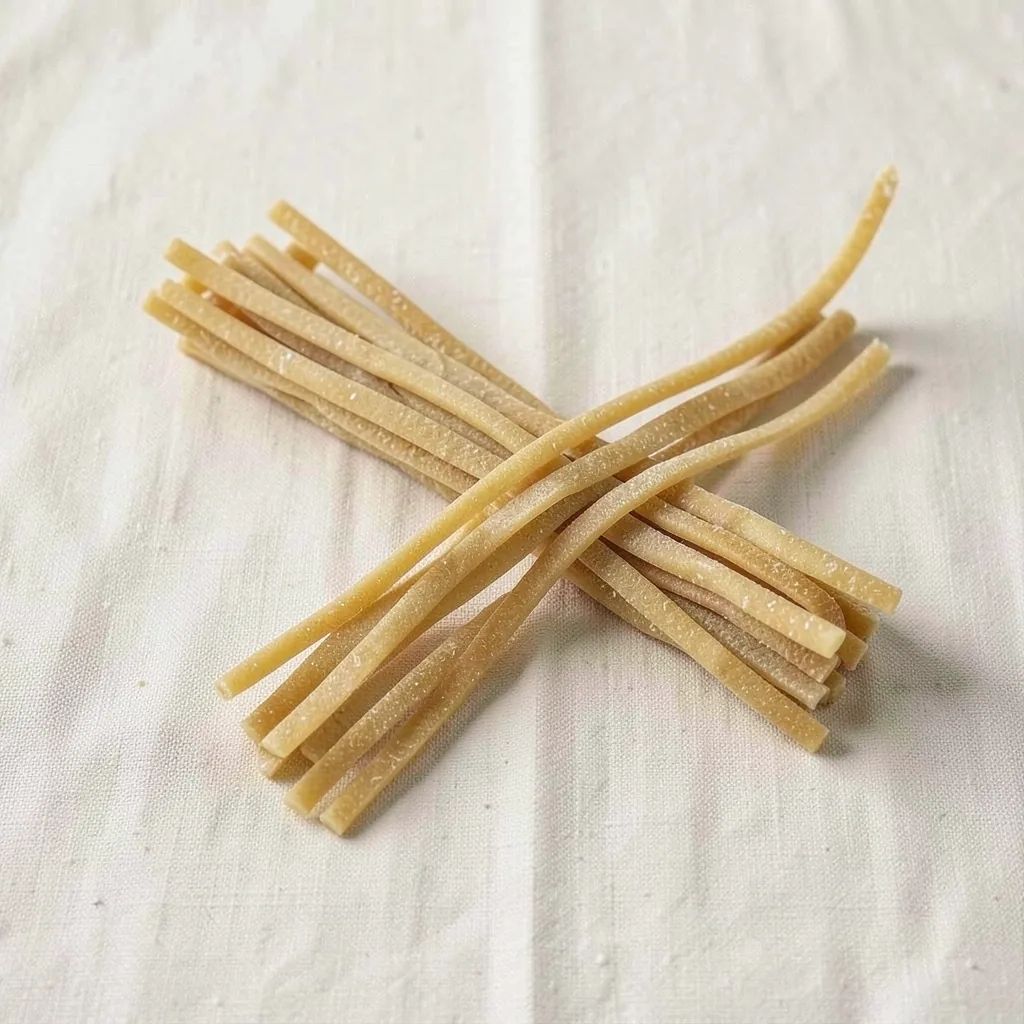
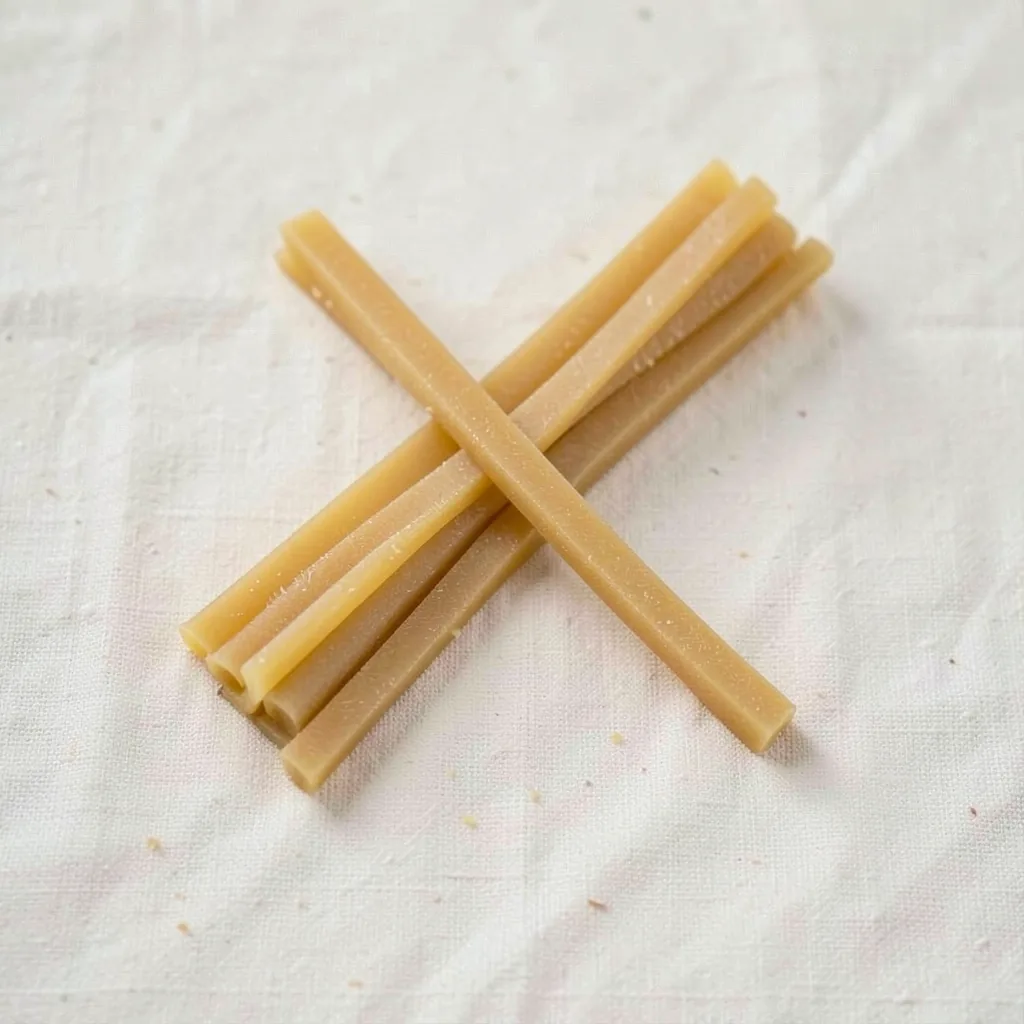
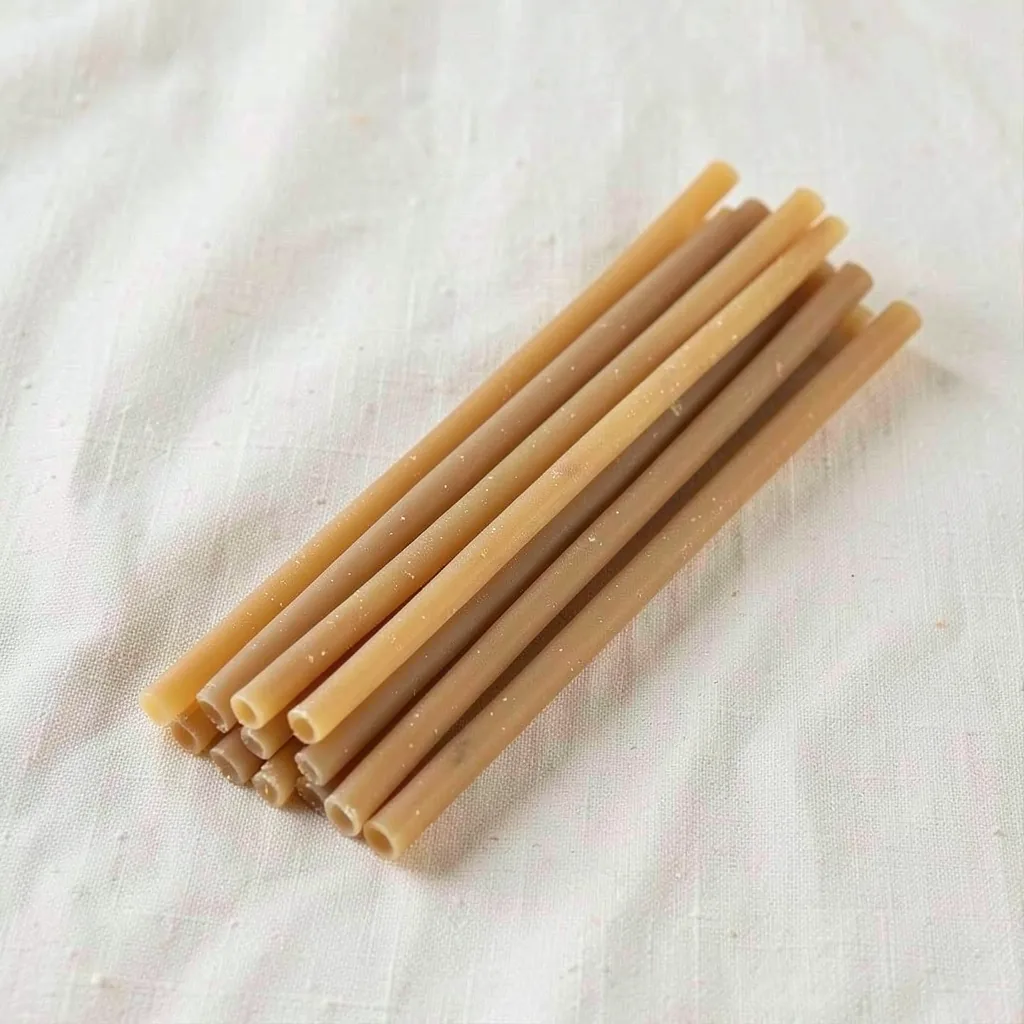
No maccaronara? Use these
Ranked by how they behave with sauce, not how they look.
Other names
maccheronara, maccherunaro, maccuarnàr, marcannale.
Sources
- Wikipedia (it): Maccaronara (profile: origin, form, use)
- Luciano Pignataro: La maccheronara (profile: origin, form, use)
- Terre d'Irpinia: Maccaronara (profile: origin, form, use)
- Photograph: Maccaronara 01.jpg, VinRock80, CC BY-SA 4.0.
- USDA FoodData Central (nutrition per 100 g, by dough: FDC 169736, Pasta, dry, enriched; FDC 169737, Pasta, cooked, enriched, without added salt), public domain. The cooked yield is derived from the two energy figures.
- Maccaronara, Italian Wikipedia (summary), CC BY-SA 4.0
- Q3841974, Wikidata
- Dimensions: brand spec sheets and measured boxes. Blank fields are unmeasured, never guessed.