Coralli
Ridged tubes.
Name. Italian for corals. The short tubes look like pieces of coral or small pearls.
What it is
Coralli are very short tubes, cut from a thin extruded cylinder. Each piece has a small hole that fills with soup. The English Wikipedia list describes them as ridged; Pastificio dei Campi makes a smooth version. That producer uses Italian durum wheat semolina and water, bronze dies and slow drying, and gives a cook time of 8 minutes.
No source gives a region of origin. Pastificio dei Campi sells them as Coralli di Gragnano PGI, so Gragnano is one place of production. They are a soup shape. The producer suggests minestrone, broth and vegetable soups. They also work in pasta e fagioli or pasta e ceci.
How to cook coralli
8 minutes in boiling salted water. Take the shorter time for al dente, the longer time for fully cooked.
8:00
Start when the water returns to the boil.
Water and salt
- Pasta, dry
- 400 g
- Water
- 4 L
- Salt
- 40 g
100 g per person as a main. A litre and 10 g of salt per 100 g. Adjust with the portion calculator.
The steps
- Bring 4 L of water to a full boil in a tall pot. Add 40 g of salt when it boils.
- Add the coralli. Stir for the first minute so nothing sticks. Start the timer when the water returns to the boil.
- Or cook it in the broth it will be served in, and do not drain it.
- Bite a piece at 7 minutes. A hairline of white at the centre is al dente.
- Scoop out a cup of the cooking water. Drain, or lift the pasta straight into the pan.
- Toss with the sauce over the heat for a minute. Add cooking water a splash at a time until it clings.
Read more: what al dente means and why the pasta water matters. Times for every shape are on the cook page.
What it is served with
Pairs with: In brodo · Minestrone · Pasta e fagioli · Pasta e ceci
By brand: numbers, cook times, spec sheets
1 brand, 1 product page.
| Brand | Product | Cook |
|---|---|---|
| Pastificio dei Campi | Coralli di Gragnano IGP 500g | 8 min |
Nutrition
Per 100 g of dry semolina pasta. The shape does not change these numbers. The dough does, so a whole wheat or egg version of this shape reads differently. See every dough.
| Per 100 g | Energy | Protein | Carbohydrate | Fibre | Fat | Sodium | Iron |
|---|---|---|---|---|---|---|---|
| Dry | 371 kcal | 13.0 g | 74.7 g | 3.2 g | 1.5 g | 6 mg | 3.3 mg |
| Cooked | 158 kcal | 5.8 g | 30.9 g | 1.8 g | 0.9 g | 1 mg | 1.3 mg |
One portion. 100 g dry becomes about 235 g cooked, 371 kcal and 13 g of protein. Pasta takes on 2.3 times its weight in the pot.
No coralli? Use these
Ranked by how they behave with sauce, not how they look.
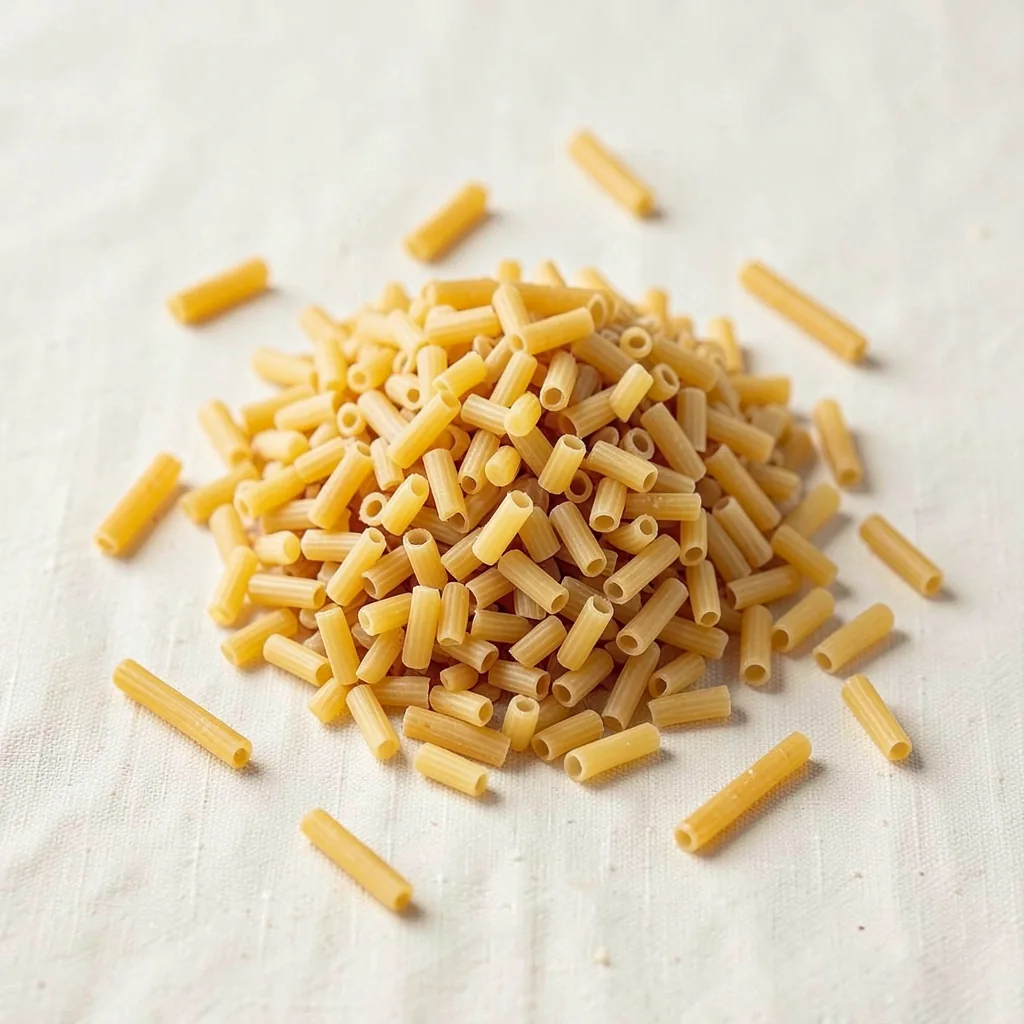
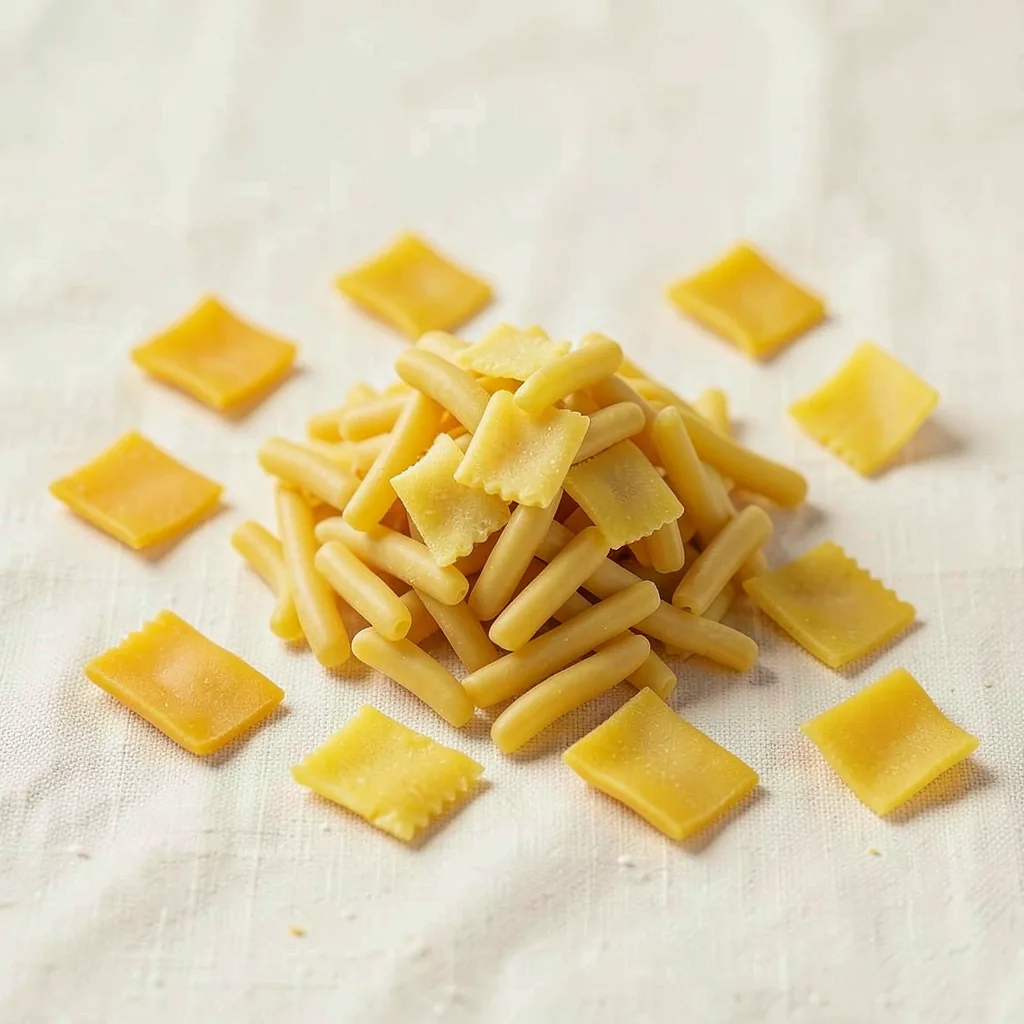
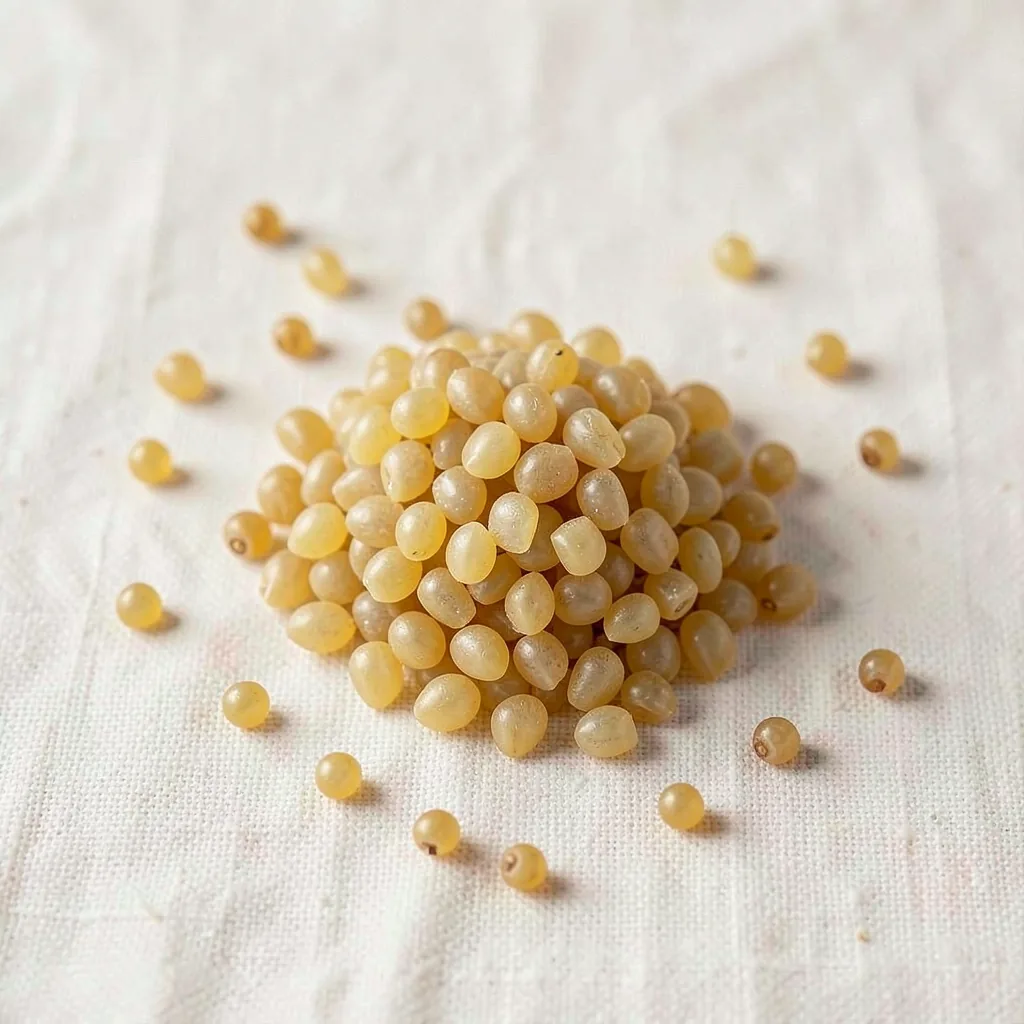
Other names
coralli rigati.
Sources
- Coralli di Gragnano IGP 500g, Pastificio dei Campi (cook time, from the brand's own product page)
- Pastificio dei Campi: Coralli di Gragnano IGP (profile: origin, form, use)
- Wikipedia (en): List of pasta (profile: origin, form, use)
- Cook time: Pastificio dei Campi Coralli di Gragnano IGP 500g: 8 min.
- USDA FoodData Central (nutrition per 100 g, by dough: FDC 169736, Pasta, dry, enriched; FDC 169737, Pasta, cooked, enriched, without added salt), public domain. The cooked yield is derived from the two energy figures.
- Coralli (pasta), Wikipedia (names, origin), CC BY-SA 4.0
- Dimensions: brand spec sheets and measured boxes. Blank fields are unmeasured, never guessed.