Barbine
Thin strands, often coiled into nests.
Name. Italian for little beards, from barba, beard. The singular is barbina.
What it is
Barbine are very thin strands, close to capellini in width. Italian Wikipedia gives a width of 0.78 to 0.88 millimetres. Producers coil the strands into nests and dry them, so a box holds a stack of loose coils. The nests soften in seconds and unwind in the pot. During the Renaissance, cooks prized such fine strands, because they were hard to make.
English Wikipedia lists barbine as Italian without a region. Italian Wikipedia places them in Emilia-Romagna, with no source given. The strands are too fine for a heavy sauce. Cooks drop the nests into broth, or dress them with a light sauce, such as butter or oil. Supermarket brands sell them as barbine a nido.
What it is served with
Pairs with: In brodo · Butter and sage · Lemon and butter · Aglio e olio
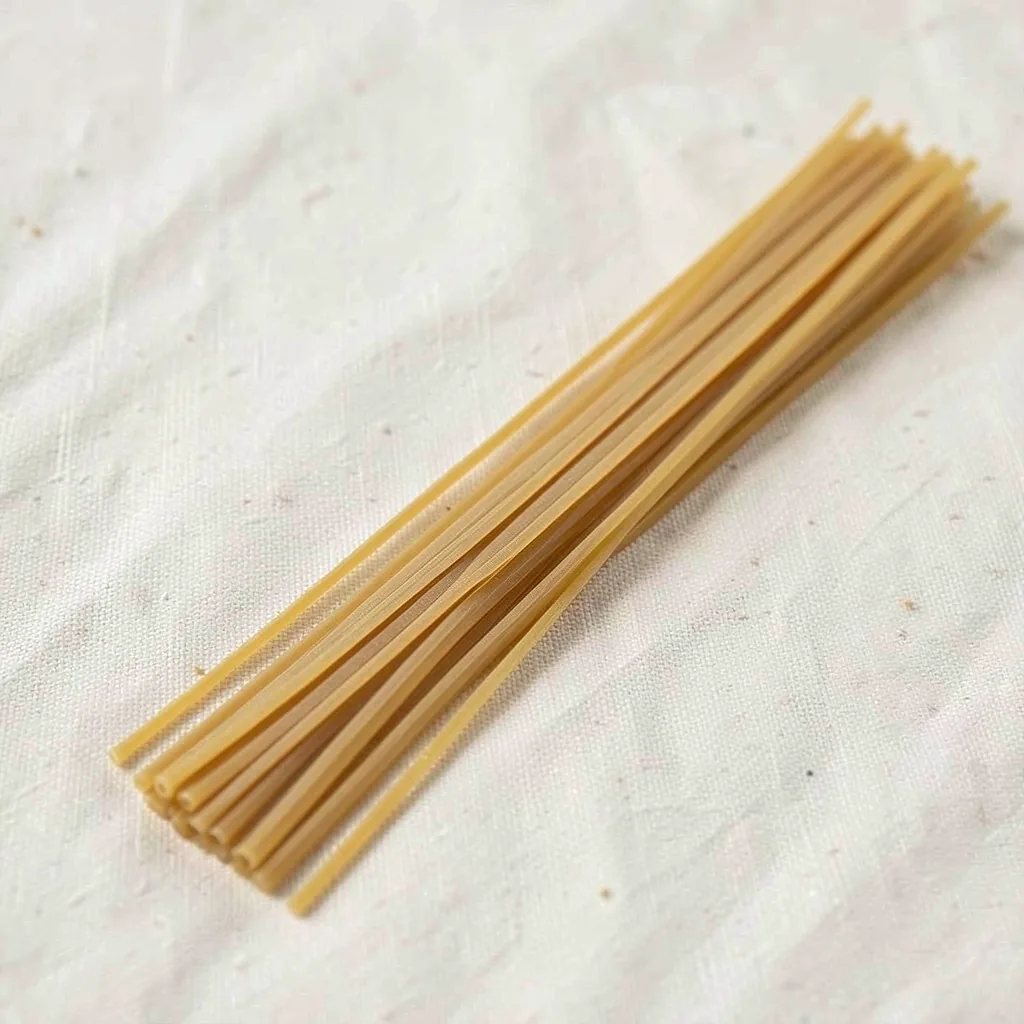
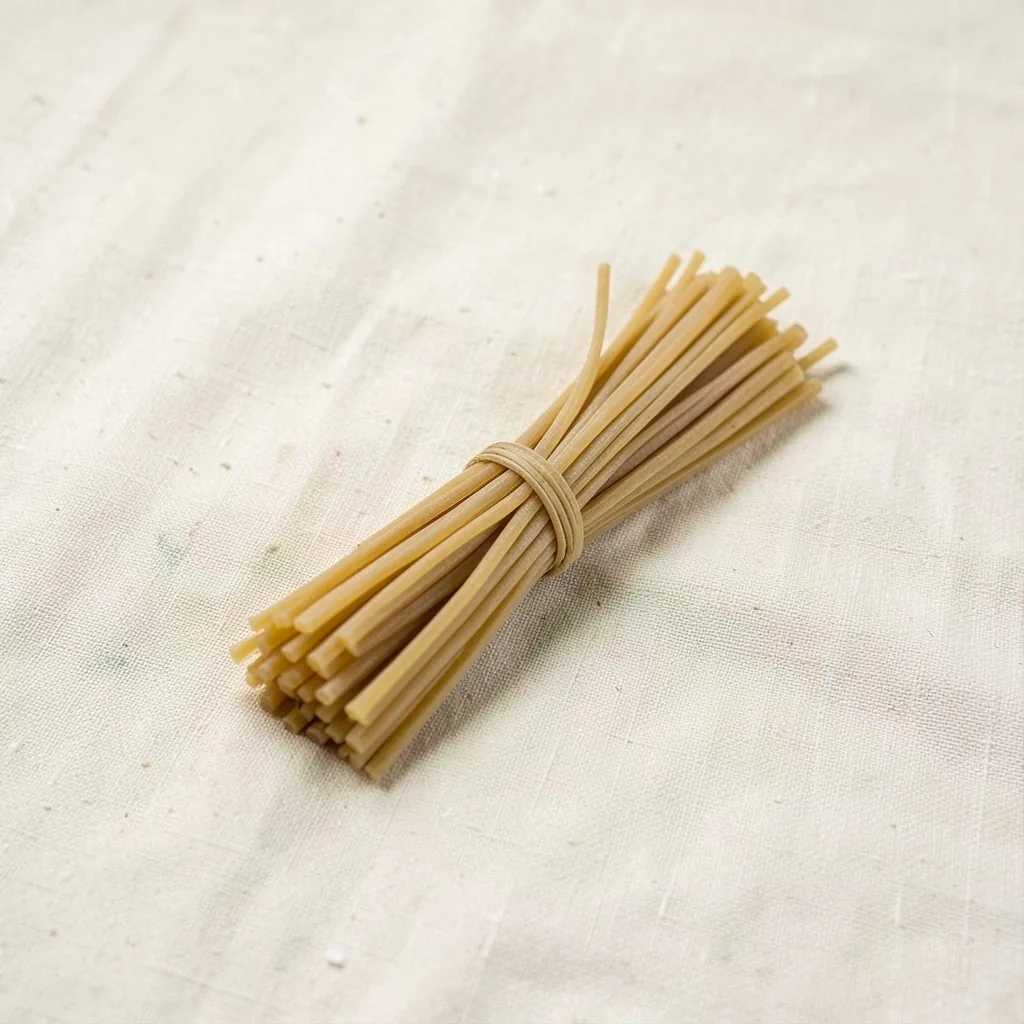
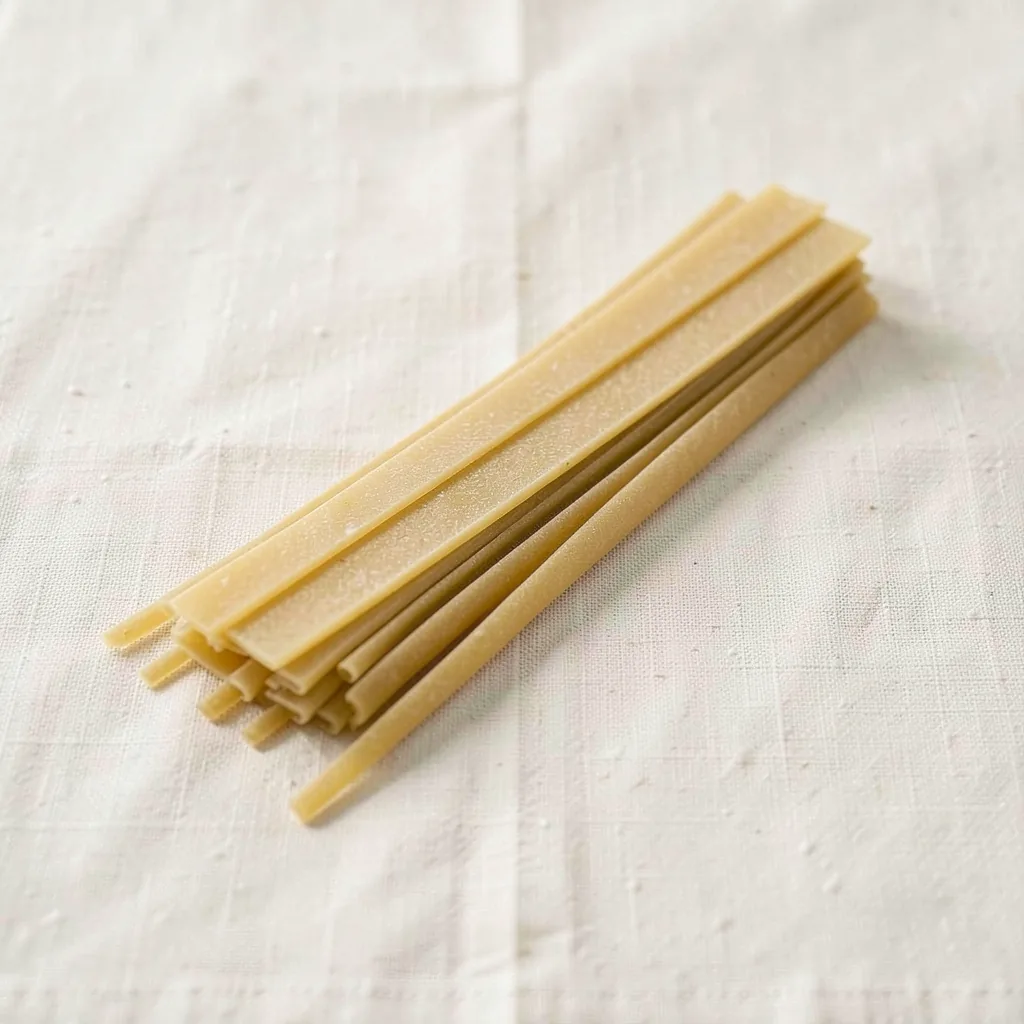
No barbine? Use these
Ranked by how they behave with sauce, not how they look.
Other names
Barbina, barbina, barbine a nido.
Sources
- Wikipedia (en): Barbine (profile: origin, form, use)
- Wikipedia (it): Barbine (profile: origin, form, use)
- Wikipedia (en): List of pasta (profile: origin, form, use)
- Barbine, Wikipedia (names, origin), CC BY-SA 4.0
- Q25055558, Wikidata
- Dimensions: brand spec sheets and measured boxes. Blank fields are unmeasured, never guessed.