Lagane
Wide pasta.
Name. From the Latin laganum, a flat sheet of dough. The same root gives lasagne.
What it is
Lagane are wide, hand-cut ribbons of fresh pasta. One Basilicata source gives a width of 2 to 3 cm. The strips are shorter and thicker than tagliatelle. The traditional dough is durum wheat semolina, warm water, and salt, with no egg. Some modern recipes use soft flour and eggs. The sheet is rolled with a matterello and cut with a knife.
The shape is at home in Basilicata, Campania, and Calabria. The Roman poet Horace, born in Venosa, wrote of a plate of leeks, chickpeas, and lagane. The classic dish is lagane e ceci. Calabria calls it lagane e cicciari or pasta del brigante. Chickpeas, garlic, and olive oil dress the pasta.
What it is served with
Pairs with: Pasta e ceci · Pasta e fagioli · Meat ragu
Classic plates: Lagane e ceci, Lagane e cicciari, Pasta del brigante.
Nutrition
Per 100 g of dry semolina pasta. The shape does not change these numbers. The dough does, so a whole wheat or egg version of this shape reads differently. See every dough.
| Per 100 g | Energy | Protein | Carbohydrate | Fibre | Fat | Sodium | Iron |
|---|---|---|---|---|---|---|---|
| Dry | 371 kcal | 13.0 g | 74.7 g | 3.2 g | 1.5 g | 6 mg | 3.3 mg |
| Cooked | 158 kcal | 5.8 g | 30.9 g | 1.8 g | 0.9 g | 1 mg | 1.3 mg |
One portion. 100 g dry becomes about 235 g cooked, 371 kcal and 13 g of protein. Pasta takes on 2.3 times its weight in the pot.
No lagane? Use these
Ranked by how they behave with sauce, not how they look.
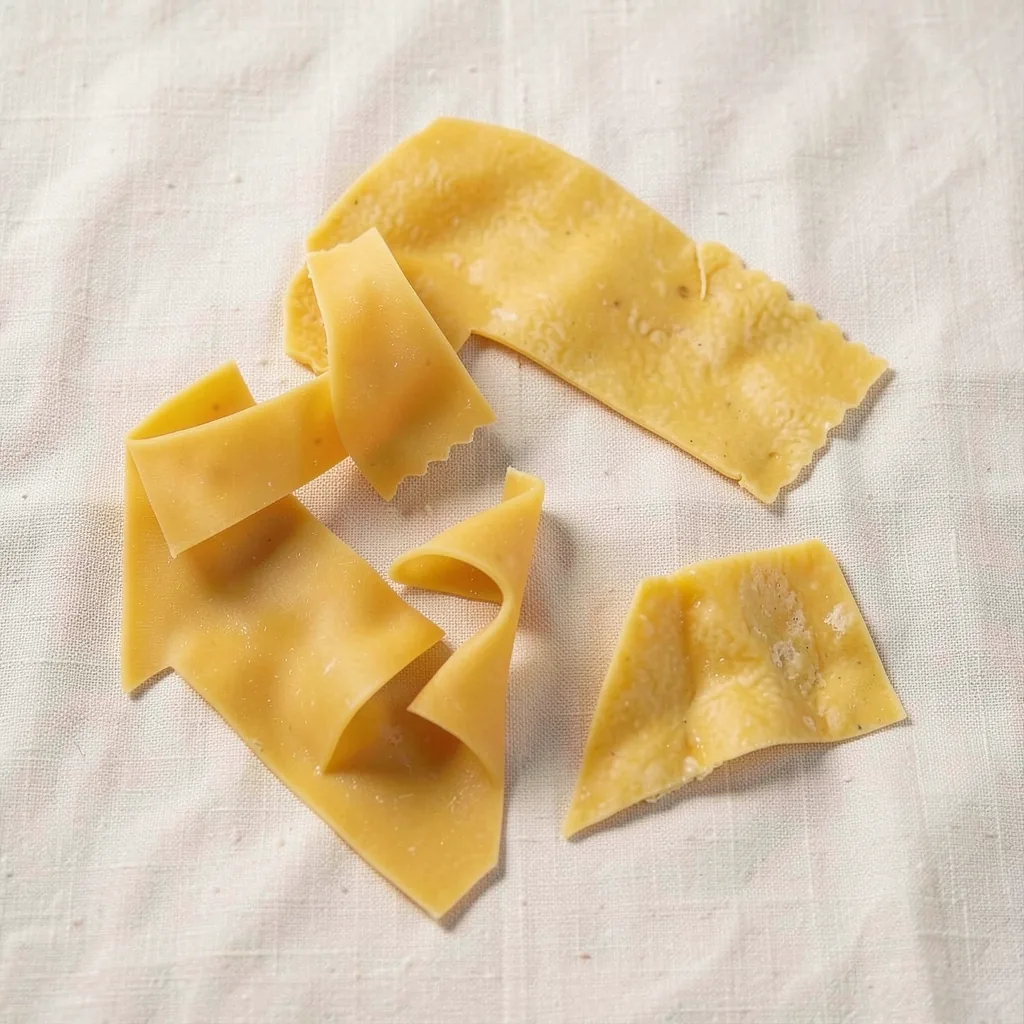
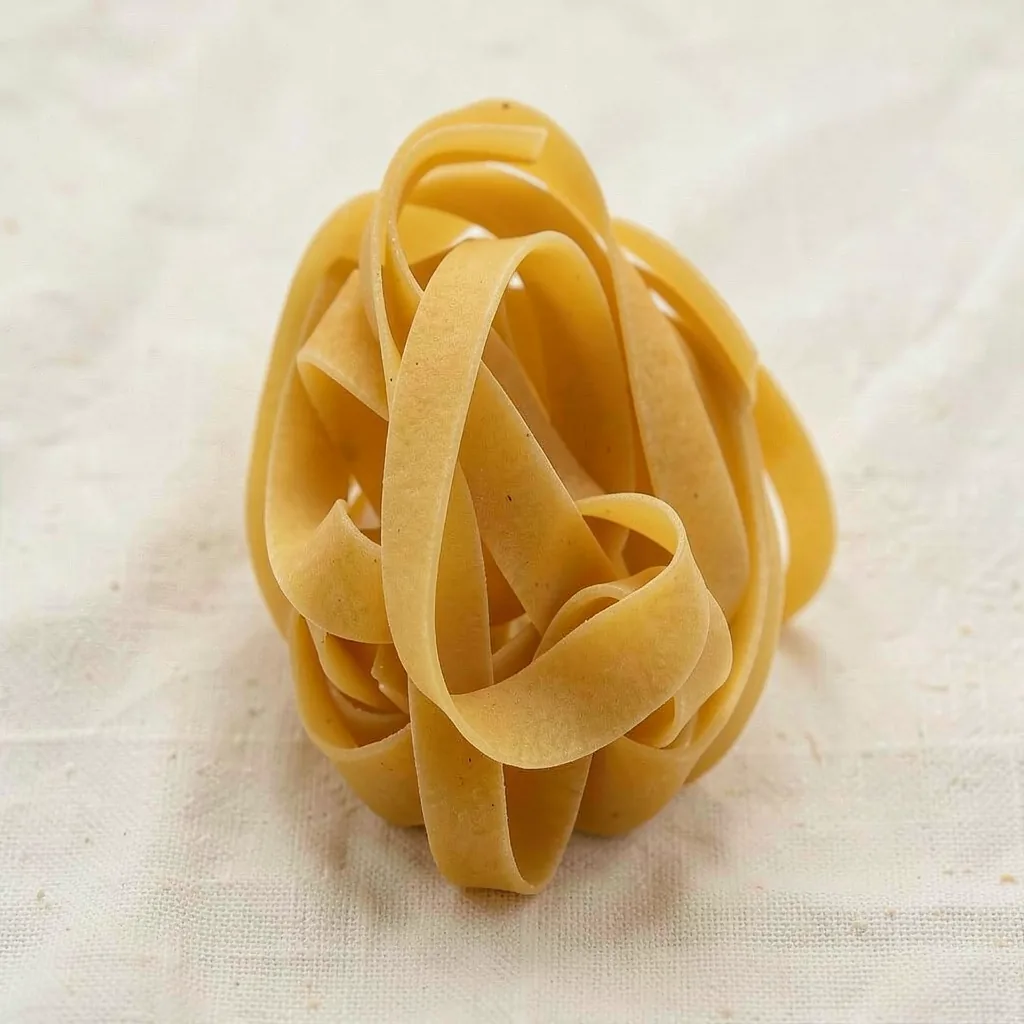
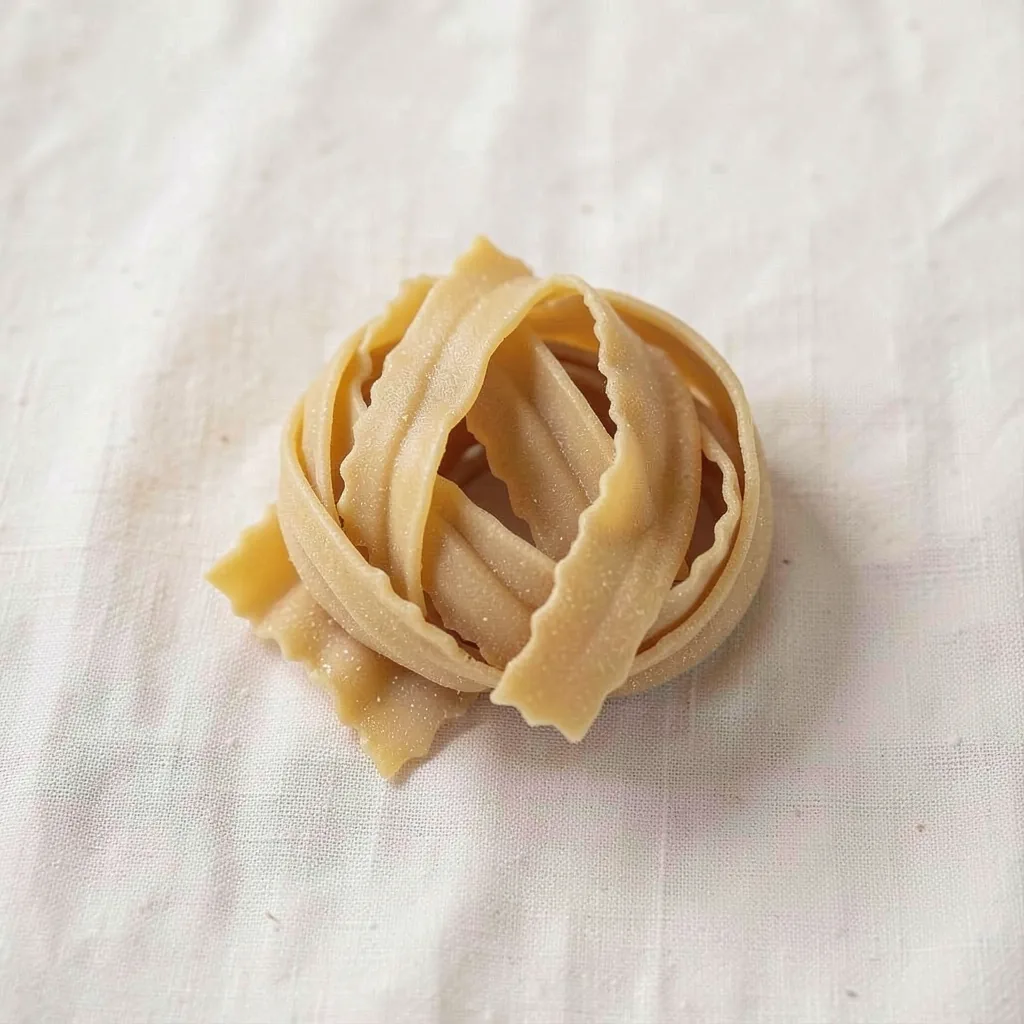
Other names
Bardele, Lasagnoni, bardele, laganelle, lasagnoni.
Sources
- Wikipedia, Lagane e cicciari (profile: origin, form, use)
- SassiGusto, Lagane e ceci lucane (profile: origin, form, use)
- CuoreBasilicata, Lagane e ceci (profile: origin, form, use)
- Wikipedia (it), Lasagne (profile: origin, form, use)
- Photograph: Lagane e ciciari ara cusentina.jpg, Lupo silano 1914, CC BY-SA 4.0.
- USDA FoodData Central (nutrition per 100 g, by dough: FDC 169736, Pasta, dry, enriched; FDC 169737, Pasta, cooked, enriched, without added salt), public domain. The cooked yield is derived from the two energy figures.
- Lagane e cicciari, Wikipedia (names, origin), CC BY-SA 4.0
- Dimensions: brand spec sheets and measured boxes. Blank fields are unmeasured, never guessed.