parmatieddi
Italian: parmatieddi di Teggiano
Type of pasta.
Name. From parmi, the local word for palms: the palm fronds of Palm Sunday, or the palm of the hand that shapes them.
What it is
Parmatieddi are a fresh pasta from Teggiano in the Vallo di Diano. The dough mixes soft wheat flour, durum semolina, water and salt. Families vary the blend. The cook cuts a thin rope of dough into short pieces. Three or four fingers then drag each piece across the board. The result is a flat, slightly elongated leaf with raised edges and finger grooves. Wikipedia, citing Zanini De Vita, calls them a larger, flatter cavatelli. One local recipe starts from a cylinder one centimetre wide and five centimetres long.
They come from Campania, in the province of Salerno. Teggiano serves them as the first course of the Palm Sunday lunch. The leaf shape recalls the palm fronds of that feast. The usual dressing is a meat ragù. Grated pecorino or salted ricotta goes on top. A local variant, parmatieddi con fagioli e porva, pairs them with beans.
What it is served with
Pairs with: Meat ragu · Ragu napoletano · Ricotta · Pasta e fagioli
Classic plates: parmatieddi al ragù, parmatieddi con fagioli e porva.
Nutrition
Per 100 g of dry semolina pasta. The shape does not change these numbers. The dough does, so a whole wheat or egg version of this shape reads differently. See every dough.
| Per 100 g | Energy | Protein | Carbohydrate | Fibre | Fat | Sodium | Iron |
|---|---|---|---|---|---|---|---|
| Dry | 371 kcal | 13.0 g | 74.7 g | 3.2 g | 1.5 g | 6 mg | 3.3 mg |
| Cooked | 158 kcal | 5.8 g | 30.9 g | 1.8 g | 0.9 g | 1 mg | 1.3 mg |
One portion. 100 g dry becomes about 235 g cooked, 371 kcal and 13 g of protein. Pasta takes on 2.3 times its weight in the pot.
No parmatieddi? Use these
Ranked by how they behave with sauce, not how they look.
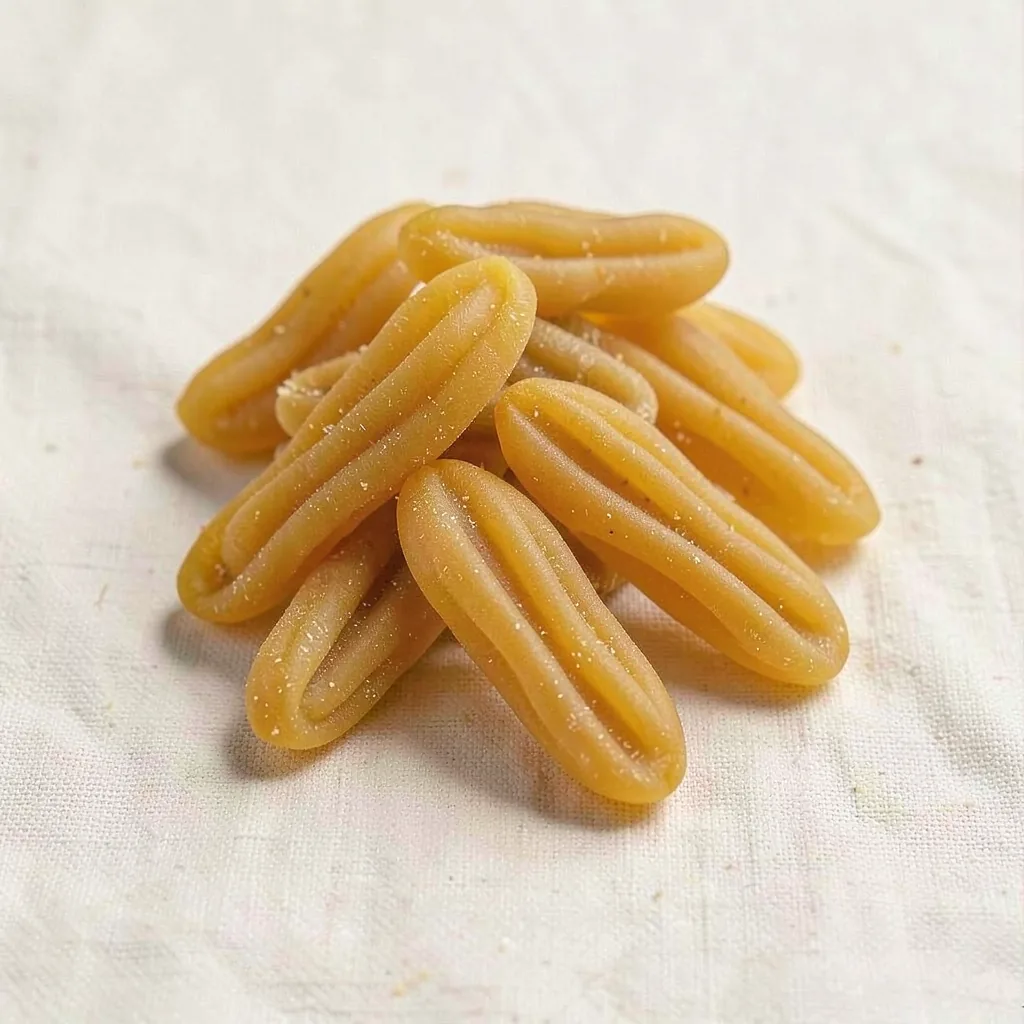
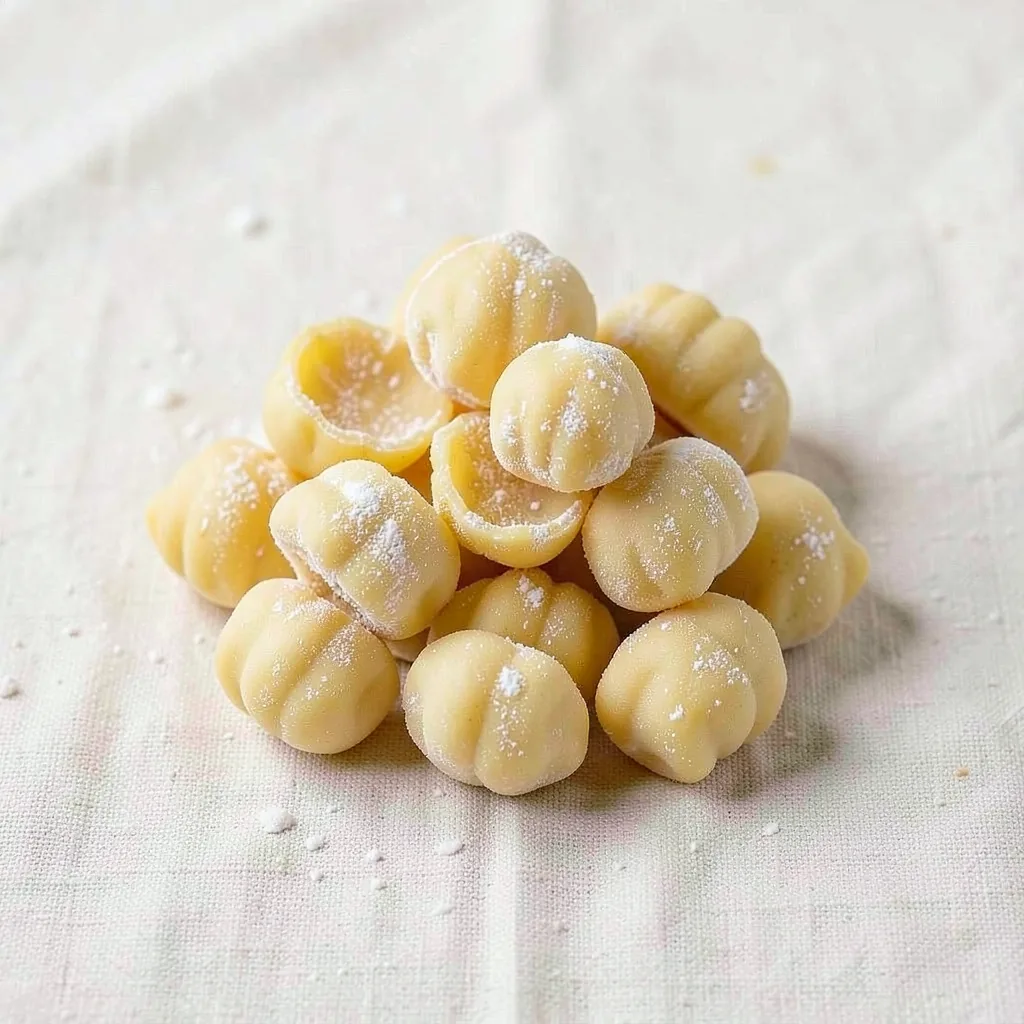
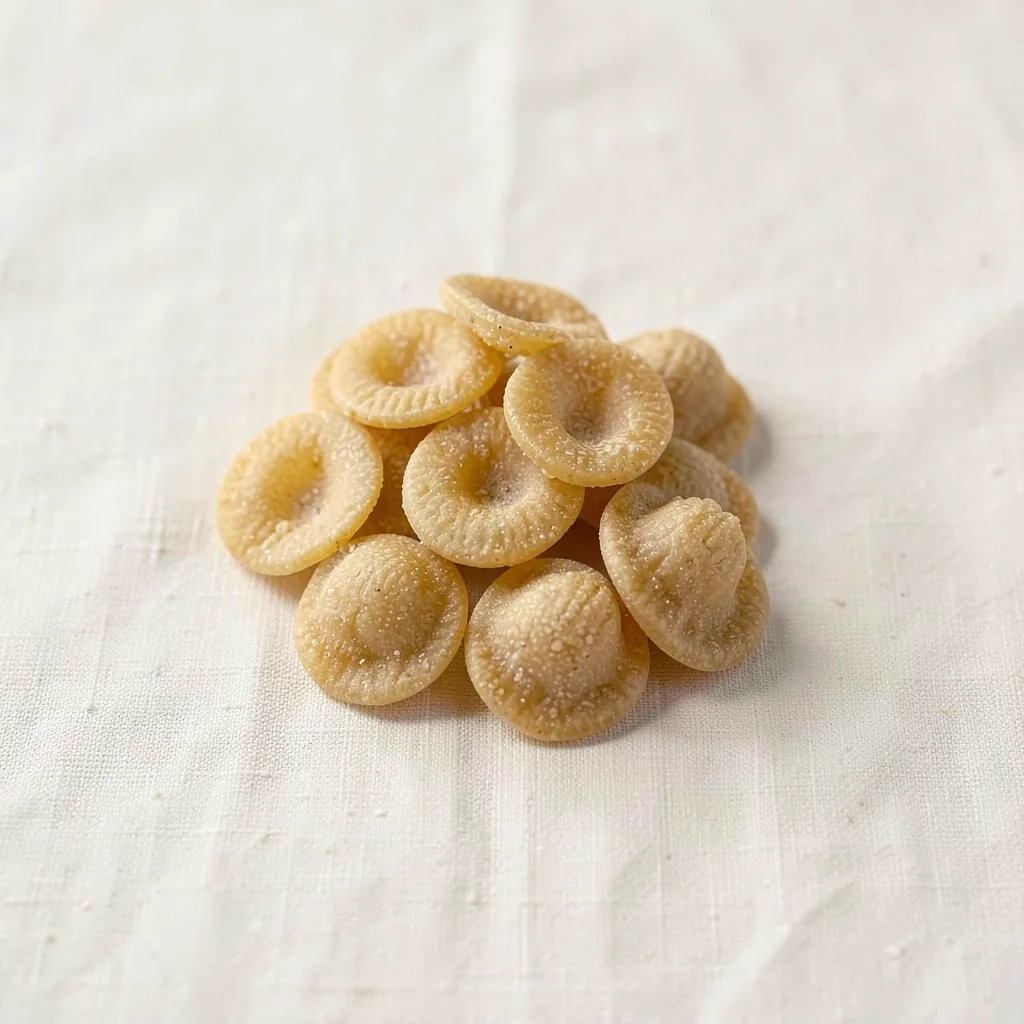
Other names
palmatielli, parmi, parmitieddi, parmitieddi di Teggiano.
Sources
- Wikipedia (EN): Parmitieddi (profile: origin, form, use)
- Wikipedia (IT): Parmitieddi di Teggiano (profile: origin, form, use)
- Giornale del Cilento: Parmitieddi di Teggiano (profile: origin, form, use)
- Photograph: Parmatieddi.jpg, Antonioptg, CC BY-SA 4.0.
- USDA FoodData Central (nutrition per 100 g, by dough: FDC 169736, Pasta, dry, enriched; FDC 169737, Pasta, cooked, enriched, without added salt), public domain. The cooked yield is derived from the two energy figures.
- Parmitieddi, Wikipedia (names, origin), CC BY-SA 4.0
- Q47408669, Wikidata
- Dimensions: brand spec sheets and measured boxes. Blank fields are unmeasured, never guessed.