Fusi
Italian: fusi Istriani
Type of pasta.
Name. Fuso means a spindle. The rolled diamond of dough looks like one.
What it is
Fusi are a hand-rolled egg pasta from Istria. The dough is flour, eggs, and salt. Some cooks add white wine, grappa, or oil. The sheet is rolled thin and cut into strips 3 to 4 cm wide. The strips are cut on the diagonal into diamonds. Two opposite corners are folded over a thin wooden stick and pressed together. The piece looks like a spindle or a small bow. Unlike garganelli, fusi have no comb ridges.
The shape belongs to the Istrian peninsula, across Croatia, Slovenia, and Friuli-Venezia Giulia. The classic dressing is a sauce of hen or rooster with onion, tomato paste, white wine, and broth. Goulash sauce, game ragù, wild asparagus, and truffle are also traditional.
What it is served with
Pairs with: Meat ragu · Wild boar ragu
Classic plates: Fusi con sugo di gallina, Fusi al gulasch, Fusi al tartufo.
Nutrition
Per 100 g of dry egg pasta. The shape does not change these numbers. The dough does, so a whole wheat or egg version of this shape reads differently. See every dough.
| Per 100 g | Energy | Protein | Carbohydrate | Fibre | Fat | Sodium | Iron |
|---|---|---|---|---|---|---|---|
| Dry | 384 kcal | 14.2 g | 71.3 g | 3.3 g | 4.4 g | 21 mg | 4.0 mg |
| Cooked | 138 kcal | 4.5 g | 25.2 g | 1.2 g | 2.1 g | 5 mg | 1.5 mg |
One portion. 100 g dry becomes about 278 g cooked, 384 kcal and 14 g of protein. Pasta takes on 2.8 times its weight in the pot.
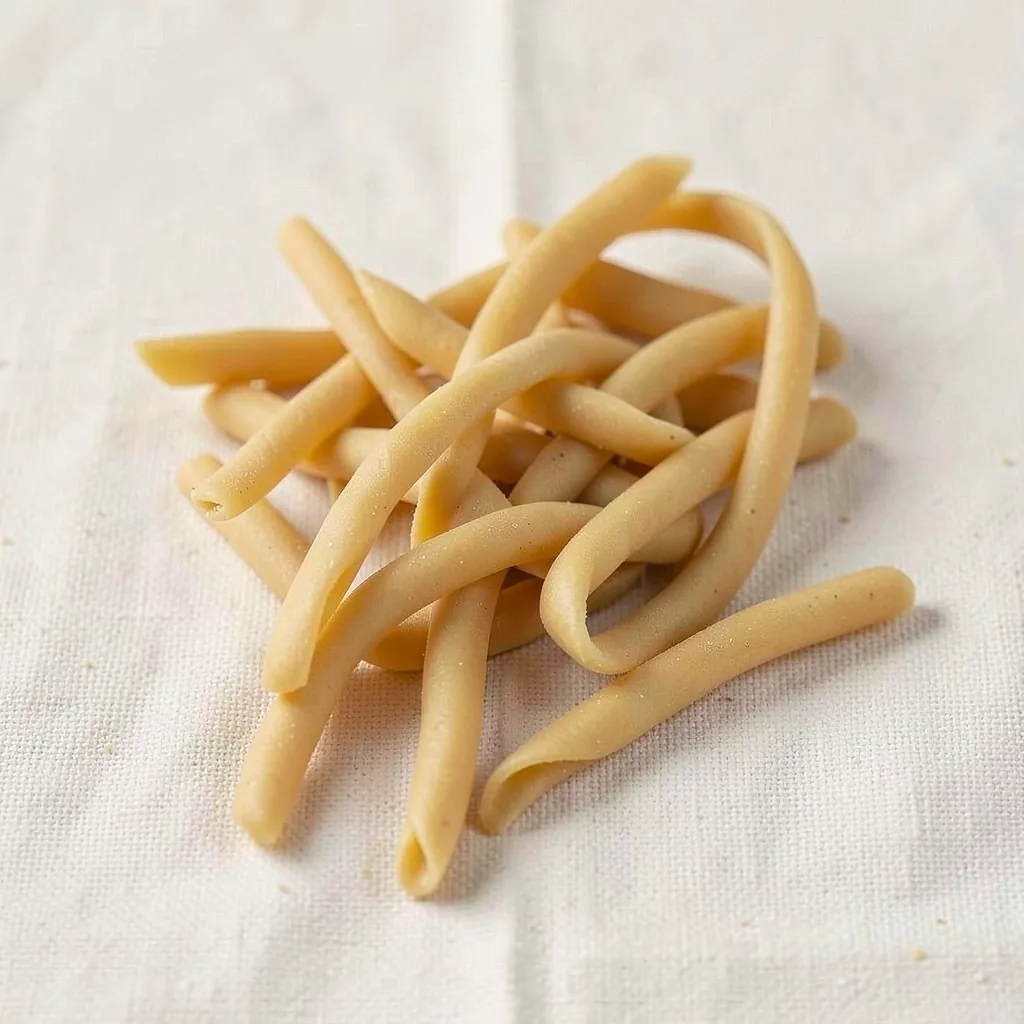
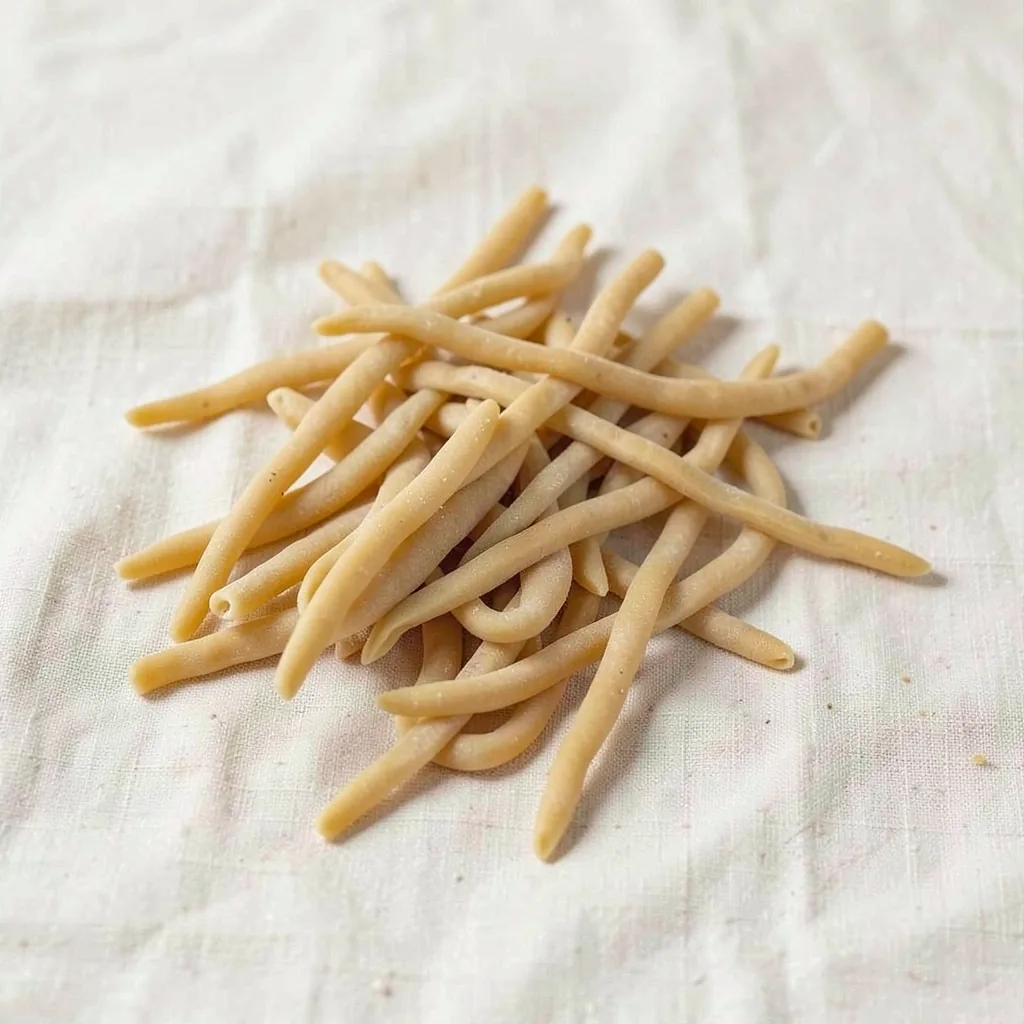
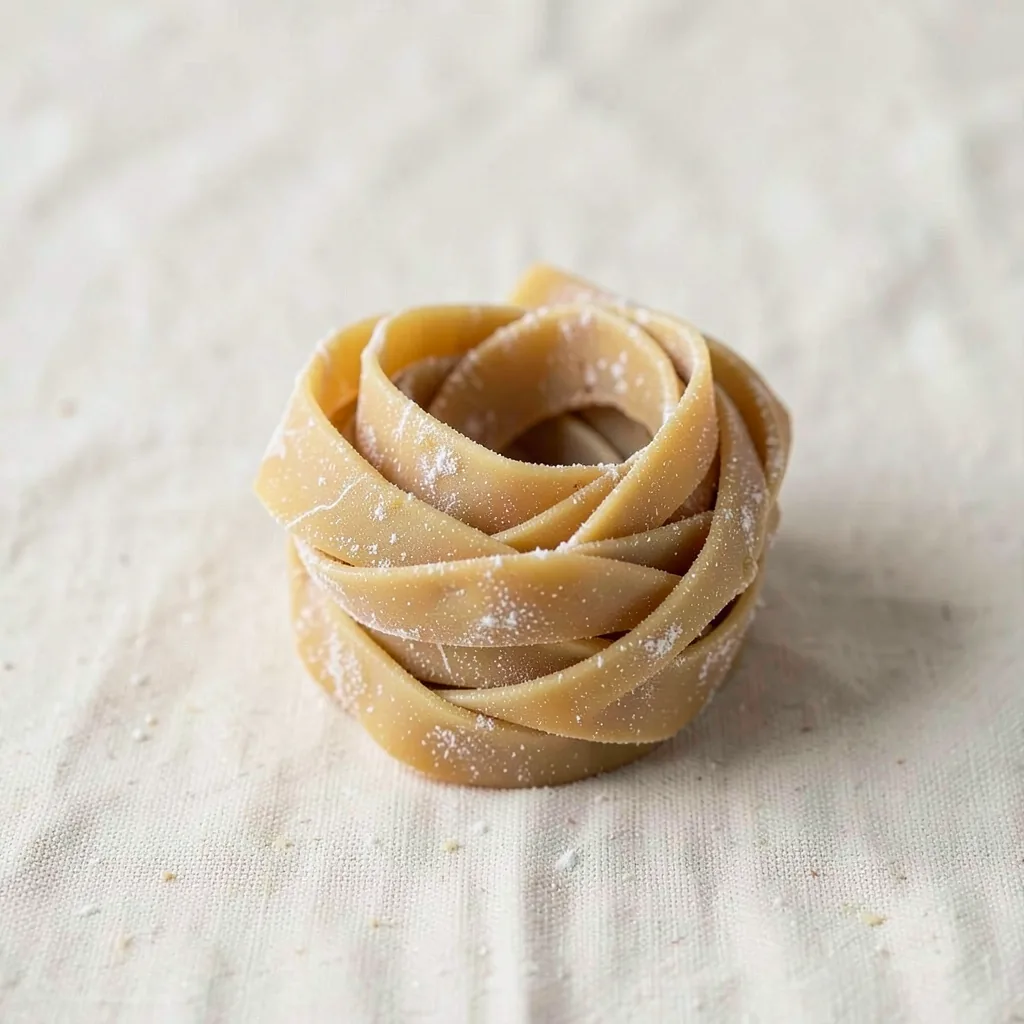
No fusi? Use these
Ranked by how they behave with sauce, not how they look.
Other names
fusi istriani, fuži, istarski fuži.
Sources
- Wikipedia, Fusi (pasta) (profile: origin, form, use)
- Wikipedia (it), Fusi istriani (profile: origin, form, use)
- Il Giornale del Cibo, Fusi istriani (profile: origin, form, use)
- Photograph: Istrski fuži 02.jpg, Shabicht, CC BY-SA 4.0.
- USDA FoodData Central (nutrition per 100 g, by dough: FDC 169731, Noodles, egg, dry, enriched; FDC 169732, Noodles, egg, enriched, cooked), public domain. The cooked yield is derived from the two energy figures.
- Fusi (pasta), Wikipedia (names, origin), CC BY-SA 4.0
- Q3447542, Wikidata
- Dimensions: brand spec sheets and measured boxes. Blank fields are unmeasured, never guessed.