Culurgiones vs Ravioli
Culurgiones is potato and pecorino filling sealed with a pleated braid like an ear of wheat. Ravioli is filling sealed between two squares of egg sheet, edges crimped.
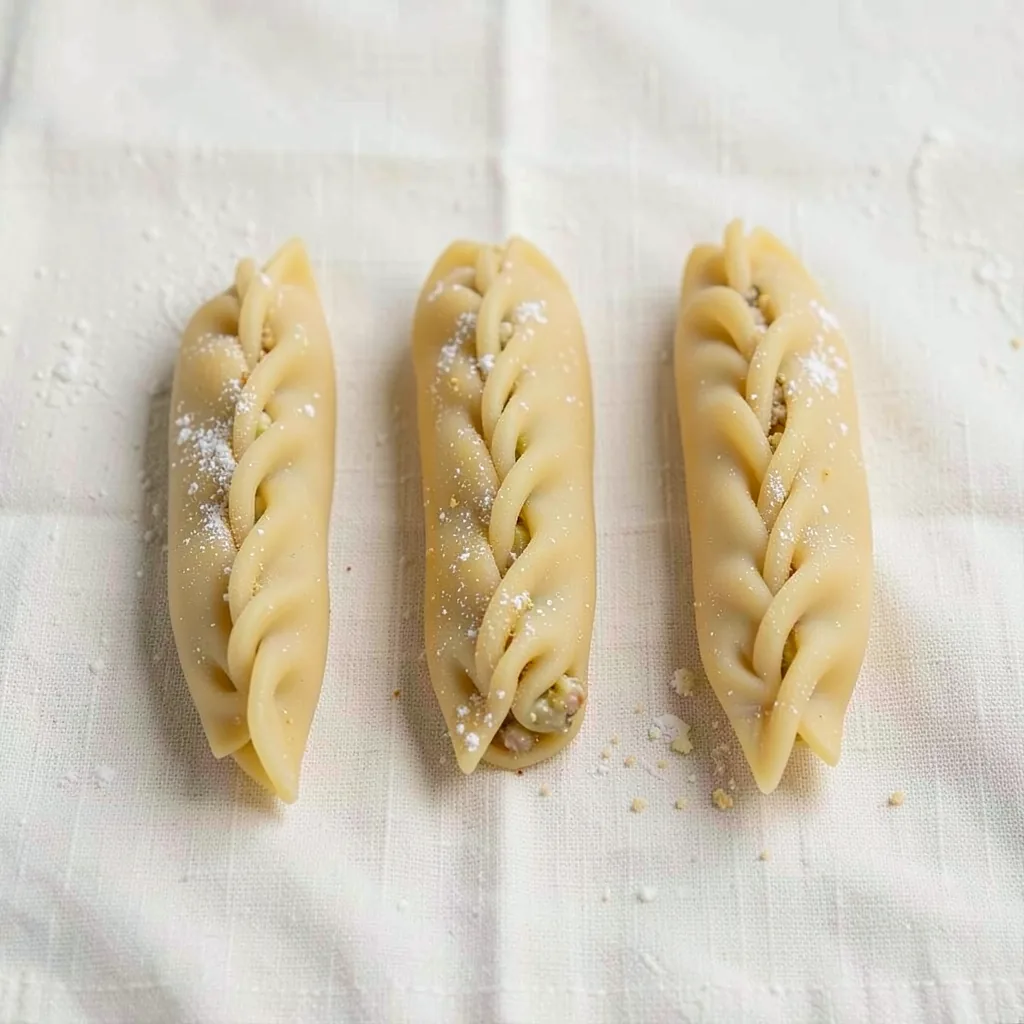
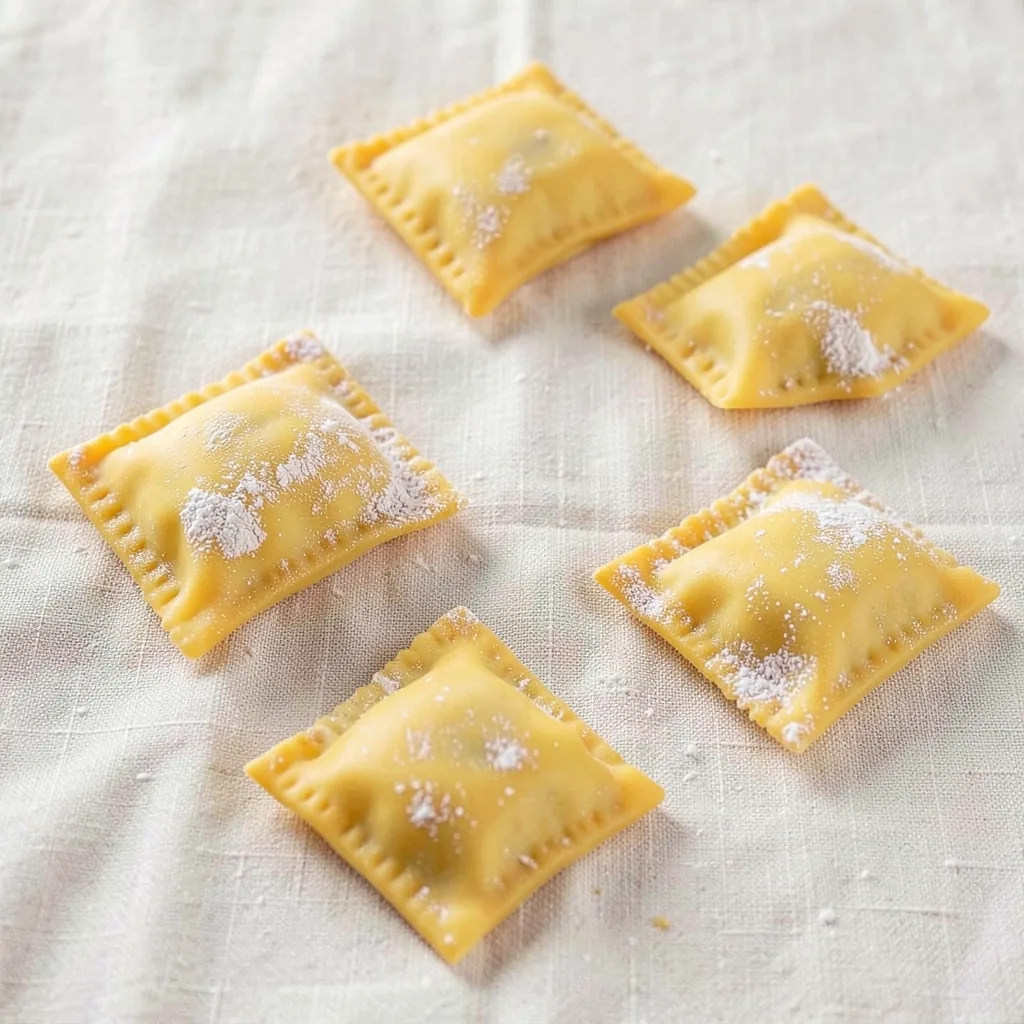
Side by side, to scale
10 mmCulurgiones: 50 to 70 mm by 30 to 40 mm
Ravioli: 35 to 60 mm by 35 to 60 mm
Footprints from the length and width in each record, one scale for both. See every shape on the chart.
| Family | Stuffed | Stuffed |
|---|---|---|
| Region | Sardinia | All of Italy |
| Section | Potato and pecorino filling sealed with a pleated braid like an ear of wheat | Filling sealed between two squares of egg sheet, edges crimped |
| Length | 50 to 70 mm | 35 to 60 mm |
| Width or diameter | 30 to 40 mm | 35 to 60 mm |
| Wall or thickness | 1 to 1.5 mm | 0.6 to 1 mm |
| Surface | Smooth | Smooth |
| Hollow | No | No |
| Dough | Semolina and water | Egg pasta |
| Cook time | 5 to 8 min | 3 to 6 min |
| Energy, dry, per 100 g | 371 kcal (dry semolina pasta) | 288 kcal (fresh pasta) |
| Protein, dry, per 100 g | 13.0 g | 11.3 g |
| Products catalogued | not measured | 2656 |
| Pairs with | Pomodoro, Butter and sage | Butter and sage, Pomodoro, In brodo, Cream sauce, Walnut sauce |
Culurgiones
A rich potato and cheese filling under a thick semolina skin. A light tomato with pecorino cuts it; butter and sage is the plainer option.
Ravioli
The filling carries the flavour, so the sauce stays simple and smooth: brown butter with sage, a light tomato, a little cream, or a broth. A heavy ragu fights the filling and tears the pasta.
Can you swap them?
Ravioli for culurgiones: yes, a potato ravioli.
Both take Pomodoro, Butter and sage.
Only ravioli: In brodo, Cream sauce, Walnut sauce.
Sources
- Dimensions, surface, dough, and cook time: each shape page names the brand page, spec sheet, or measured box behind every figure.
- Energy and protein: USDA FoodData Central, per 100 g of the dough, public domain.
- Products catalogued: Open Food Facts, Open Database License, read on 2026-08-25. A crowd database: a count is a floor.